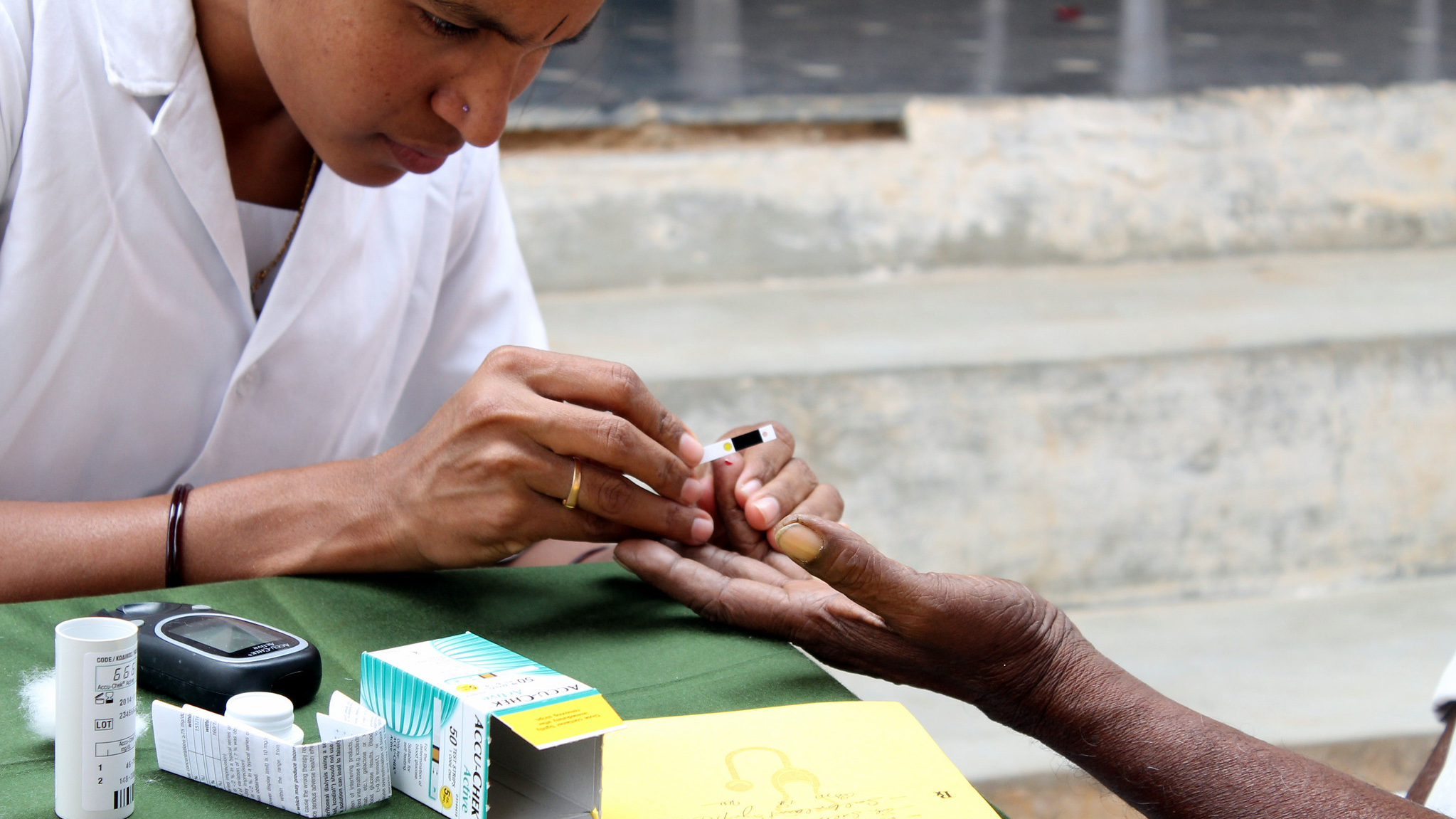
Katherine Adams stood at the intersection of a problem that affects 537 million people worldwide: how to deliver diabetes care when resources are scarce, staff are stretched, and each health worker's visit comes at the cost of reaching someone else. As a PhD student at the University of Wisconsin-Madison, she and her team of researchers set out to answer a deceptively complex question: if you have limited community health workers to deploy across low-income neighborhoods in India, how do you schedule their visits to save the most lives?
The stakes are profound. According to the World Health Organization, most people living with diabetes inhabit low- and middle-income countries—yet treatment lags there more than anywhere else, more often leading to death or disability. Community health workers fill a critical gap, bringing care directly to patients in underserved regions. But without intelligent planning, dispatching them becomes a game of impossible choices.
Working with her advisors Yonatan Mintz, an assistant professor of industrial and systems engineering at UW-Madison, and Justin Boutilier from the University of Ottawa, alongside Sarang Deo at the Indian School of Business, Adams developed an AI optimization framework that treats each patient not as a name on a spreadsheet but as an individual with distinct needs. The team published their findings in Operations Research in May 2026.
The framework accounts for something most healthcare systems overlook: a patient's likelihood to actually stick with treatment. Adams and her team modeled behavioral factors that influence compliance—including the "nosy neighbor" effect, where repeated visits from health workers can create social stigma in tight-knit communities, and the cognitive burden of learning new treatment regimens and making lasting behavioral changes. By weaving these human realities into operational mathematics, they created visit schedules that honor both efficiency and dignity.
The results speak for themselves. Using data from NanoHealth, a health-tech company operating in India, the researchers found they could reduce fasting blood glucose levels by up to 25 percent using the exact same resources—the same number of workers, the same budget, the same constraints. The optimization framework also smartly reduced treatment dropout rates by ensuring each patient received a visit cadence tailored to their individual circumstances and motivational state.
What makes this approach genuinely innovative is its flexibility. "We have different heuristics that will prioritize equity a little bit more or others that will prioritize efficiency a little bit more," Adams explains. "So the planner in charge of this could still pick the heuristic based on the goal that they're most concerned about." Healthcare administrators aren't forced into a one-size-fits-all approach; they can balance competing values according to their communities' needs.
Mintz sees the implications extending far beyond India. Wisconsin and the Midwest face parallel crises in substance-use disorder treatment in rural areas and tribal communities, mental healthcare for farmers, and healthcare access in urban centers. Every chronic condition demands sustained engagement—you don't treat diabetes or addiction once and declare victory. The burden falls on already-insufficient healthcare systems to keep patients engaged over months and years.
The research was funded by the National Library of Medicine, the UW-Madison Global Health Institute, and the American Family Funding Initiative. As healthcare leaders worldwide grapple with doing more with less, this framework offers something rare: a way to use artificial intelligence not to cut corners, but to serve people more wisely.