At MIT, a team of researchers has tackled one of carbon capture's most stubborn problems: the methods we use to pull CO2 from the air are either too expensive, too energy-hungry, or too difficult to scale up when we need them most. Now they've found a more efficient path forward.
The current gold standard for carbon capture is conventional amine scrubbing, a chemical process that has been used for decades but comes with a significant cost. It demands so much energy and effort to operate at scale that it has limited the real-world impact of carbon capture as a climate solution, despite urgent global need to reduce emissions and repurpose CO2 into useful products. The researchers wanted to explore whether a different approach could break through these barriers.
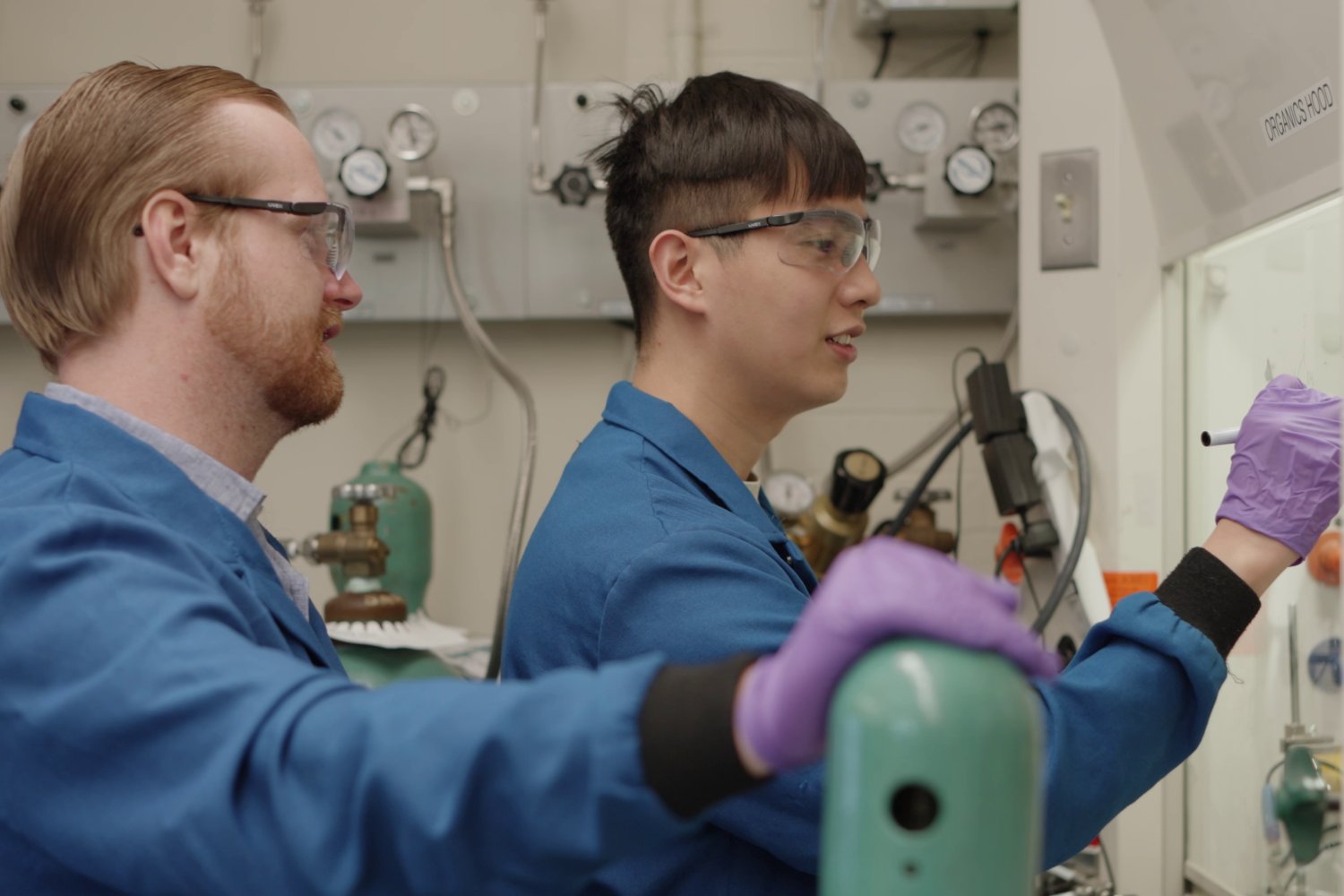
Graduate students Fang-Yu Kuo of the Department of Chemical Engineering and Gi Hyun Byun of the Department of Mechanical Engineering, working with Professor Betar Gallant and former postdoctoral fellows Glen Junor and Akachukwu Obi, investigated electrochemically mediated CO2 capture (EMCC) as an alternative. Unlike conventional methods, EMCC promises to electrify the separation process—ideally using renewable electricity—but the approach has faced its own challenges. Most existing sorbents require extremely reducing potentials to work, which creates unwanted side reactions with oxygen that undermine efficiency and durability.
The team's innovation centers on a novel class of materials called N-heterocyclic imines, or NHIs. Though researchers have explored NHIs as CO2 sorbents in recent years, they had never been adapted for EMCC applications until now. "Our work translates these NHIs for the first time into the EMCC application space, and demonstrates that NHI-based sorbents can be modulated electrochemically for CO2 separation by a unique separation mechanism that avoids the need of applying highly reducing potentials," explains Kuo.
The team's breakthrough centers on a new bis(NHI) structure that can theoretically modulate two CO2 molecules per electron during operation—a meaningful improvement in efficiency. The research, published in Nature Energy, suggests that with further refinement, these bis(NHI) structures could operate across different electrolyte environments. That flexibility opens the door to optimizing three critical metrics simultaneously: electron efficiency, energy efficiency, and operational versatility.
What excites the researchers most is the trajectory ahead. The team recognizes that understanding how bis(NHI) materials degrade over time will be essential for real-world deployment. Kuo points to the next critical phase: "Understanding these pathways will inform the rational design of next-generation bis(NHI) molecules, enabling longer operational lifetimes and enhanced cycling durability for practical deployment."
This work, supported by the MIT Climate and Sustainability Consortium, represents the kind of molecular-level engineering that can unlock new possibilities in climate technology. By tackling the fundamental chemistry of CO2 capture, these researchers have mapped a route toward systems that are not just more efficient, but flexible enough to adapt to different operational contexts. In the race against climate change, that kind of versatility—combined with cleaner energy—could help shift carbon capture from a laboratory curiosity into a scalable solution.