Arya Satheesh was testing river water in Ireland when she saw microplastics under the microscope—everywhere—and realized no tool existed to pull them out. That moment sparked Eco Purge, a plant-based plastic embedded with enzymes that, as it biodegrades, releases agents to break down existing microplastics in soil and water. This year, Arya and her team are one of seven global youth-led initiatives awarded $12,500 from The Earth Prize 2026, part of a $100,000 fund fueling teenage innovators tackling environmental crises at their roots. For five years, The Earth Prize has centered young people living closest to the problems they aim to solve—and their solutions reflect a deep, local wisdom often missing from top-down environmental policy.
In Naivasha, Kenya, 17-year-old Fredrick Njoroge Kariuki knows air pollution not as data but as breathlessness. Living with bronchitis, he and teammate Miron Onsarigo developed HewaSafi, a low-cost, nearly theft-proof vehicle exhaust filter made from maize cobs, coconut shells, and algae. It captures over 90% of particulate matter and reduces CO2 and carbon monoxide emissions. Designed for matatus and boda bodas—Africa’s most common transit—HewaSafi is now in pilot testing with local drivers, with plans for affordable installment models. Meanwhile, in Gaza, sisters Tala and Farah Mousa turned rubble into resilience, creating Build Hope Palestine, a method to transform war debris into usable construction blocks using simple tools and local binders like clay or ash. No heavy machinery needed. Their goal? Train 100 young people to make at least 200 blocks and pass the knowledge forward.
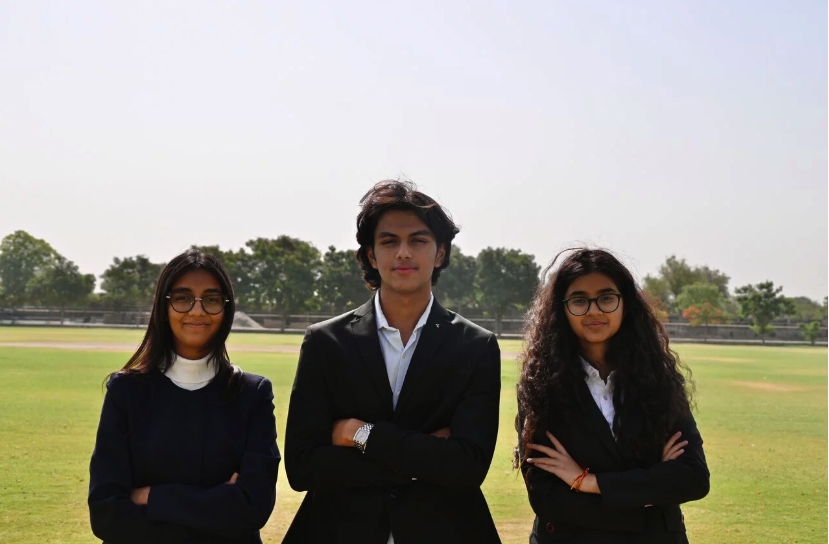
Half a world away, in India, 16-year-olds Vivaan Chhawchharia, Ariana Agarwal, and Avyana Mehta witnessed a child drinking from a shared, unfiltered water container—prompting Plas-Stick, a biodegradable powder from waste tamarind seeds that clumps microplastics so they can be removed with a magnet. With no electricity required, it’s ideal for rural communities. Already, the team has reached over 8,000 students and teachers and is partnering with IIT Guwahati to scale decentralized production. These aren’t futuristic concepts—they’re deployable, community-rooted fixes, now backed by funding and global recognition.
What unites these teams is not just innovation, but intimacy with the problem. They aren’t waiting for permission or perfection. As Arya put it, “Plastic pollution doesn’t just disappear, it breaks into tiny pieces that stay in our environment.” Their work is a quiet rebuttal to despair—a reminder that the next chapter of environmental healing may be written not in boardrooms, but by teenagers with compost bags, magnets, and maize.