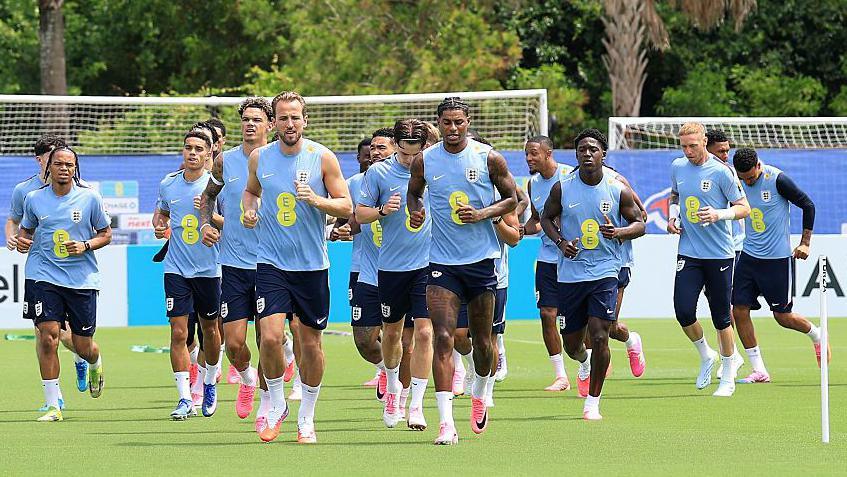
At 32 degrees Celsius under the Florida sun, England's players felt the World Cup's first test before a single competitive match was played. West Palm Beach, where the team opened training this week, gave them a raw preview of what lies ahead—and it's precisely why the England camp has turned to an unlikely piece of technology: palm-cooling devices.
The heat isn't incidental to the tournament; it's a defining feature. Research shows that at least a third of World Cup matches will be played in temperatures exceeding 26 degrees Celsius, a threshold that transforms football from a game of skill into a battle against physiology. Every player who has trained in summer heat knows the feeling of core temperature rising, energy draining, and recovery becoming sluggish between intense efforts. England is determined not to let that be a disadvantage.
The science behind palm cooling is straightforward but elegant. Hands and feet contain specialized blood vessels that efficiently release heat when cooled. By applying cold to the palms—typically through water or specialized equipment—athletes can significantly lower their core body temperature, a finding supported by growing research in sports physiology. Manchester United has already adopted the technology, and now England will deploy it both in training and during the water breaks built into World Cup matches. Jordan Henderson, speaking from West Palm Beach, framed it as part of a broader strategy: "We're using this first week to build capacity to the conditions," the Brentford midfielder said. He praised the coaching staff's "top level research" on recovery and cooling, adding optimistically, "Hopefully that can give us a little edge when we get into the tournament."
The edge matters because recovery—particularly in-game recovery—can be the difference between a player who maintains sharpness in the 80th minute and one who fades. In a tournament compressed into three weeks, where matches come thick and fast, even marginal gains in core temperature management could influence how fresh England's legs are when they need them most. It's a quiet form of preparation that sits alongside the more visible training drills and tactical work.
England's schedule will test their preparation. Friendly matches against New Zealand on 6 June and Costa Rica on 10 June serve as crucial acclimatization tools before their World Cup opener against Croatia on 17 June. Then comes Ghana on 23 June and Panama on 27 June—a relentless schedule in unforgiving conditions.
The broader picture reflects how modern elite football has become a hybrid of performance science and traditional craft. Cooling devices, hydration protocols, and recovery research sit alongside the coaching wisdom that builds shape and chemistry. Thomas Tuchel's side arrives in Florida with the kind of infrastructural support that only the world's richest football programs can afford. Yet the heat will be democracy in motion: every player, every team, will face the same brutal conditions. What England is betting on is that their preparation—visible and invisible—will mean they adapt faster than their opponents.