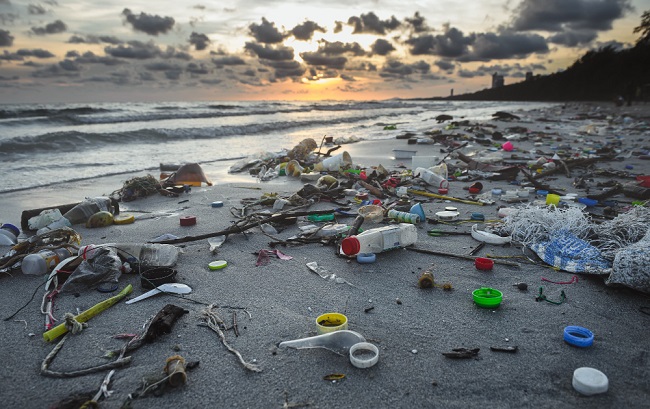
In a Lagos laboratory, a plastic bag sits under a heat lamp, slowly fracturing into a brittle film—within months, it will become a waxy residue, and in less than two years, it will vanish entirely into the environment, broken down by bacteria. This isn’t science fiction; it’s the promise of a new biodegradable plastic technology being tested in one of Africa’s most populous cities, where plastic waste has long choked drains, polluted beaches, and worsened seasonal floods. With over 20 million residents generating an estimated 13,000 metric tonnes of waste daily—much of it plastic—the stakes could not be higher. Now, a partnership between Nigeria’s Oando Clean Energy and UK-based Polymateria is offering a novel solution: plastics that function like conventional ones during use but biodegrade completely when discarded.
The technology, developed at Imperial College London’s I-HUB, works by embedding additives into plastic that trigger a two-stage breakdown process. First, the material oxidizes and turns into a wax-like substance—achievable in about three months in tropical climates like Lagos—before microbes fully digest it within a maximum of two years. "The properties of the plastic remain the same after our technology is added," explains Polymateria scientist Taylor Young, underscoring that strength, flexibility, and shelf life are preserved. Unlike oxo-degradable plastics, which fragment into microplastics, this process meets the British Standards Institution’s PAS 9017, a rigorous benchmark for full biodegradation in open environments.
The project is being advanced through POLYSOL Ltd., a special-purpose vehicle formed by Oando Clean Energy and its partners, and is currently undergoing regulatory review with both Lagos State and federal authorities. Ademola Ogunbanjo, CEO of Oando Clean Energy, stresses that no single solution can fix Nigeria’s waste crisis: "The goal is not to eliminate plastics overnight, but to support a transition from long-life, persistent plastics to materials designed with a defined end-of-life pathway." Meanwhile, recyclers like Taiwo Adewole of Recyclespoint welcome the innovation, noting that while recycling remains essential, it’s hamstrung by logistics and funding gaps. Only 12% of Nigeria’s plastic waste is currently recycled, leaving the rest to pollute land and water.
Polymateria’s Steven Altmann-Richer sees Lagos as a critical testing ground, not just for technology but for policy. He points to Malaysia, where an eco-label for biodegradable plastics led to rapid adoption, as a model for how regulation can accelerate change. As Lagos enforces its 2025 ban on single-use plastics, this new technology could bridge the gap between immediate convenience and long-term sustainability. If approved, pilot deployments could begin within the year—offering a future where plastic no longer outlives the people who use it.