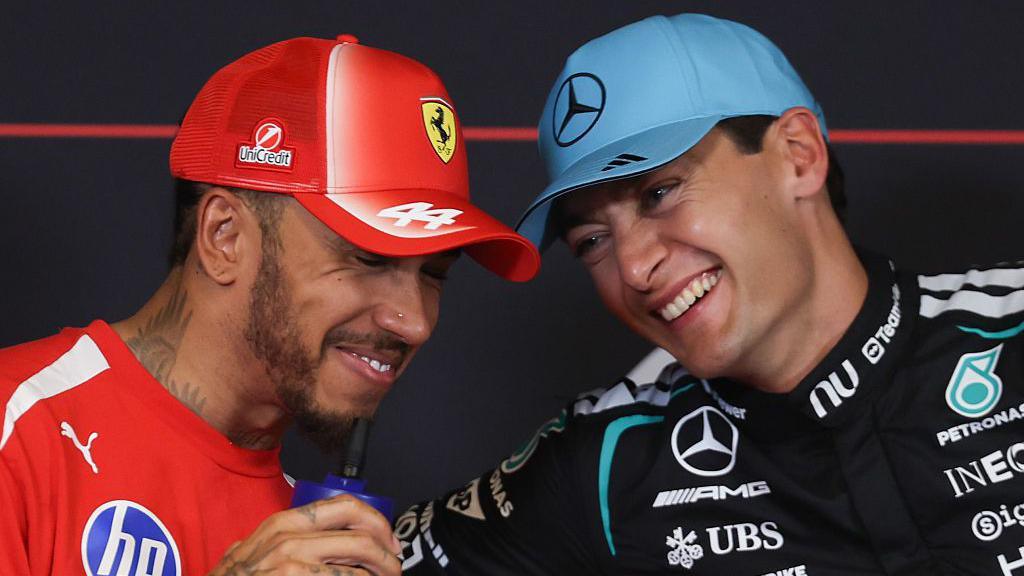
On a sun-baked afternoon in Barcelona, Lewis Hamilton found the reset he needed. The 41-year-old Ferrari driver qualified second at the Barcelona-Catalunya Grand Prix, just 0.064 seconds behind George Russell, marking his best qualifying performance since joining the Scuderia in 2025. It was more than a lap time—it was proof that Hamilton's difficult first season with Ferrari is giving way to something resembling form.
The turnaround matters because Hamilton had arrived in Spain struggling. Through practice, he was half a second off the pace, wrestling with his car through the high-speed corners. The gap gnawed at him all weekend. Then, in an unusual act of recalibration, Hamilton left the paddock entirely between final practice and qualifying. He retreated to his motorhome, stayed on an engineer call, and somehow found the mental space he needed. "I've got to get out of here," he recalled thinking. Whatever that reset accomplished, it worked. He returned to the track and delivered his closest qualifying result to the front since arriving at Ferrari.
The gap between second and first—0.064 seconds—speaks volumes about how narrow the margins have become. Russell's pole position marked his own resurgence after three difficult races in Miami, Canada, and Monaco. The Mercedes driver described his Barcelona weekend as "a big reset," and it showed. For both drivers, Barcelona represented a moment of recovery and refocus, a clearing of the fog that had settled over their respective seasons.
Ferrari's significance-upgrade to their aerodynamic package clearly made a difference. Hamilton had fought through practice sessions where he questioned everything about his setup, struggling through Turn Three and Turn Nine, where confidence in those high-speed sections felt elusive. His engineers made small but critical adjustments. Combined with his mental reset, the effect was immediate. "The fight is on," he told the paddock, and he meant it.
Yet Hamilton was careful not to overstate Barcelona's implications. Mercedes still possessed something extra in the pocket, he acknowledged—that intangible speed advantage that persists no matter what Ferrari brings to the grid. "Every time we bring an upgrade, they're still ahead, so we've got some work ahead of us," he said with characteristic candor. Still, the closeness itself felt like progress. This was the nearest he had come to Mercedes' pace in qualifying since joining the team. "It's the closest I've been to the front in quali," he said. "So, I'll give it a go."
For the race itself, complications awaited. Tire degradation proved even more severe than anticipated on Barcelona's notoriously tough asphalt, forcing teams to prepare for at least two pit stops. Hamilton acknowledged that Mercedes remained the team to beat, but something had shifted. The reset—psychological as much as mechanical—had reconnected him to the car and to himself. His gratitude toward Ferrari's team was genuine and plainly spoken. He had watched them work with focus and passion through a difficult campaign, and now, finally, he was delivering results that matched their effort.
Charles Leclerc, Hamilton's teammate, crashed during qualifying at Turn Four while attempting to carry high speed through the corner. Hamilton empathized, understanding how fine the line is between brilliance and failure at these speeds. But his own trajectory pointed forward: from half a second adrift in practice to 0.064 away from pole, in a single qualifying session. In Formula One, where milliseconds decide championships, that kind of jump suggests something real is stirring at Ferrari.