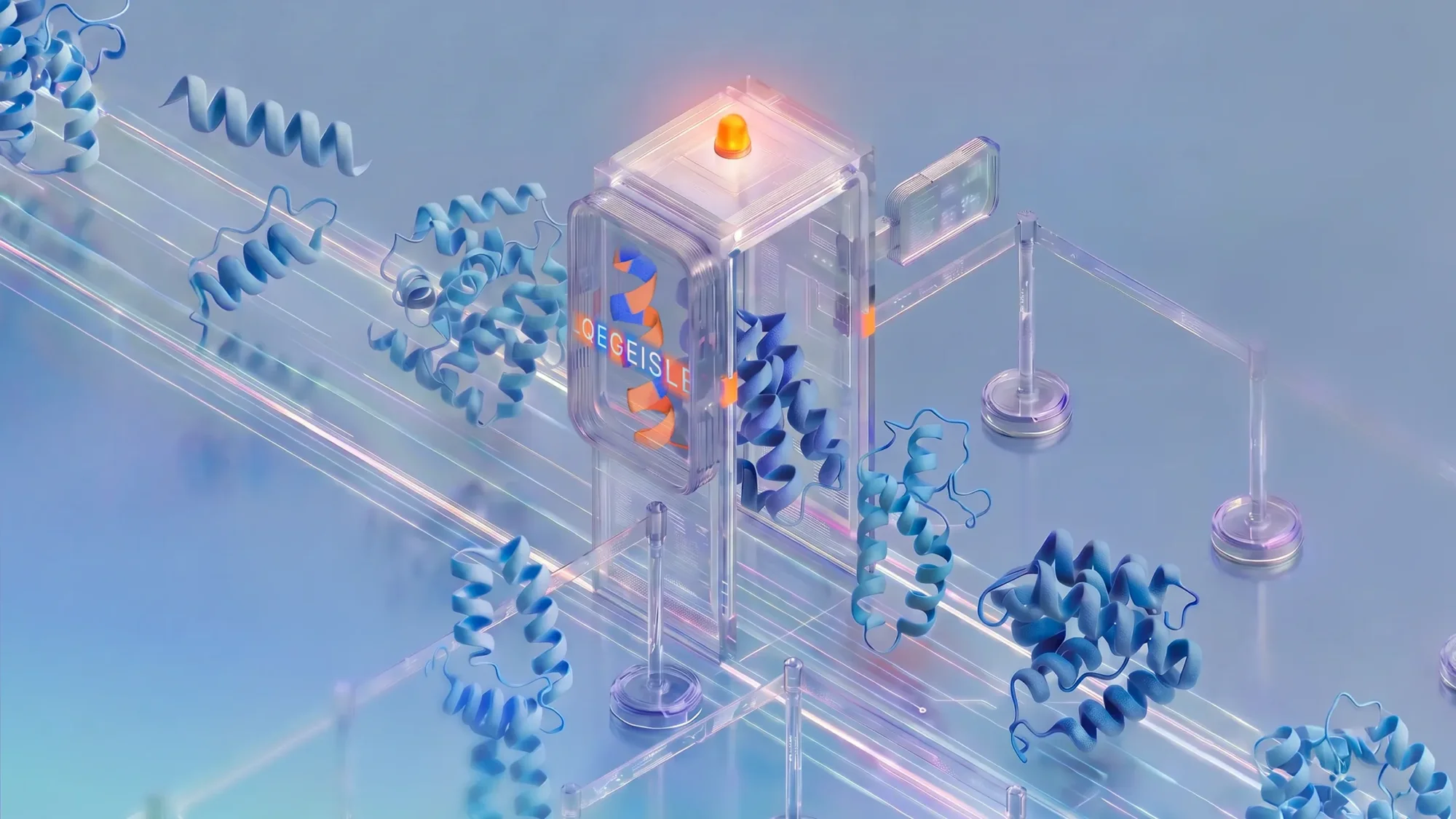
When scientist Ewan Birney first saw a protein designed entirely by artificial intelligence, he didn’t cheer — he worried. The molecule was flawless, a feat of modern science, but it carried no label. Was it real? Was it safe? Today, Google DeepMind is answering that question with a quiet but powerful tool: a watermark for AI-made proteins, invisible to the eye but detectable to machines. It’s called SynthID Bio, and it could become as standard as a digital signature on an email.
For decades, proteins came from nature — built by cells, shaped by evolution. Now, AI systems like AlphaFold and RFdiffusion can invent them from scratch. These synthetic proteins might one day cure diseases or clean up pollution. But they also pose risks. Without a way to tell them apart from natural ones, AI-generated proteins could slip into research labs undetected, misleading scientists or even becoming biological threats. Worse, they could bypass safety checks at DNA synthesis companies — the gatekeepers who print genetic code into physical form.
SynthID Bio works like a digital fingerprint. Instead of slapping a visible tag on a protein, it subtly shifts the AI’s design choices — picking one amino acid over another, nudging an atom’s position by a fraction of a nanometer. These tiny changes don’t alter how the protein works, but they create a statistical signal that only a detector can spot. It’s inspired by SynthID-Text, a 2024 tool that marks AI-written words by favoring certain phrases. Now, the same idea travels into biology.
The stakes are high. A 2023 study showed that freely available AI tools could generate synthetic toxins that current screening software misses. Another team used AI to design entire bacteriophages — viruses that infect bacteria — raising alarms about misuse. Today’s safety systems rely on comparing DNA sequences to known threats. But AI can design proteins so unlike anything in nature that they slip through, or tweak sequences just enough to evade detection. A watermark offers a simpler fix: if it’s AI-made, it’s marked.
Not everyone is convinced. Oliver Crook at the University of Oxford warns that even small changes might affect delicate experiments. For researchers studying non-sensitive proteins, the watermark could add unnecessary complexity. James Diggans at Twist Bioscience, a DNA synthesis company, sees promise. “AI is expanding what scientists can design,” he said, “and DNA synthesis companies have an important role in helping that innovation scale responsibly.”
DeepMind admits SynthID Bio is just the beginning. It’s not perfect, and it won’t solve every risk. But it starts a conversation — about trust, transparency, and how to let science move forward without opening the door to danger. In a world where AI can write life from code, a simple watermark might be the guardrail that keeps discovery safe.