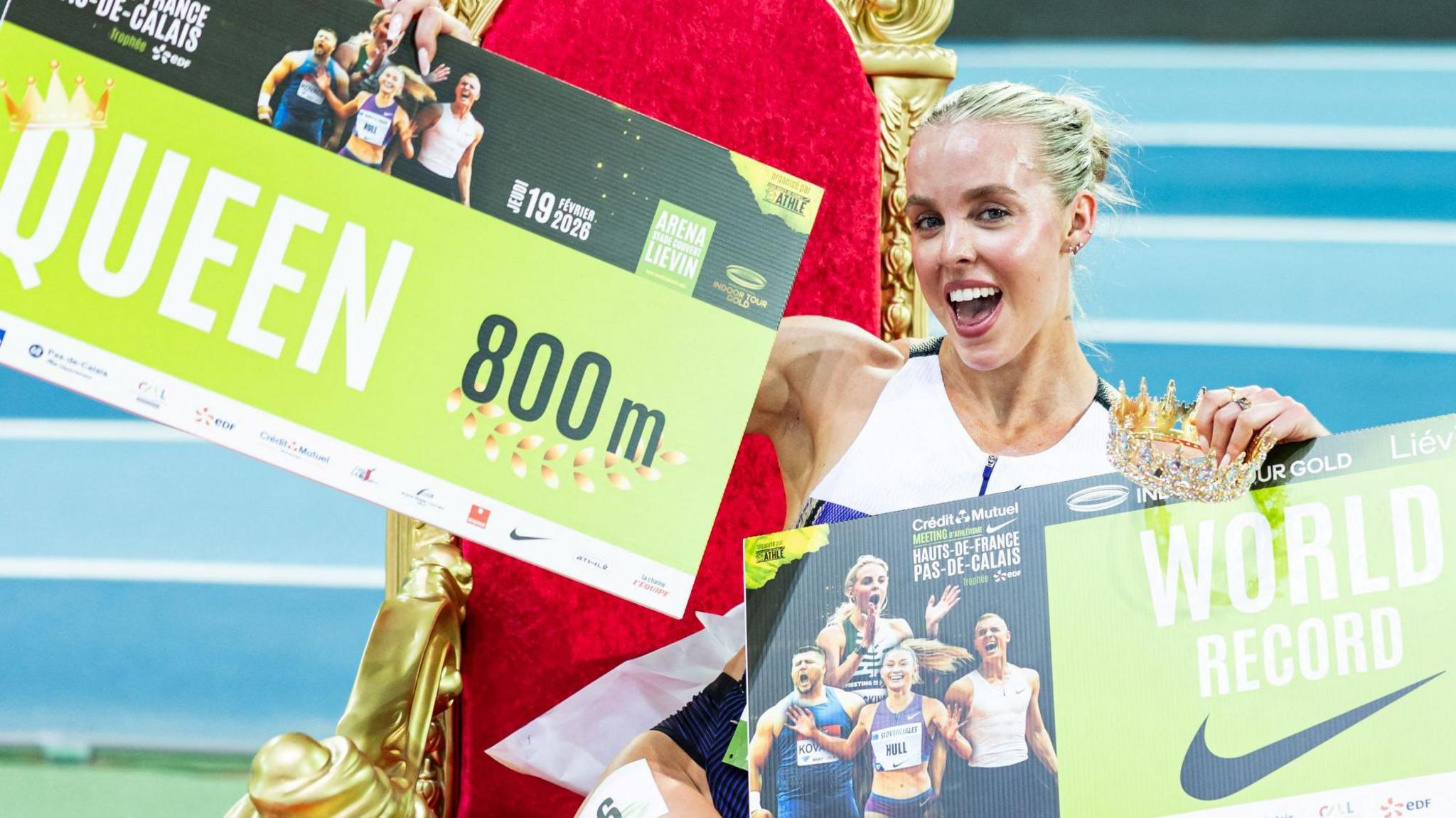
Keely Hodgkinson is plotting one of athletics' most daring bids this summer: breaking a world record that has stood untouched for 43 years. The 24-year-old Olympic 800m champion plans to chase Czech runner Jarmila Kratochvilova's storied mark of 1:53.28—set in July 1983—at London Stadium in what could be a remarkable July showdown.
The timing feels inevitable. Hodgkinson has spent the past months in what she describes as the best winter training block of her career, missing no sessions despite an injury-disrupted 2025. That dedication paid off spectacularly in February when she smashed the world indoor record, a performance that signals she is moving into peak form exactly when it matters most. With 2025 offering no global outdoor championship to chase—the first year in five without one—Hodgkinson has zeroed in on Kratochvilova's benchmark as her central focus.
What makes this pursuit particularly compelling is the context. Hodgkinson returns to London Stadium for the first time since setting a British record there before claiming Olympic gold in Paris 2024. The crowd, the familiarity, the national stage—she speaks of these elements with genuine warmth. "I get really excited about London and the crowd," she said. "As a British person, competing there is so much fun."
The London Diamond League on July 18 has shaped up as something extraordinary. Not only will Hodgkinson pursue her historic mark, but her British teammate Josh Kerr has also announced plans to target the world mile record—a time that has stood since 1999. The convergence of two world-record attempts on home soil has prompted Hodgkinson to contemplate the evening's possibilities with a playful competitive spirit. "It might be a battle of the world records. Who can get a better one?" she joked, capturing both the ambition and the sense of occasion that London will provide.
For Hodgkinson, the appeal of chasing records in her home country cannot be overstated. She understands the electricity that a British crowd generates, the way a roaring stadium can lift an athlete through those final, brutal meters. At 800 meters, where races are decided by fractions and mental fortitude, that energy becomes a tangible force. Breaking Kratochvilova's record would not only cement Hodgkinson as one of the sport's greats but would do so with the backing of thousands cheering her name.
The logistics alone underscore her confidence. She arrived at this moment healthy, trained, and with recent proof—that February indoor record—that her preparation is translating into real results. The question now is whether the summer conditions in London, the stage, and the psychological weight of chasing a four-decade-old record will align in her favor. In sport, alignment of readiness and opportunity is rare. Hodgkinson appears positioned for both. When July arrives, the battle she has imagined—whether with one world record or two—will finally unfold.