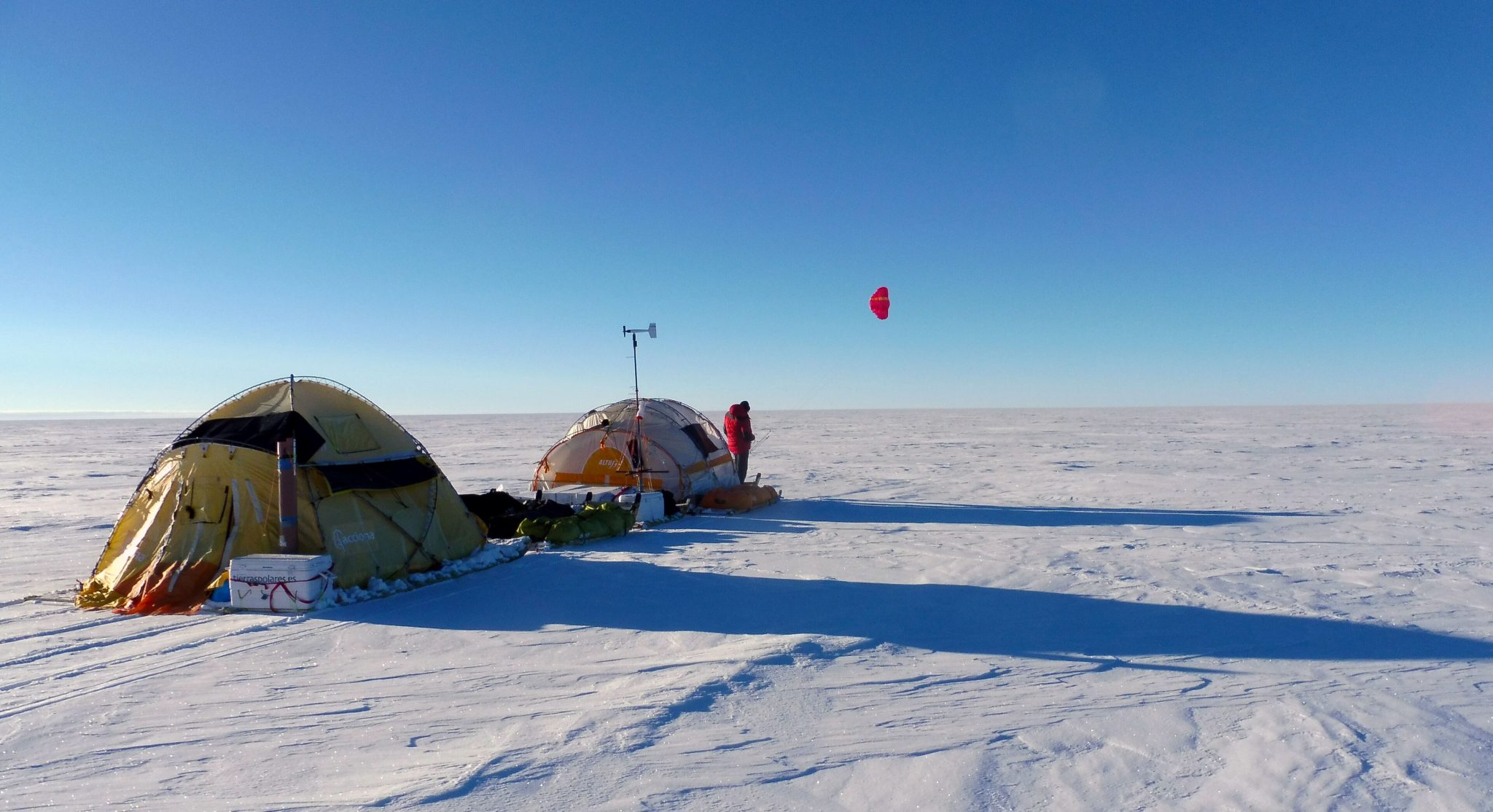
Ramón Larramendi once skied 28,000 kilometers across ice, refining a dream: a silent sled that sails across Antarctica on wind alone. Now, he’s putting it to the ultimate test. On October 18, Larramendi and three teammates launched the Wind Sled expedition from Spain, bound for a 3,400-kilometer crossing of Antarctica’s frozen interior—without burning a single drop of fuel.
This journey isn’t just about breaking records. It’s about reimagining how we explore Earth’s most remote places. The last team to cross Antarctica’s interior used nearly 170,000 liters of fuel—enough to fill 680 bathtubs. The Wind Sled uses none. Powered by kites and solar panels, this 15-meter-long, four-module platform glides across the ice like a ship on an invisible sea. Its design draws from Inuit sled-building wisdom, blending ancient knowledge with modern science in a way that feels both humble and revolutionary.
The crew carries 16 research projects, from NASA-led experiments hunting for microbial life in salt rocks to radar scans of snow layers up to 10 meters deep. One study, Dinglac, will track how ice accumulates over time. Others will hunt for microplastics, test for viruses, and evaluate the European Galileo navigation system in extreme cold. Five temporary research stations will be set up along the route, which stretches from Russia’s Novolazarevskaya base, past the Pole of Inaccessibility and near the Pole of Cold, ending at Concordia Station on Dome C.
The team itself is part of the science. All four members—Larramendi, polar guide Hilo Moreno, researcher Mariusz Potocki, and filmmaker Javier Selva—are Antarctic veterans. For 85 days, they’ll live in isolation, their sleep, moods, and interactions monitored by the WindSled Mind project from the University of Cádiz. The data could help prepare astronauts for long missions in deep space, where isolation is just as extreme.
Speed isn’t the goal, but the sled can race at 80 kilometers per hour in strong winds, averaging around 25. It carries 20 kites, swapped out depending on conditions, from 5 to 150 square meters in size. The current load includes about 250 kilograms of scientific instruments—light for the sled’s 2,100-kilogram capacity.
When they reach Concordia, the team will fly out, leaving the sled behind, dismantled but ready. The plan is to return, to retrace the route in future seasons. Because real understanding comes not from one trip, but from repeated journeys—comparing ice, air, and data year after year. This isn’t just an expedition. It’s the start of a new way to study the poles.