On a scorching summer day in Paris, thousands of air conditioners humming outside windows all push the same invisible problem into the streets — heat. Every unit pulls warmth from inside a building and dumps it outside, and millions of them running together make the city itself hotter, which makes the next hot day worse. Sophie Parison, a researcher in Paris who studies urban heat, put it simply: "Everything that requires energy releases heat, and that heat has to go somewhere."
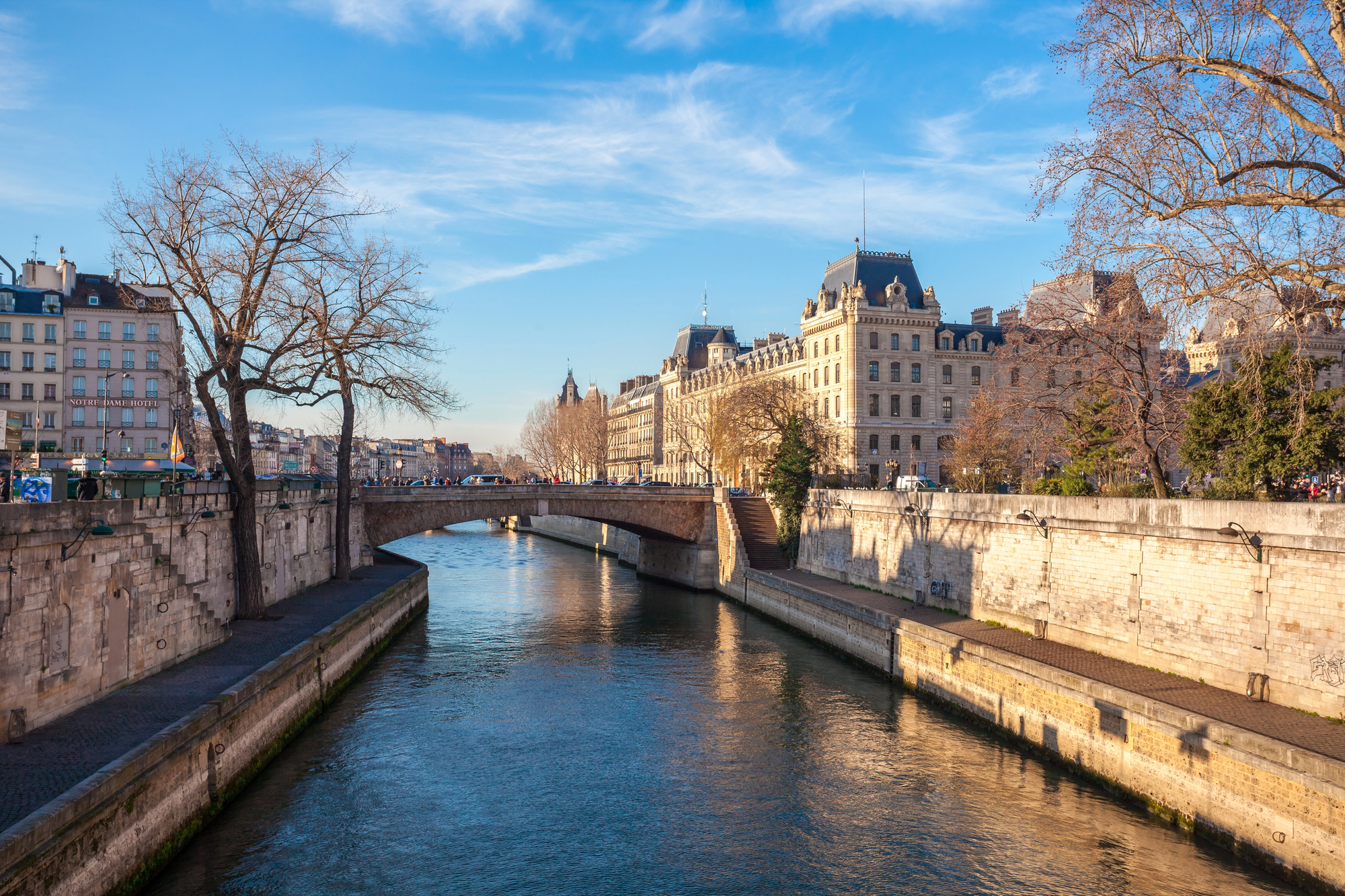
For thirty years, Paris has been building something different. Instead of millions of individual cooling units fighting the same problem, the city taps an unlikely resource flowing right through its heart: the Seine River.
The system is called Fraîcheur de Paris — roughly, "the freshness of Paris." It operates 120 kilometers (about 75 miles) of underground pipes running beneath the city. Cold water drawn from the Seine flows through one pipe alongside a second pipe carrying warm water returning from buildings. A thin metal wall separates them, and a heat exchanger moves warmth from one stream to the other without the two ever mixing. The cooled water goes back into the buildings; the Seine water returns to the river, only slightly warmer than before.
Scientists monitoring the system say those tiny temperature changes stay within safe environmental limits, with no measurable harm to river life. The Louvre, the Grand Palais, hospitals, schools, and major office districts are already connected. Cooling is produced at a central point and piped out like electricity or water.
"The ambition is to move from a historic network focused on large tertiary buildings to a city-wide infrastructure," said Tim Guigon, a spokesperson for Fraîcheur de Paris.
Paris plans to triple the network's size by 2042, reaching more than 3,000 buildings across every neighborhood in the city. Priority goes to hospitals, schools, day-care centers, and retirement homes — places where keeping cool isn't a luxury. The 20-year contract, renewed in 2022 and worth €2.4 billion (about $2.6 billion), is held jointly by transportation company RATP and energy firm Engie. The city of Paris owns the network outright.
Charles Simpson, a senior researcher in climate change at University College London, said district cooling should use far less energy than the same cooling produced by separate units in each building. Pauline Lavaud, Paris's director of climate transition, said the network already offers "much higher energy and environmental performance than individual cooling systems."
Whether Paris residents buy fewer window units as the network grows will be a real test of that promise. Every reduction in individual AC adoption means less heat dumped onto already-warm streets.
Other cities are trying similar approaches. Stockholm uses cold water from the Baltic Sea. Toronto draws from Lake Ontario. Neither copied Paris — each adapted the idea to fit what they had. Emmanuel Gendreau, an ecologist at the Sorbonne, warned that solutions always need to fit the city using them: "It is crucial not to simply apply adaptations that have already worked in one city directly to another." But Paris shows what's possible when a city's own waterways become part of the answer.