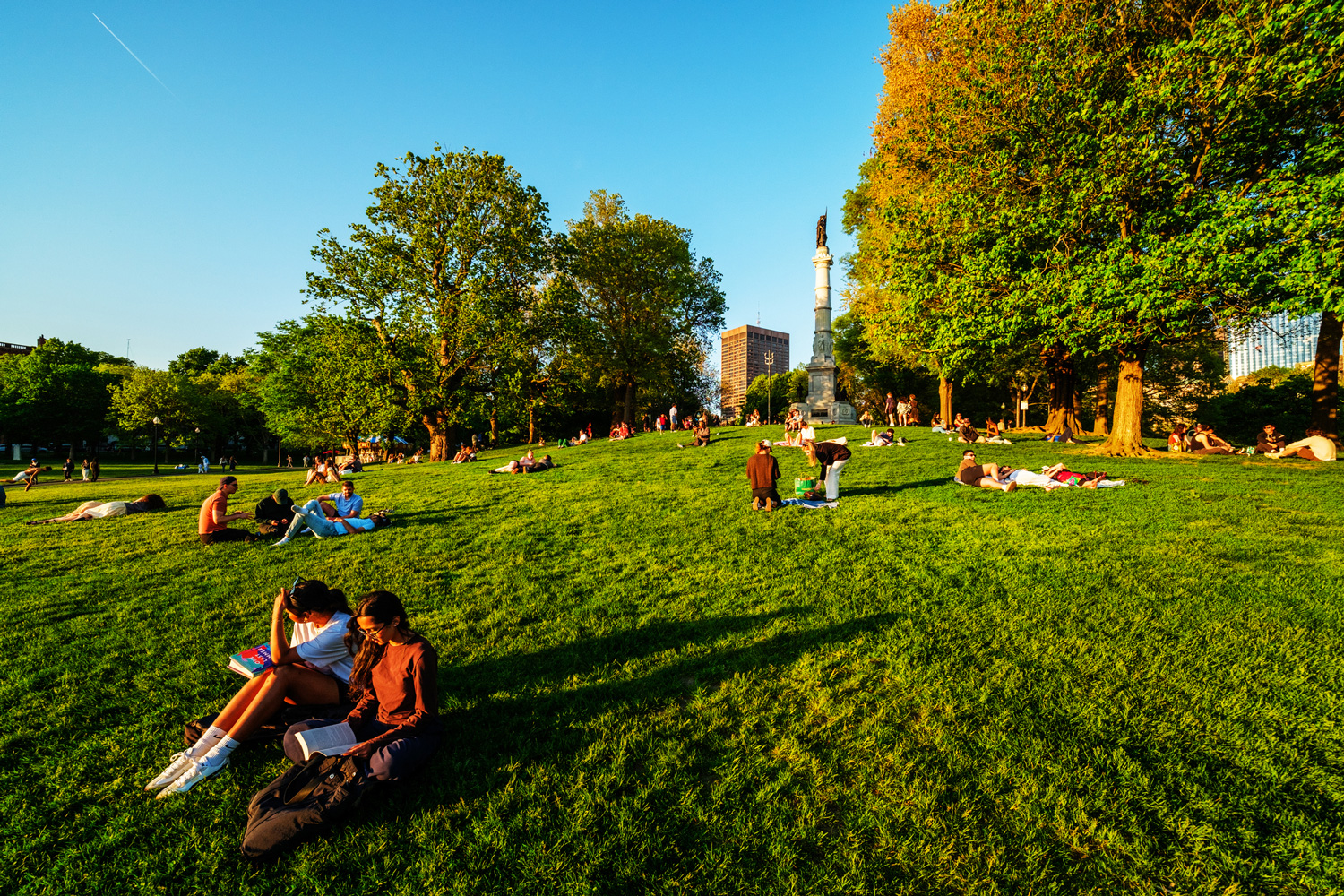
On a typical block in Manhattan's Flatbush neighborhood, a resident can grab coffee, pick up groceries, visit a small park, and chat with neighbors — all without getting in a car. According to a major new study from MIT, that simple combination of walking routes, greenery, and nearby shops may be one reason residents in places like this tend to be healthier.
Researchers at MIT's Senseable City Lab analyzed 28,323 census tracts across the United States — examining more than 8 million street view images to understand how city design connects to resident health. Their findings, published in the journal Nature Health, reveal that well-designed neighborhoods with walkable streets, parks, and a mix of shops and homes correlate strongly with better health outcomes for the people living there.
"We found that on a very large scale, urban planning and design, such as the availability of different amenities and their spatial arrangement, plays a critical role in population health outcomes," said Winston Yap, a visiting scholar at MIT Senseable City Lab and co-author of the study.
The researchers used a type of artificial intelligence called graph deep learning to identify which design features matter most. They found that short, well-connected blocks with many different amenities nearby made a significant difference. Manhattan and Boston's Back Bay neighborhood — where mixed-use buildings sit on relatively small blocks, creating lots of walking routes — scored high on their health measures. But the shape of streets mattered less than their connectedness. Even areas with curving roads could promote health if they had plenty of paths and destinations within reach.
Parks stood out as a especially powerful factor. The researchers also found that expanding tree canopy in cities could improve resident health. Restaurants, cultural institutions, and other "points of interest" also correlated with better health outcomes.
Perhaps surprisingly, the study found that good urban design matters for mental health just as much as physical health.
"We usually think about physical health first, but we also found a high correlation between good design and mental health," said Fabio Duarte, associate director of MIT Senseable City Lab and co-author of the paper. "If you are walking more, it is not only a matter of physical fitness, but gives people a chance to avoid isolation, have serendipitous meetings with people, and at least see there are others around."
The researchers say they undertook the study partly because healthcare systems worldwide are overwhelmed, and preventing illness before it starts may be just as important as treating it after.
"There's a lot of burden on health care systems, and there is a need not just for treatment but for prevention as well, for obesity, high cholesterol, depression and other mental health issues," Yap said.
Carlo Ratti, director of MIT Senseable City Lab, said the research demonstrates the value of making health and demographic data freely available to planners and policymakers. "By bringing together open demographic, health, and environmental data, the study highlights the importance of open data accessibility for planning healthy cities," he said.
The findings suggest that cities looking to improve resident health might focus less on any single design blueprint and more on creating neighborhoods where people can easily walk to multiple destinations, spend time in green spaces, and encounter their neighbors along the way.