Nicole Horseherder has spent years protecting water that sustains Navajo communities from industrial use. Now she sees a troubling parallel with artificial intelligence.
"It's built on thousands of years of real-time human observations on the changes in landscapes, the weather and the seasons," she said. "AI development needs to listen to that."
Horseherder, a Navajo environmental activist and co-founder of Tó Nizhóní Ání (Sacred Water Speaks), a nonprofit based in Arizona, is part of a growing movement exploring how Indigenous knowledge systems could guide ethical AI development for environmental monitoring.
A recent study published in the journal AI and Ethics examined how traditional ecological knowledge could reshape AI frameworks through analyzing Navajo and Māori concepts. The paper drew on the Māori value of Kaitiakitanga, meaning guardianship, and the Navajo philosophy of Hózhó, meaning balance and harmony.
The researchers argued that Indigenous knowledge emphasizes collective responsibility and could provide an ethical basis for questioning whether AI models are worth their environmental costs. Instead of unbounded technological expansion, the framework prioritizes ecological integrity.
"You need to learn from local communities what their problems are," said Jude Kong, an assistant professor at the University of Toronto who studies community-oriented AI and public health. "Otherwise, you are moving into this colonial way of saying 'This is your problem and this is your solution.' That has never worked."
Kong said AI frameworks often fail to gain trust when designed without consulting the communities they aim to serve.
Some Indigenous researchers, however, remain skeptical. They question whether a broad category of "Indigenous values" even exists, and whether knowledge rooted in specific lands and cultures can truly be translated into AI tools.
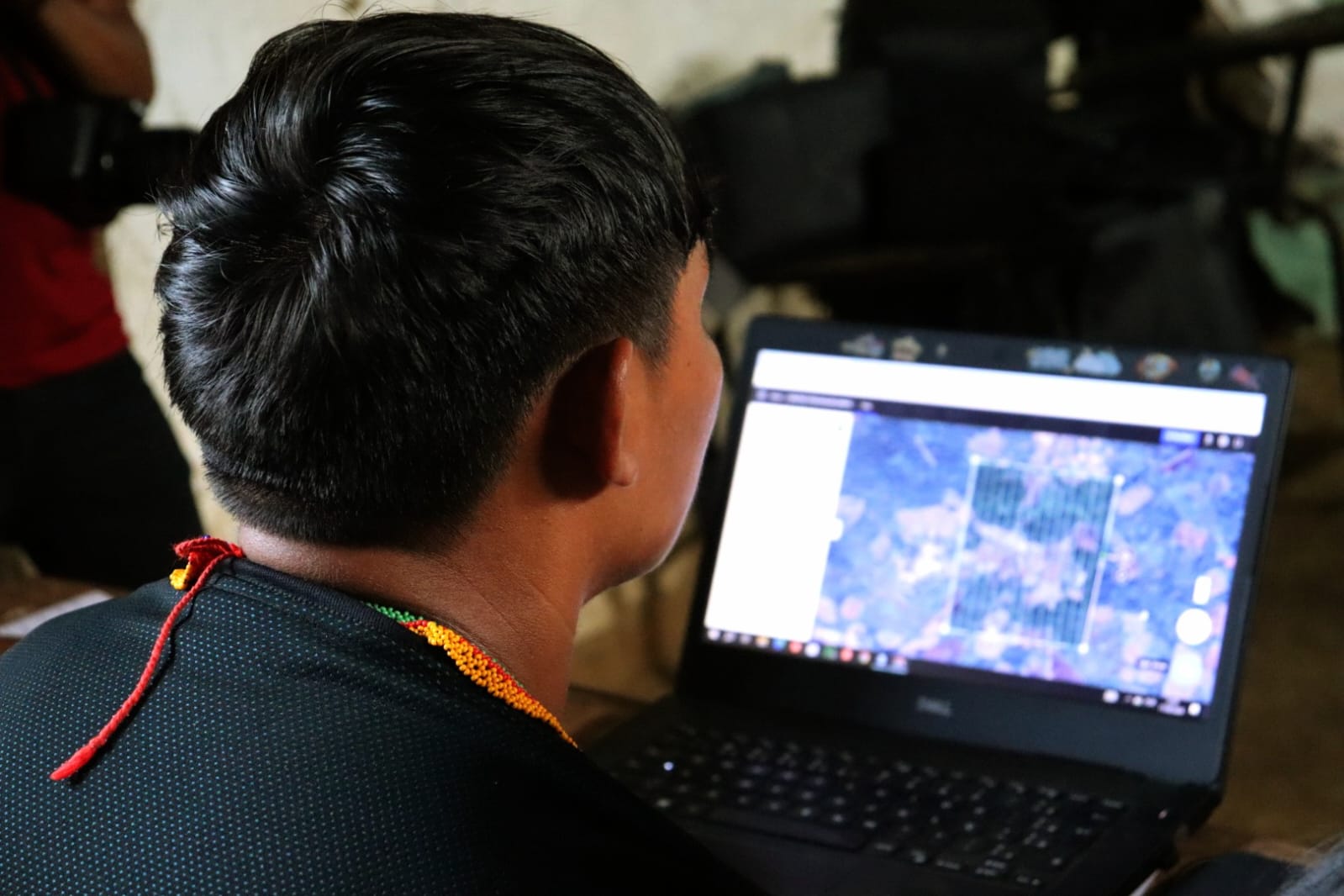
Despite these concerns, AI is already being integrated into conservation programs around the world. Researchers say AI tools are helping identify causes of deforestation in the Congo Basin and Indonesia, while also tracking the spread of illegal gold mining in the Amazon. In Brazil's Yanomami Indigenous Territory, young community members now monitor their lands using drones and other technologies amid ongoing environmental crises from illegal mining.
The study's authors said incorporating Indigenous knowledge could also reduce bias in AI models. Rather than relying solely on Western scientific data, AI systems could better reflect the complex relationships between species, their environments, animal behavior, and habitat use.
The governance mechanisms proposed in the study remain theoretical, the authors noted, and must be validated, critiqued, and refined by Indigenous communities themselves before becoming reality.
For Horseherder, the core principle is clear: Indigenous knowledge is not data to be harvested. It is a living practice built over thousands of years by people deeply connected to specific landscapes—from high-desert plateaus to river valleys to arid plains. Whether AI developers are ready to learn from that kind of wisdom remains an open question.