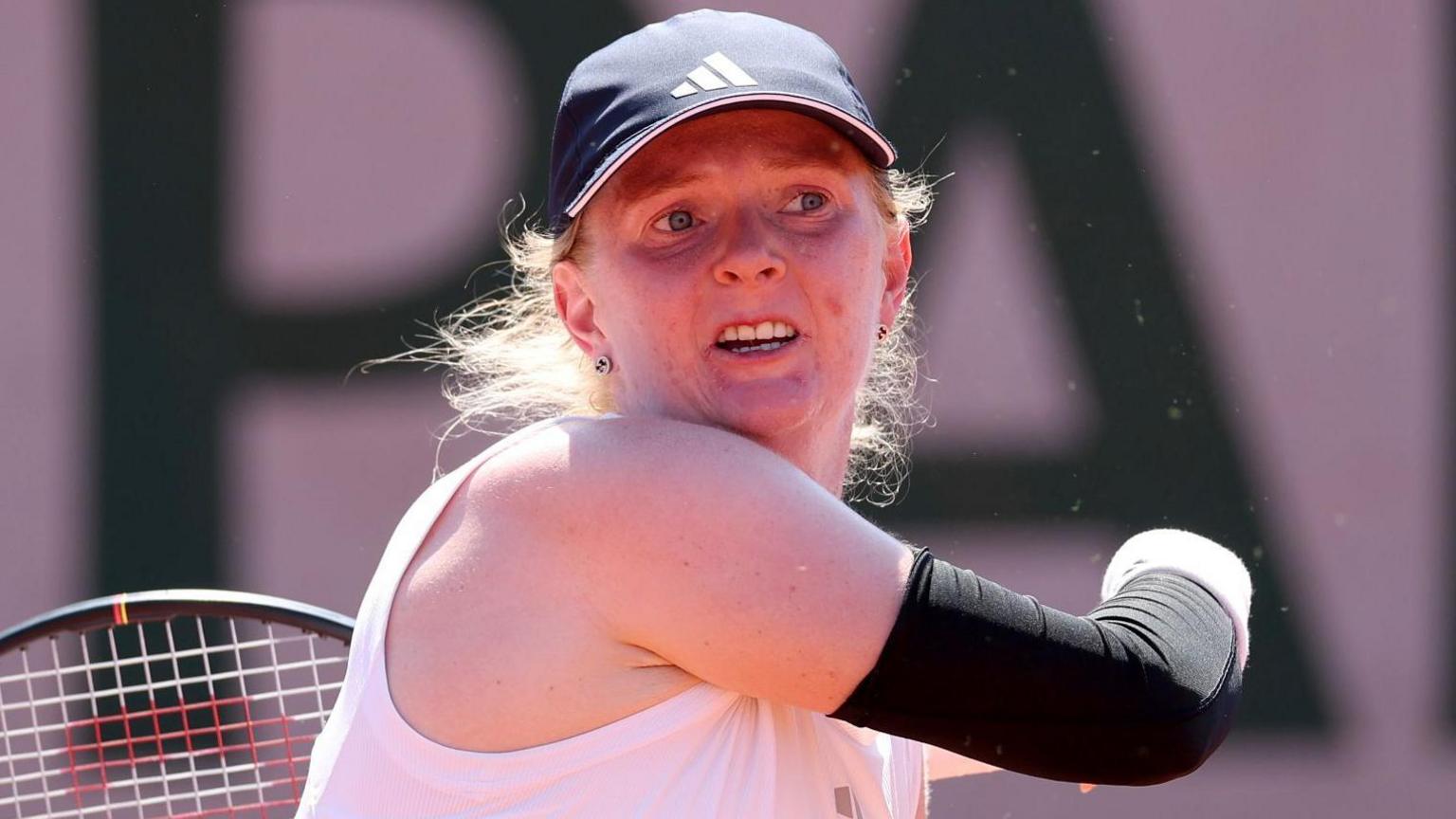
Francesca Jones walked onto a Paris clay court on Sunday carrying seven years of Grand Slam disappointment—and left it with the breakthrough she'd been chasing since her debut at tennis's largest stages. The British number four claimed her first-ever Grand Slam first-round victory in her seventh attempt across the four majors, defeating former top-10 player Haddad Maia in a moment she described as arriving after "arguably the hardest moment of my career."
The path to this win had been carved through genuine hardship. Just as Jones was rebuilding her fitness following a torn hip muscle that ended her Australian Open campaign in January, a freak gym accident upended her progress entirely. While using a leg-press machine, the locking mechanism failed catastrophically, and a 45-kilogram weight crashed directly onto her head and knee. The aftermath wasn't a simple recovery—she battled lingering concussion symptoms that stretched across months, testing not just her body but her resolve to return to elite competition.
Standing in the Roland Garros arena on Sunday, Jones proved that resilience pays. Her victory wasn't merely statistical; it was psychological. She'd endured setbacks that might have retired lesser athletes, yet she returned to the sport's grandest stages and delivered a result that had eluded her across seven prior major first-round appearances. The win felt different—it felt earned through sheer force of will.
What makes Jones's achievement particularly resonant is her clear-eyed perspective on what comes next. She's already looking toward the grass court season and Wimbledon's main draw, a stage where she's yet to secure a victory. Rather than pretend her recent success erases the injury setbacks, she acknowledged the gap in her current form compared to last year, when she was building wins on grass with greater consistency. But her confidence isn't rooted in false optimism; it's grounded in something harder to measure: mental fortitude.
"I do trust my mentality," Jones said, "so hopefully I'll put myself in the position over the grass as well to keep winning matches." This isn't the swagger of someone who's suddenly become invincible. It's the conviction of an athlete who has stared down true adversity—a catastrophic equipment failure, a serious concussion, and years of Grand Slam heartbreak—and found the strength to keep competing. That distinction matters, because it's what makes her Wimbledon goal feel achievable rather than aspirational.
Jones's Paris victory also marks a significant moment for British tennis at Roland Garros. With her progress, she became the last remaining British player in the singles competition—a responsibility she'll carry into the next rounds. The weight of that mantle, however, seems likely to sit lighter on her shoulders now. She's already proven she belongs among the sport's elite stages. The only question remaining is how far her renewed confidence and tested character can carry her through grass season and beyond.
For an athlete who survived a 45-kilogram weight to the head and returned to defeat a former top-10 opponent, Wimbledon suddenly looks a lot more within reach.