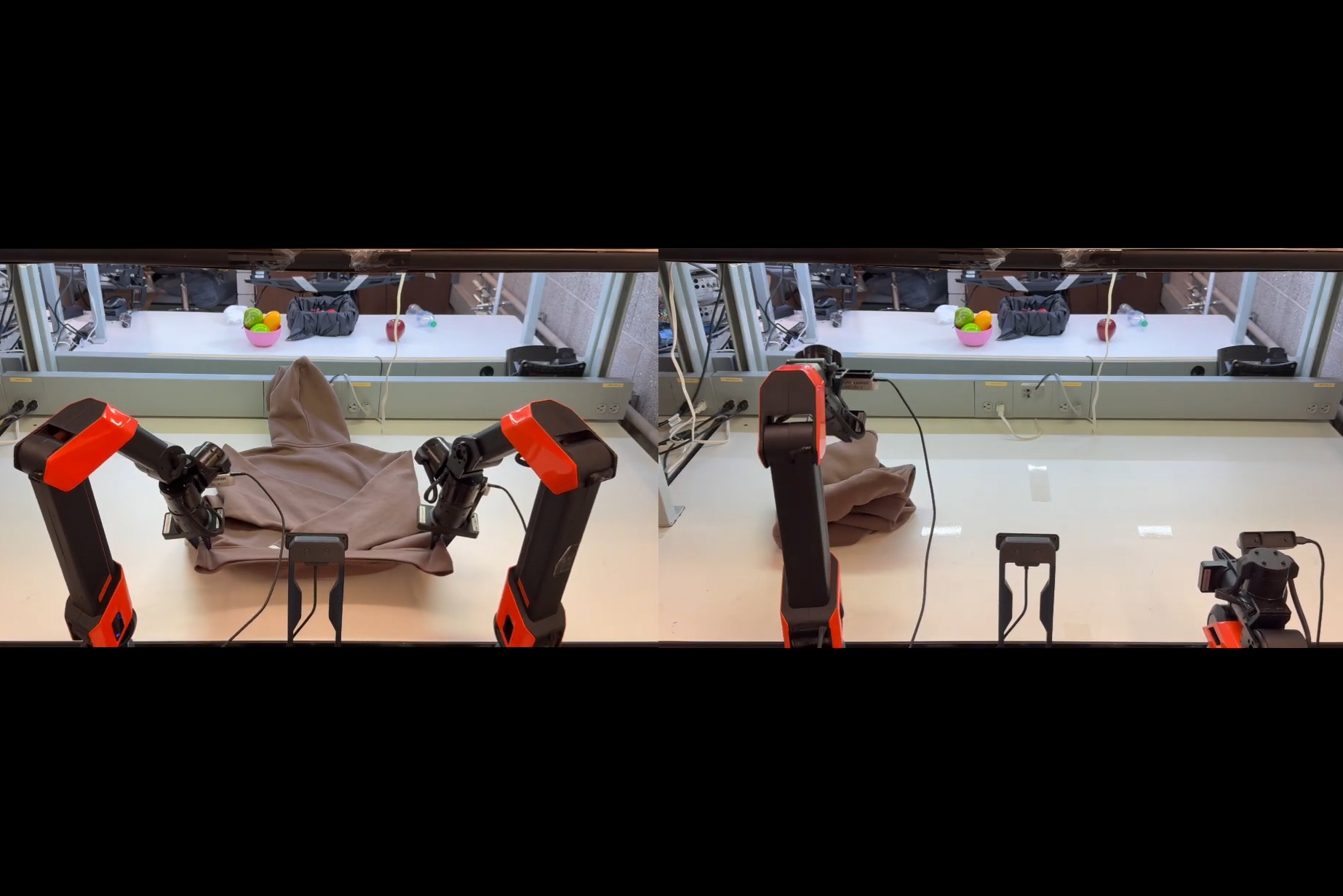
Imagine a robot that can think about its next move while it's still finishing the one it's on. That's exactly what researchers at MIT have created — and it's making robots twice as fast at everyday tasks.
The new system, called VLASH, helps robots plan ahead instead of freezing mid-action like a student who forgot their lines in a school play. Most robots today must stop what they're doing to figure out what comes next, which makes their movements slow and jerky. VLASH fixes this by letting a robot predict where it will be in a few seconds and start planning its next move while it's still working on the current one.
"Our motivation was to overlap the thinking process with the execution process to make the reaction speed faster," said Jiaming Tang, a MIT graduate student who co-led the research.
The method works by having the robot's artificial intelligence brain forecast its future position. Even though the robot can't see exactly what the room will look like later, it knows where it is right now and how it will move to complete its current task. VLASH uses that information to estimate where the robot will be and what the environment will look like, then starts planning the next steps before the current ones are finished.
The results were striking. In experiments, VLASH doubled how quickly robots could complete pick-and-place tasks — the kind of repetitive actions robots do in warehouses and factories. The system also helped robotic arms react more than 30 times faster when playing table tennis and Whack-a-Mole, tasks that require quick reflexes and constant adjustment.
Lead researcher Song Han, an associate professor at MIT's Department of Electrical Engineering and Computer Science, said the work could change how robots operate in the real world. "This work sets up a good foundation for efficient, fast, accelerated, and low-cost robotics applications," Han said. The team is now looking at combining VLASH with the latest AI models to make robots even more responsive.
One key advantage is that VLASH doesn't require any extra computing power. The researchers achieved the speed boost partly through a technique called action quantization, which groups multiple small movements into larger chunks. This makes robots faster overall, even though each individual step covers more ground.
The technology could be especially useful for robots working in unpredictable environments — think search-and-rescue missions after an earthquake or fires where humans can't go. Faster reactions would also help robots recover from mistakes, like when a robot picks up the wrong object and needs to course-correct quickly.
The research was conducted in collaboration with scientists from Nvidia, UC Berkeley, UC San Diego, and Caltech, and will be presented at the Intelligent Robots and Systems Conference. For Tang, the goal is simple: make robots think less like machines and more like humans who can multitask. "We look forward to expanding our work into the latest world action models, so it has even stronger capabilities as we keep pushing to make physical AI faster," he said.