White storks circle above the rooftops of a Polish city, their nests perched on chimneys and power poles, a familiar sight that suggests harmony between birds and urban life. But beneath the surface, these storks are stressed. A new wave of research reveals that even species thought to thrive in cities carry hidden burdens, their bodies responding to noise, light, and human activity in ways that could threaten their survival. The findings come from a groundbreaking collection of studies published in Frontiers in Ecology and Evolution, edited by Rusty Gonser of Indiana State University, and Ryan Jensen and Steven Petersen of Brigham Young University. This second volume in a series on urban animal ecology shifts the focus from simply observing wildlife in cities to understanding how the layout of streets, parks, buildings, and lights shapes animal life down to the cellular level.
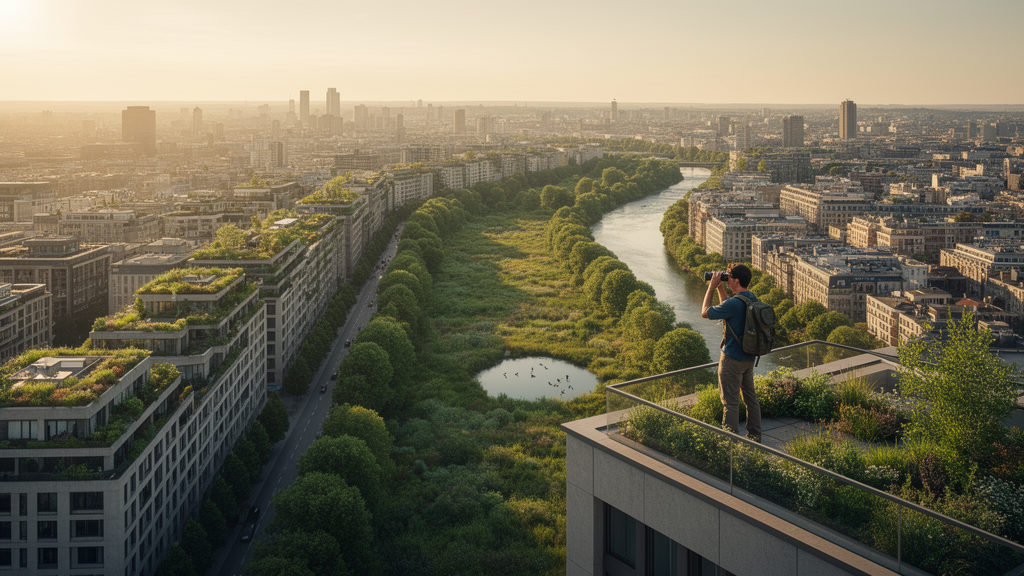
For decades, cities were seen as ecological wastelands, too broken and noisy for nature to flourish. But this research shows that urban landscapes are not just backyards for wildlife—they are complex, fragmented habitats where survival depends on spatial design. The way green spaces are arranged, where water is available, and how light and sound spread through neighborhoods all influence whether animals can move, feed, and reproduce. One study on white storks found that those nesting in urban areas had elevated stress hormone levels, proving that even so-called urban adapters pay a physiological price for city living. This challenges the idea that some animals simply "get used to" humans—instead, their tolerance has limits.
The research emphasizes that conservation in cities must be precise. A green corridor on a map might look like a safe passage for animals, but if it’s flooded with light at night or cut by busy roads, it may be unusable in practice. The same goes for ponds or nesting sites that are technically present but functionally out of reach. The editors argue that urban planners should treat ecological data as essential, not optional—knowing where animals go and why is as important as knowing where to build schools or sewers.
With cities expanding faster than ever, the timing is critical. A city that changes in ten years creates different pressures than one that evolves over a century, and animals respond at their own pace. Some, like bats or amphibians, are highly sensitive to small changes in their surroundings. Others, like bears in suburban edges, may wander into conflict zones when food sources shift. The studies call for smarter design—reducing artificial light, managing food waste, and creating truly connected green spaces—to prevent these conflicts before they happen.
The message is clear: cities can be places of coexistence, but only if we design them with nature’s needs in mind. The tools are within reach. The next step is to use them.