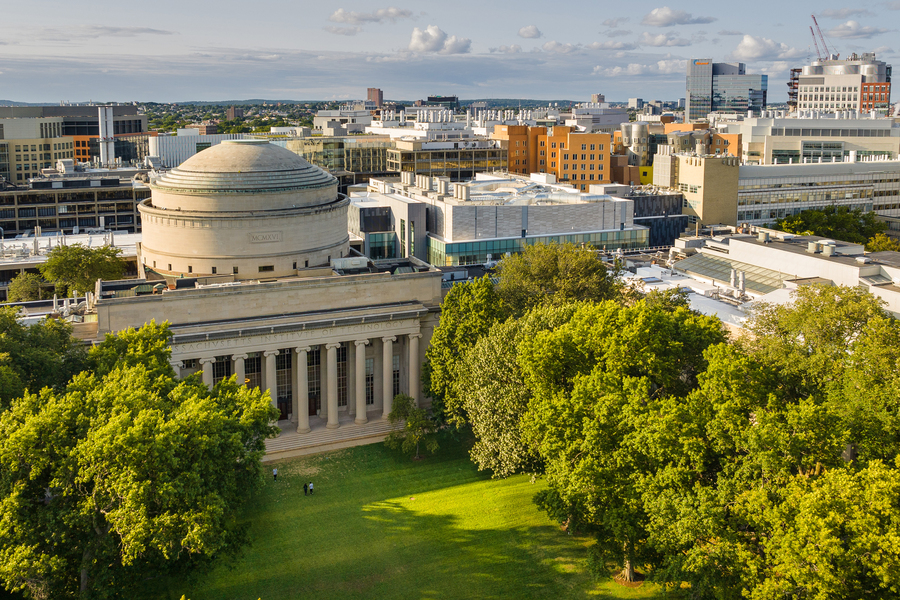
Governor Maura Healey and MIT President Sally Kornbluth stood together on May 28 to announce something Massachusetts has been quietly building toward for years: a quantum leap forward. The Quantum Systems Laboratory opening at MIT's Cambridge campus will be the first facility in the world to combine state-of-the-art quantum computers with quantum sensors and quantum interconnects—the physical channels that transfer quantum information—all under one roof.
This matters because quantum technologies promise to revolutionize fields from computing and security to health sciences and space exploration. Yet the competitive advantage in quantum innovation will belong to the regions that build the infrastructure first. Massachusetts, home to the world's greatest concentration of quantum talent, risks falling behind unless it invests now. A $25 million commitment from the Commonwealth, matched against existing federal funding for quantum research at MIT, answers that challenge directly.
The lab, located in Building 39 on MIT's campus, isn't just a showpiece. It's designed as a shared-use facility, meaning researchers from across the region—not just MIT—will have hands-on access to quantum hardware and experimental capabilities that would be prohibitively expensive for individual institutions to build alone. Quantum research demands extraordinarily controlled environments because it involves studying coherent phenomena in systems isolated from the broader universe. MIT has already begun upgrading the physical infrastructure in Building 39 to meet these demands. The state's investment will accelerate that transformation, allowing construction to begin this summer.
"This facility will serve those at the edges of our wildest imaginations in physics and quantum computing," Kornbluth said in announcing the lab. "But it will also equip the talent in our region—and ultimately, our nation—to push our knowledge to new limits, and new innovations." The language matters: MIT isn't building this for itself alone, but for a regional ecosystem of startups, defense contractors, life sciences companies, and research institutions.
That ecosystem already exists. Greater Boston's quantum sector includes dozens of startups and established companies working on practical applications. Life sciences and defense technologies alone contribute $50 billion annually to the Massachusetts economy. A shared quantum computing facility removes a major barrier to entry for smaller companies and younger researchers who want to develop quantum applications but can't afford their own hardware. During a time of economic uncertainty and labor market anxiety, the lab promises something concrete: new jobs in research institutions, startups, and defense contractors.
MIT's own commitment, combined with philanthropic support from Thomas Tull, rounds out the funding picture. The Commonwealth's $25 million is the catalyst—the signal that Massachusetts intends to lead the coming era of quantum technologies, not follow it.
Anantha Chandrakasan, MIT's provost, framed the lab as an equalizer. "Our region has unparalleled strengths in science-intensive innovations and tough tech breakthroughs that combine engineering, science, and computing," he said. "With the new Quantum Systems Laboratory, we aim to arm Massachusetts with the compute power and integrated platforms needed to lead the coming era of quantum technologies." The emphasis on "arm" is telling: this is infrastructure as competitive advantage, a deliberate choice to democratize access to tools that have historically belonged only to the largest players.
Construction begins this summer. The quantum leap forward starts with concrete, steel, and the will to keep Massachusetts at the frontier of the world's next transformative technology.