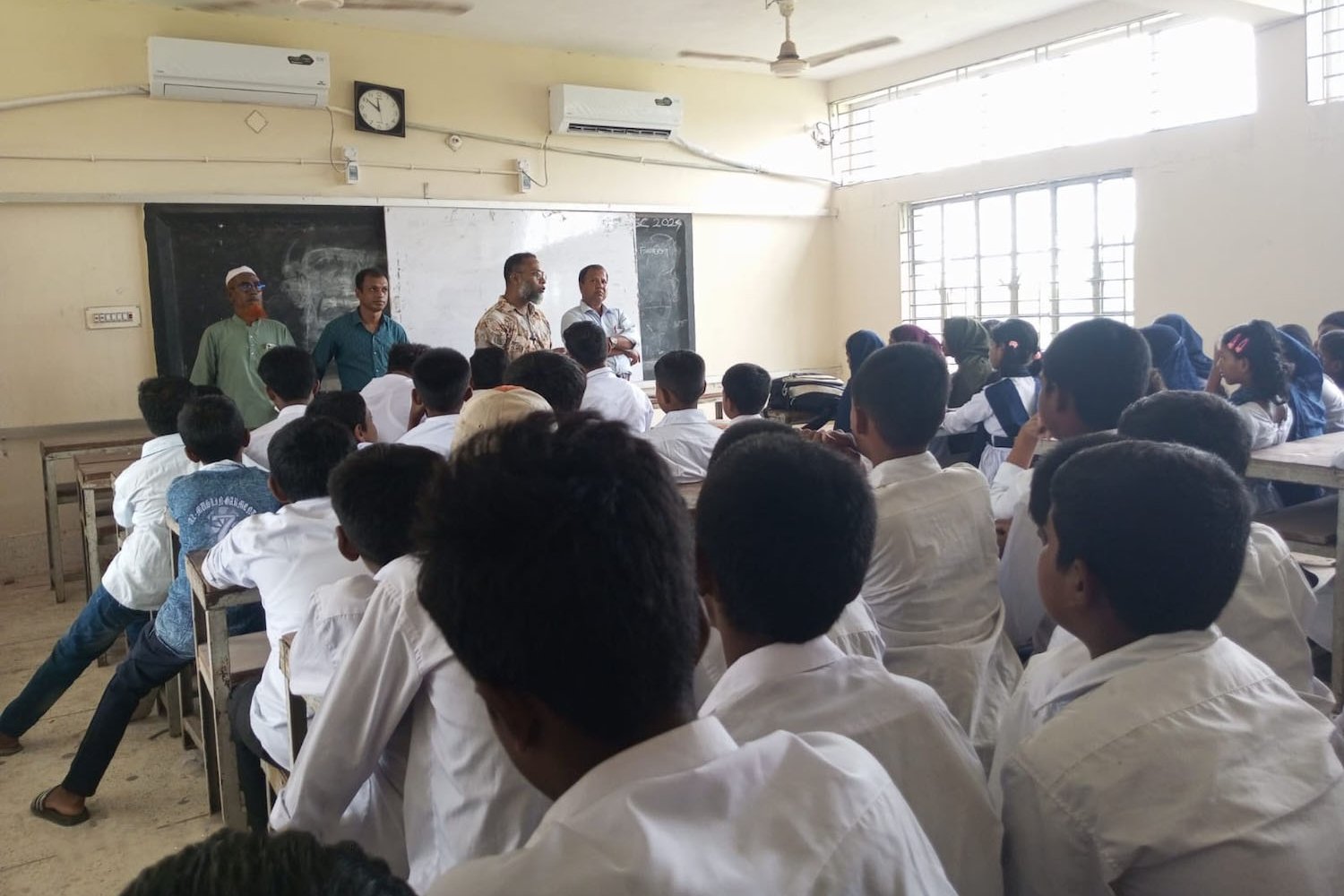
When the temperature climbs to 44 degrees Celsius in southwestern Bangladesh, hiding under a tree or near a pond no longer keeps people safe. For the 30 million residents in this region, extreme heat and tropical cyclones have become a fact of life. But now, a new kind of refuge is changing that reality.
At the Baradal Aftab Uddin Collegiate School in Satkhira district, researchers from the Massachusetts Institute of Technology and the nonprofit BRAC International have opened the first "adaptation fortress" — a solar-powered shelter designed to protect communities from both scorching heatwaves and violent storms. The project, called Jameel Observatory-CREWSnet, began in 2022 led by Elfatih Eltahir, a professor of hydrology and climate at MIT, along with researchers John Aldridge and Deborah Campbell from MIT Lincoln Laboratory. Their goal was simple but ambitious: bridge the gap between what climate science predicts and what communities can actually do about it.
During government-declared heat emergencies, the fortress can cool up to 200 people in four air-conditioned rooms with clean drinking water. When cyclones strike, it has space for 500 people in additional rooms. The building generates its own power through rooftop solar panels, with batteries that keep it running even when the electrical grid fails. Rainwater collection addresses the region's severe groundwater salinity problem, and a smart meter actually lets the shelter sell extra electricity back to the national grid — creating money for repairs and upkeep.
"Our models project more intense heatwaves for this region, and now residents of Satkhira have a place built to withstand them," Eltahir said.
The fortress was designed with the local school committee and BRAC, formalized through a signed agreement to ensure it stays open for generations. A user guide in Bangla empowers community members to manage operations themselves. Remote sensors will track temperature, humidity, and power use to prove the concept works so similar shelters can be built elsewhere.
For a region facing both record-breaking heat and cyclones in a compounding cycle, the fortress marks a shift: from waiting for disasters to arrive to building permanent protection against them.