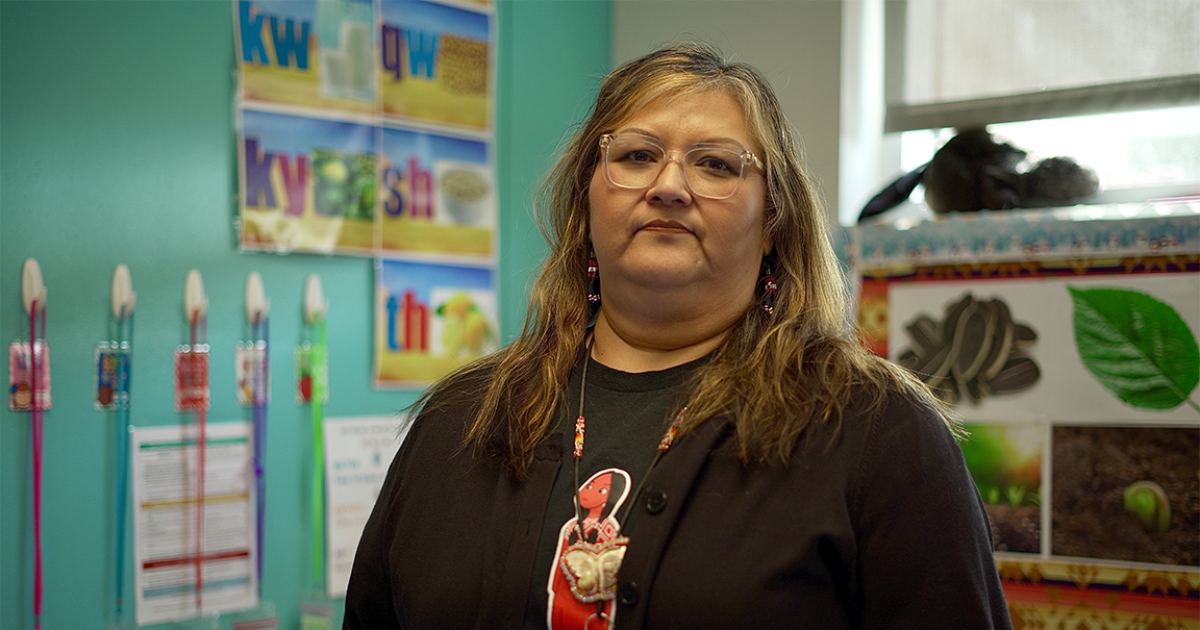
In 1996, Jeanette Allen counted 76 fluent speakers of Northern Paiute on the Pyramid Lake Paiute reservation; only one was younger than 50. Today, she estimates that fewer than 10 elders can still speak the language fluently.
“We’re at a critical point right now with the language,” says Allen, a member of the Pyramid Lake Paiute Tribe. The work to teach Paiute and Mojave in Nevada is about more than words: Native languages carry culture and identity, and communities are building ways for children and elders to learn from one another.
The decline has deep roots. Native children were taken from their families and sent to government-funded boarding schools meant to force them to adopt Anglo-American ways. Nevada’s Stewart Indian School closed in 1980. Children at these schools were often forbidden from speaking their languages, and abuse and death were common. Many survivors chose not to pass traditional practices on to their children, hoping to spare them similar harm. The effects reached families across Nevada’s Paiute, Shoshone and Washoe communities, says Josh Bonde, a member of the Te-Moak Tribe of Western Shoshone.
Allen remembers how language survived in her own family. Her grandmother attended boarding school but kept speaking Shoshone and raised her children in the language. When they returned from school, she says, they could pick it up again at home. Other families did not have that chance. Linguists estimate that more than 300 Native languages were once spoken in what is now the United States; about 175 have been preserved and are still spoken. Nevada once had at least six dialects.
At Pyramid Lake, the tribe offers language classes for young people and elders. Allen has filled in for a group of about a dozen elders who meet in an office building in the morning. They begin with a prayer in Northern Paiute, practice introductions and learn the names of important animals in the tribe’s life.
Farther south, the Fort Mojave Indian Tribe is also teaching elders and children. Its Anya itpak Elementary School, which opened in 2019, includes Mojave language in its curriculum, with a dedicated part of the day for students to speak it. The program grew from a tribal council discussion that began about a decade ago, when leaders saw how close the language was to disappearing. Teachers and community members recorded and learned from elders who still spoke Mojave, also known as Hamakhav.
April Barrackman, the school’s lead language teacher, grew up understanding Mojave but not speaking it. Now she hears students use it naturally. Some go home singing or speaking words their parents do not understand, and families ask the school what the children are saying. That gap between generations is a challenge, but it also shows that young speakers are carrying the language beyond the classroom.
Across Nevada, tribal classes and school programs are creating places for languages to be heard again in daily life. The work depends on elders’ knowledge and on children who can take those words home. For Allen, the stakes are clear: “It’s our culture. It’s who we are. We’re the Cui-ui Ticutta people. And if we don’t have the language, how do we identify ourselves?”