There is a mountain in Greece so tall that ancient Greeks believed their gods lived on its peak. This week, Mount Olympus officially joined the ranks of the world's most treasured places. UNESCO, the United Nations body that protects the planet's cultural and natural wonders, added the legendary mountain to its World Heritage List on Tuesday. It was one of 25 new sites announced during a meeting of the World Heritage Committee in Busan, South Korea.
The recognition for Mount Olympus goes beyond mythology. At nearly 2,918 meters, it is Greece's highest peak. UNESCO pointed out that the mountain's dramatic rise from sea level creates surprising variety in its landscape. Climates change quickly as you climb, and the vegetation shifts dramatically across different elevations. Hikers who explore its slopes will find striking limestone cliffs, bowl-shaped valleys carved by ancient glaciers, and unusual sinkholes formed by dissolving rock.
Mount Olympus was also home to Zeus and the gods of ancient Greek civilization, making it a powerful symbol of Greek culture that has endured for thousands of years.
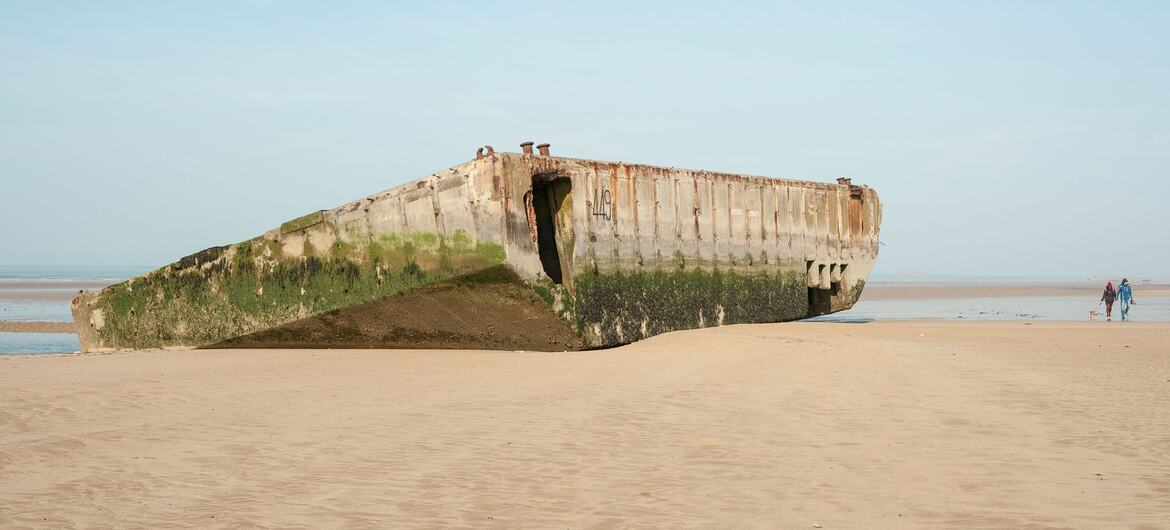
But Greece was not the only nation celebrating. France's D-Day beaches earned a place on the list too. These are the five stretches of coastline where Allied soldiers stormed ashore on June 6, 1944 — the largest military operation in history. An additional site called Point du Hoc was included. Altogether, they stretch across roughly 80 kilometers of the Normandy coast. From these beaches, hundreds of thousands of American, British, and Canadian troops launched the mission that would liberate Western Europe from Nazi occupation.
UNESCO noted that the beaches preserve remarkable evidence of that pivotal moment: remnants of the German defensive wall, original wartime equipment, and battlefield scars still visible in the landscape. The American Cemetery at Colleville-sur-Mer, with its rows of white crosses overlooking the sea, serves as a place of remembrance for the fallen. The designation honors both the historic events and the memory of those who fought there.
Also newly inscribed were two grand theaters in Brazil's Amazon region. The Theatro da Paz in Belém and the Teatro Amazonas in Manaus were built during a period of rubber boom prosperity between 1879 and 1912. Both buildings blend French European design with Amazonian art and motifs. The Theatro da Paz opened in 1878, while the Teatro Amazonas — famous for its distinctive dome — welcomed its first audience in 1896.
This year's additions marked a milestone for Africa. Three nations on the continent received their very first World Heritage Sites: Comoros, São Tomé and Príncipe, and South Sudan. It brings the total number of protected sites on the list to more than 1,200 locations worldwide.
The World Heritage List exists to protect places that belong to all of humanity. Once inscribed, sites receive international support for conservation and are recognized as vital parts of our shared human story.