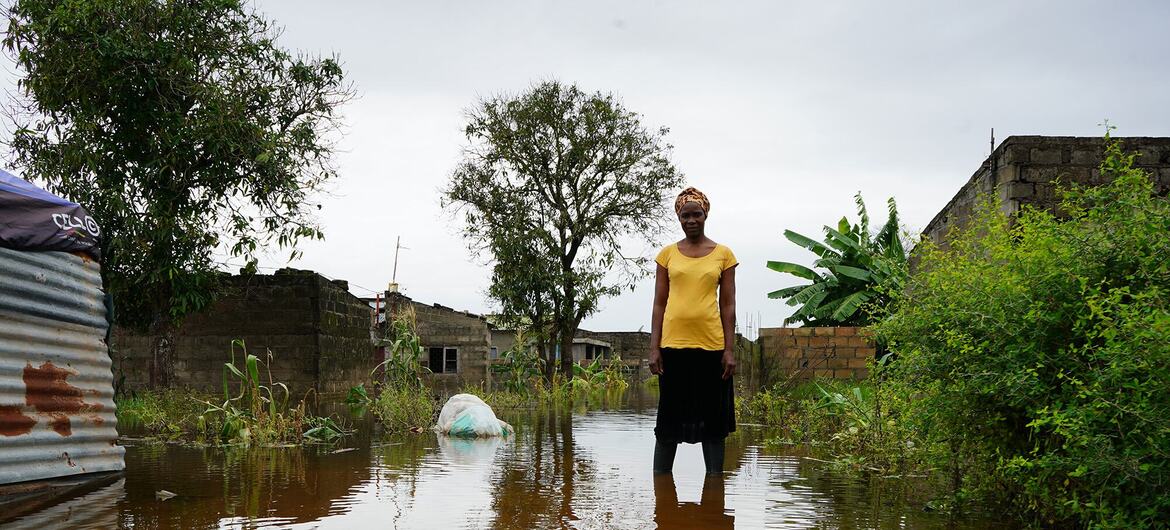
A forecast can give communities days—or sometimes weeks—to prepare for a flood, storm or heatwave, but only if money is ready when the warning arrives. At the COP31 climate summit in Antalya, Türkiye, six United Nations agencies launched a platform intended to help close that gap by securing more than $3 billion in risk financing by 2030.
The UN Disaster Risk Financing Platform aims to protect 75 million people and their livelihoods from climate shocks and other natural hazards. Its launch comes as disasters become easier to predict, while funding to act before they hit remains slow and scattered. “Disasters are increasingly predictable, yet the financing needed to act ahead of them remains slow and fragmented,” said Lisa Doughten, director of financing and outreach at the UN Office for the Coordination of Humanitarian Affairs, known as OCHA.
The platform brings together the Food and Agriculture Organization, the International Organization for Migration, OCHA, the UN Children’s Fund, the UN refugee agency and the World Food Programme. The agencies plan to share expertise, pool data and coordinate solutions that connect forecasts with money for early action. They also want to make disaster funding more predictable, increase the funds available during major crises and get more impact from each dollar by combining existing resources with private-sector support.
Insurance is already part of the effort. With help from specialist insurance teams at the World Food Programme, OCHA and UNICEF have put policies in place to support their early-action programmes. Gernot Laganda, UNICEF’s global practice director for climate and environment, said forecasts can provide time to act before children are put at risk. Insurance, he added, can ensure funds are available even in a year when several disasters strike.
The need is clear: pre-arranged financing accounts for less than 2 per cent of global humanitarian funding. The World Food Programme, the UN’s largest user of this kind of financing, has helped secure nearly $211 million in pre-arranged funds this year. That money is intended to protect up to 9.6 million people in more than 50 countries.
Early funding can also matter for people forced to flee. Antón Leis García, UNHCR’s assistant high commissioner for operations, said acting ahead of climate shocks can save lives, protect livelihoods and help prevent further displacement among refugees already on the front lines of the climate crisis.
The platform’s success will depend on turning shared forecasts into funds that can be used quickly, while keeping costs down as financing grows. Its launch sets a common goal for the six agencies: make it easier to prepare before hazards become emergencies, and help more people receive support in time to protect what they rely on.