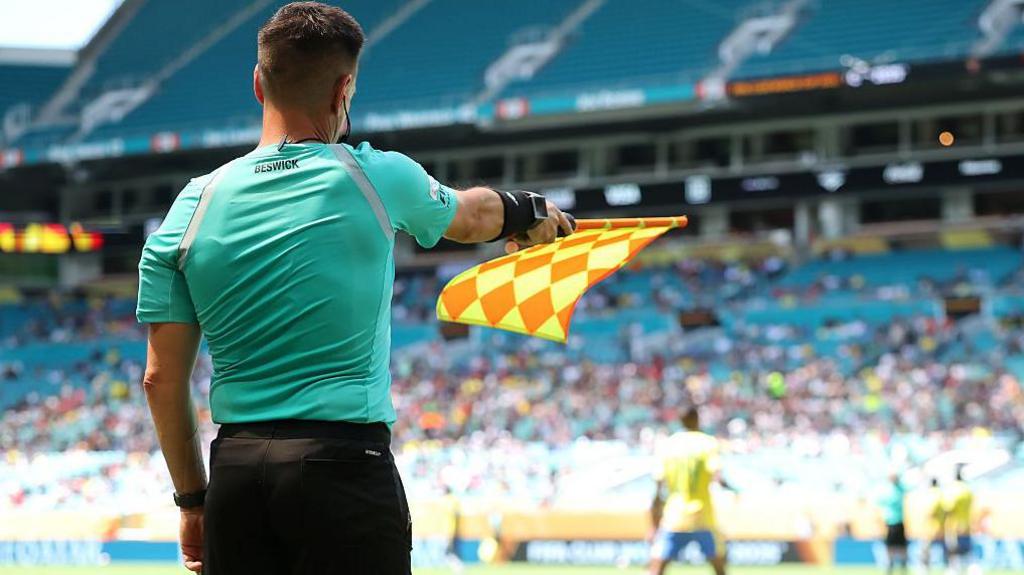
Taiwo Awoniyi's collision with a goalpost in May 2025 captured something that has frustrated football for years: the frozen moment between a potential offside and the official's whistle, when the game keeps flowing and danger accumulates. The Nottingham Forest striker had to be placed in an induced coma after the delayed flag—a consequence so stark it seemed to demand change. FIFA has answered with a sweeping technological overhaul arriving at the 2026 World Cup, one that could reshape how the sport's most contentious moment unfolds in real time.
The new semi-automated offside system represents a significant leap forward from previous iterations. Rather than waiting for play to conclude before checking, video assistant referees will now receive real-time audio alerts whenever a player is more than 10 centimetres offside. This is a dramatic tightening of the threshold: earlier versions tested at the Club World Cup and Intercontinental Cup only triggered alerts at 50 centimetres. The speed matters. An assistant referee can now raise the flag promptly, allowing play to stop before unnecessary contact occurs, reducing both frustration and the kind of injury that befell Awoniyi.
The system preserves human judgment at its centre. Officials retain full authority over when to raise the flag and stop play, and they can keep the flag lowered if they suspect a malfunction has occurred. FIFA has built in multiple failsafe measures to prevent errors, though the technology does have genuine limitations. It cannot detect the closest offsides, and struggles when players are on the ground or clustered closely together. Nor can it handle subjective calls—those intricate decisions about whether a player has interfered with an opponent without touching the ball. Semi-automated means exactly that: a tool that amplifies human decision-making rather than replacing it.
Equally ambitious is FIFA's commitment to creating AI-enabled 3D avatars of every player in the tournament. All 1,248 players across the 48 teams' 26-man squads will undergo a one-second digital scan during their pre-tournament photo shoot—a simple process conducted in a chamber that happens once and captures their exact physical form. These avatars will enable far more precise offside lines and clearer, more lifelike animations when broadcasters show the controversial moments to millions of viewers worldwide. The clarity matters not just for the broadcasters and the fans at home, but for the broader credibility of the decision.
The driving motivation is transparent: FIFA wants to ease the frustration felt by supporters and players while safeguarding player welfare. Delays that serve no purpose except ritual have always carried risk, and Awoniyi's story crystallized that risk in human terms. The technology won't eliminate controversy entirely—close calls will always live in the grey zone—but it should compress the liminal space where danger lurks.
By the time Qatar's successor hosts the 2026 tournament across North America, the old sight of an assistant referee holding back the flag while play cascades forward may become genuinely rare. The delayed flag may not vanish entirely, but it is being designed into obsolescence, replaced by a system built around the premise that football works better when decisions move at the speed of play.