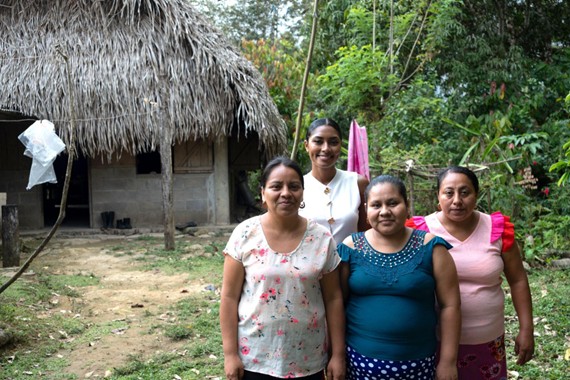
In the southern corner of Belize, a small fashion brand is stitching together tradition and opportunity, one thread at a time. In Toledo District, an area known for its lush rainforests and tight-knit Maya communities, the European Union has been partnering with SATIIM, a local indigenous organization, to support a fashion brand called Xe'il. The brand is helping Maya women preserve their ancient embroidery skills while building real, sustainable income for their families.
At the heart of Xe'il is the ancient art of xok'bil chuuy—intricate counted-stitch embroidery that comes from Mopan Maya tradition. Each pattern woven into the fabric carries meaning, telling stories passed down through generations.
For Melania Salam, a Mopan Maya woman from Pueblo Viejo now living in San Antonio Village, this embroidery has been part of her life since she was nine years old. "My mom taught me when I was a little girl," she remembers. "During the holidays when school was closed, and we didn't have anything to do at home, she taught us to do embroidery."
Through Xe'il, Melania and dozens of other skilled embroiderers are keeping this centuries-old tradition alive—and finding new markets for their work. Xe'il blends traditional xok'bil chuuy stitches into modern designs: tote bags, shirts, and dresses that carry cultural meaning into contemporary fashion.
The European Union has funded training sessions that help women refine their skills and produce work that is both beautiful and ready to sell. Melania says the training changed everything. "I learned to make my xok'bil chuuy really neat," she explains. "I used to do it before and it would have a lot of white spots, but now it comes out fine, just black yarn."
Lamberta Sho, 42, has been sewing since she was twelve. Now she works from home in San Antonio, balancing daily chores with hours of afternoon embroidery. Since joining Xe'il in 2023, she's found both steady income and a renewed sense of purpose. "I feel proud of myself," she says, encouraging others to get involved. "I tell people they should push themselves; they should take an interest."
The program reaches across cultural lines too. Susana Pop, a young Kekchi Maya mother, grew up making pillowcases and tortilla cloths—embroidery styles different from xok'bil chuuy. Through Xe'il, she learned a new technique not traditionally practiced in her community, expanding both her skills and her earning potential. Today, she contributes to her household income through her craft.
Another artisan, Incris Marleni, says the training transformed her approach. "It's far different from how we used to sew before," she notes. "There's a difference with the scaling and the gridding." For her, the work means something deeper than money. "It makes me proud to sell embroidery, so I have my little income. And I feel proud of myself that I could afford things on my own."
Xe'il shows what becomes possible when funding meets ancient wisdom. By pairing EU support with local knowledge, Maya women in Toledo District are not just surviving—they're stitching their own futures, one careful stitch at a time.