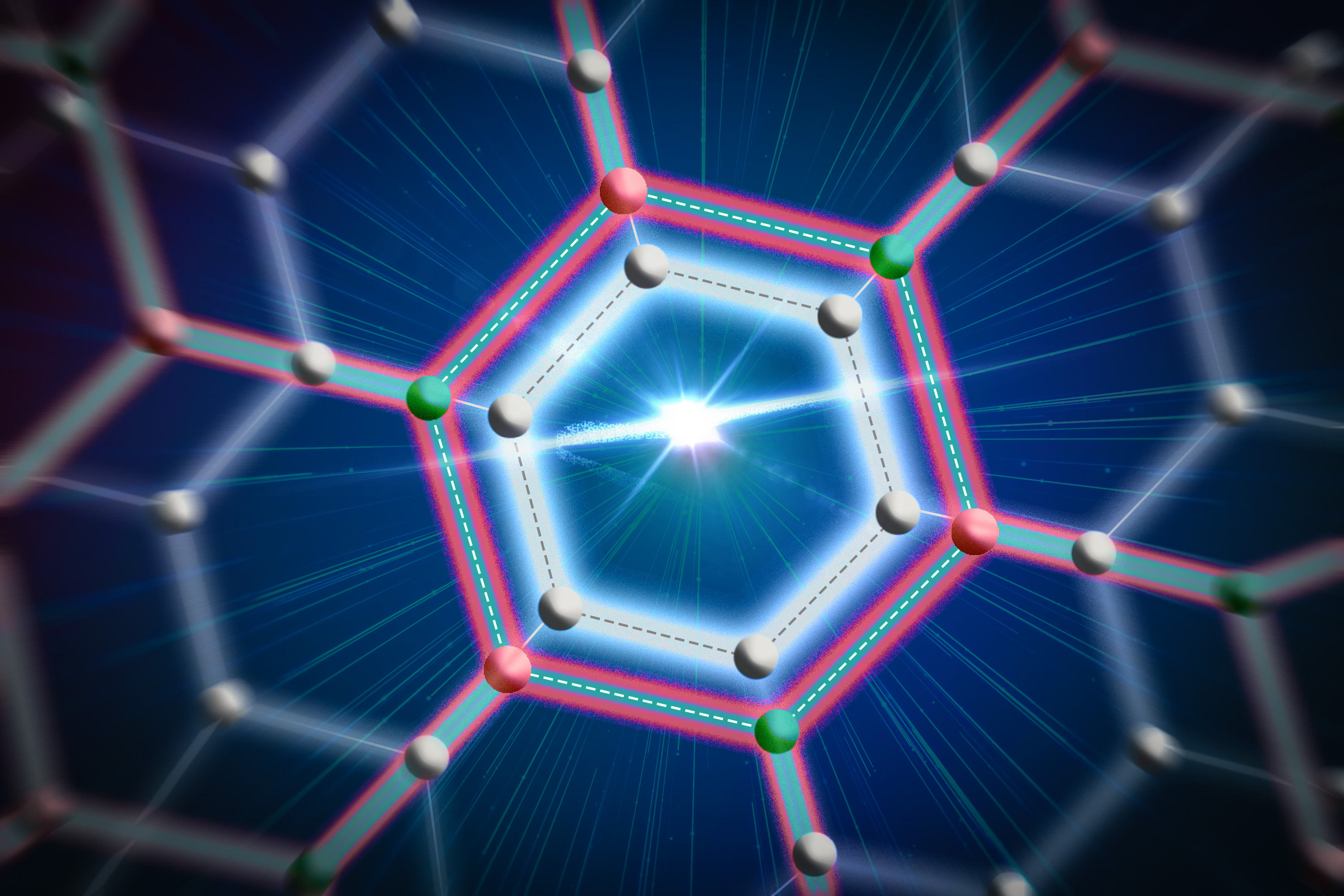
For years, a super-thin material with incredible potential kept scientists stuck. Niobium diselenide — a sheet just a few atoms thick — could shrink quantum devices down to tiny sizes, but it broke the moment it met air. Researchers had to handle it in special glove boxes filled with inert gas, peeling off tiny flakes by hand. There was no way to make it in large amounts. Until now. MIT engineers have figured out how to grow this fragile superconductor in a form that survives the real world, opening a path toward smaller, more powerful quantum computers. The team published their findings in the journal Nature. Superconductors carry electricity with zero resistance, meaning no energy is lost as heat. That makes them essential for quantum computers, which need ultra-precise components to process information. The problem is that the thinnest, most powerful superconductors have always been too delicate for everyday use. Niobium diselenide, made of a single layer of niobium atoms sandwiched between layers of selenium, has a special property called high kinetic inductance, which lets it store lots of energy in a tiny space. Engineers want to use it to replace bulky parts inside quantum circuits, shrinking whole setups down to chip size. But the material starts degrading almost immediately after it is made, long before anyone can protect it. "Typically, once we make the material and remove it from its inert environment, it immediately starts to oxidize and degrade, ultimately becoming damaged," said Xudong Sheldon Zheng, a graduate student at MIT who co-led the research. The MIT team solved the problem with a clever trick. Instead of growing the niobium diselenide first and then adding protection, they flipped the order. They placed a layer of graphene on a silicon dioxide surface, then grew the superconductor in the tiny gap underneath the graphene. The silicon dioxide trapped the chemical building blocks long enough for the crystal to form, while the graphene let those pieces move around freely and spread into a smooth, continuous sheet. "It took a long time for us to understand how the growth could happen underneath the graphene. Through collaboration and discussion, we eventually uncovered the mechanism for growing the material at the interface, and this solves a lot of problems and allows us to simplify our fabrication steps," Zheng said. Using this method, the researchers produced a perfectly smooth layer of niobium diselenide more than an inch across — large enough to be useful at an industrial scale. They integrated it into a superconducting microwave circuit and showed it kept working while also displaying the high kinetic inductance that makes it so valuable for quantum devices. The work involved collaborators from MIT, Lincoln Laboratory, Rice University, Yale University, and Pohang University in South Korea. Lead authors included Sameia Zaman and Kenan Zhang alongside Zheng, with William D. Oliver and Jing Kong serving as senior authors. Looking ahead, the advance could make quantum computing hardware smaller and more practical, and it may also lead to ultra-sensitive detectors for communications or even cosmology research. For a material once confined to lab experiments, this may be the start of a much bigger story.
← News
Science Breakthroughs Science Breakthroughs Knowledge
Researchers make air-stable, ultrathin superconductors, for more scalable quantum devices
1 inches Superconductor size achieved
3 atoms Atoms in material thickness
5 Research institutions involved
High description Kinetic inductance
15+ researchers