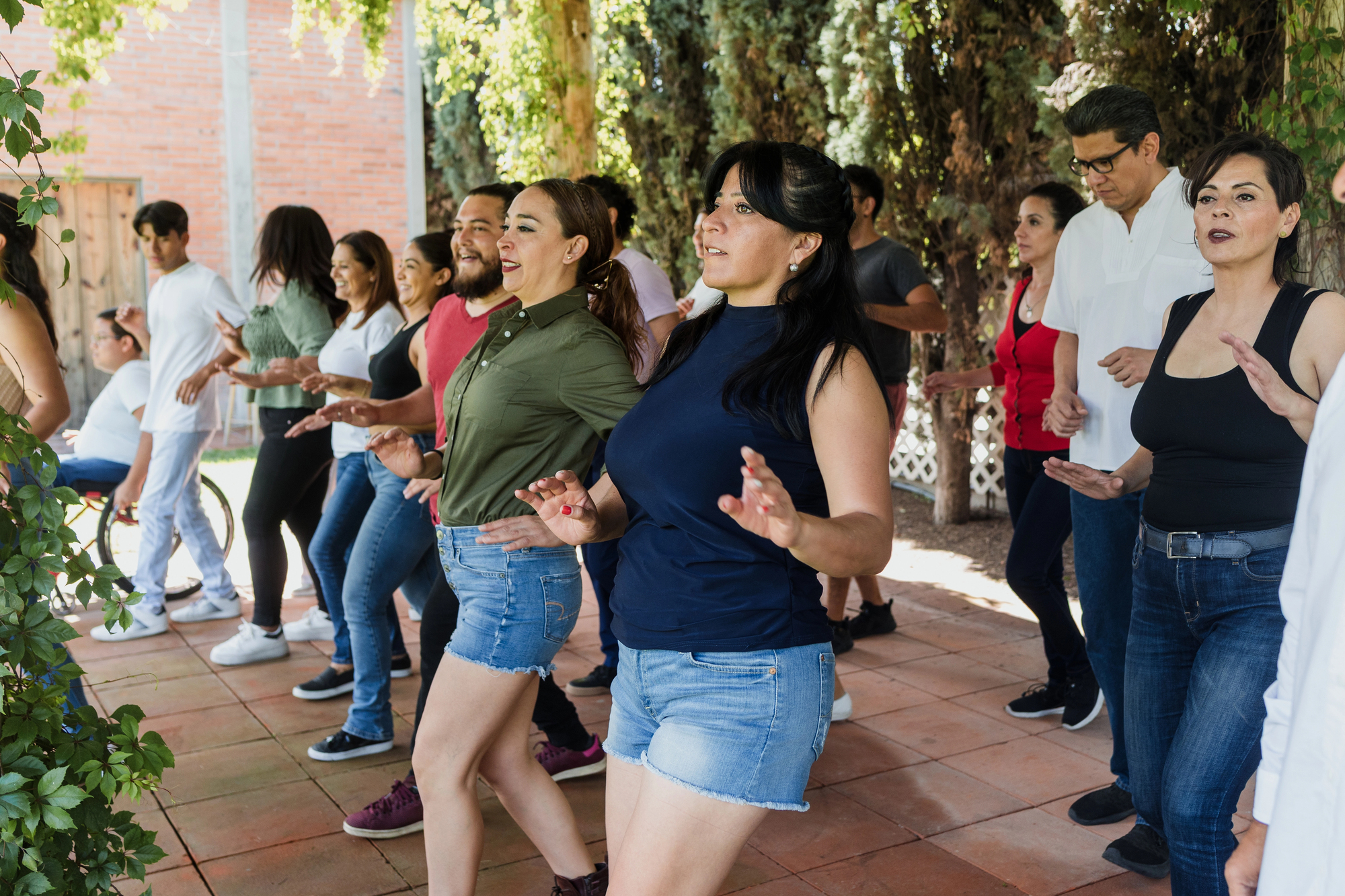
Imagine walking into a community center on a Tuesday evening, not to talk about your feelings, but to learn how to swing your partner round the room. New research from the University of Oxford suggests that eight weeks of salsa dancing might do something that many young people struggling with low mood and social anxiety find hard to achieve on their own: it might help them feel better.
The study enrolled 121 young adults between 18 and 24 years old who were experiencing mild to moderate depression and anxiety. Half attended weekly salsa classes, while the other half did not — they formed the comparison, or "control," group. Researchers from Oxford and Oxford Health NHS Trust measured participants' mental health through questionnaires at the start, during, and at the end of the trial. What they found was striking: those in the salsa group reported lower depression, less social anxiety, and more happiness in their daily lives than those who had not danced.
The lead researcher, Brennan Delattre, was careful not to oversell the results. The findings do not mean salsa should replace formal treatment for diagnosed depression — more clinical trials are needed before doctors could recommend it that strongly. But Delattre had a thoughtful idea about why the format seemed to help.
"As salsa is physical, social, musical, structured, and often playful, it asks people to engage with others, but within a clear framework: steps, patterns, partner rotation, and a predictable class routine," she explained. For someone with social anxiety, unstructured social situations — like just "hanging out" — can feel overwhelming. A dance class gives you something to do with your hands and feet. There are steps to follow. There is music filling the room. You are with other people, but you are not expected to chat over awkward silence. That is a different kind of exposure, one that feels gentler because it is built into a routine.
This is not the first time an unlikely activity has shown up in mental health research. Earlier work found that teenagers on mental health waiting lists who were connected to karate, art classes, book clubs, nature walks, and even Pokémon tournaments showed real improvements in how they handled stress and related to others. Dr. Daniel Hayes, who led that research, called the new salsa findings a welcome contribution to a growing body of evidence that mental health care should not end at the doctor's office. "Helping people take part in enjoyable, social activities in their communities can support mental health," he said.
Dr. Keir Philip of Imperial College London put it most memorably: "Perhaps this study is treating a dance deficiency that we didn't know we have." Fifty years ago, he pointed out, going out to dance would not have been called an intervention — it would simply have been a Saturday night.
For now, the practical takeaway is modest: doctors and social prescribing services could offer accessible dance classes as an optional addition to treatment for younger people who are interested, particularly those who might not connect with more traditional forms of support. The ingredients were simple — a weekly class, a shared routine, music, and other people. For some of the participants in this study, that turned out to be enough.