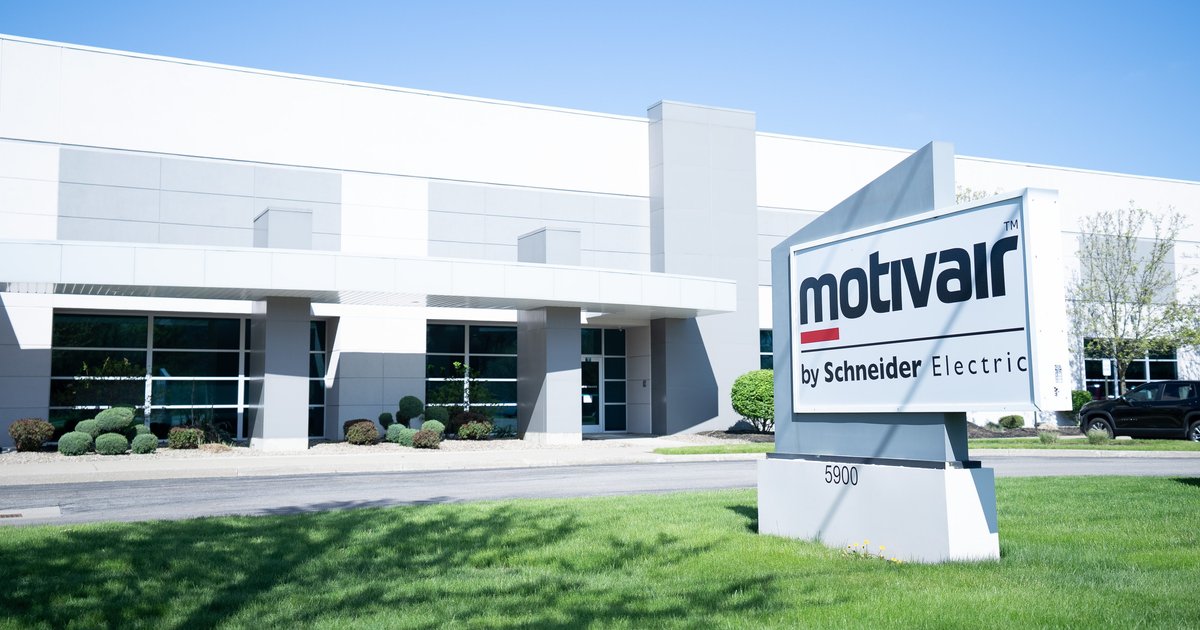
In a packed conference room at Schneider Electric's Buffalo, New York press event, Tuan Hoang, Head of Cooling Technology and Product Development, made a counterintuitive claim to a room full of journalists: "We do not need to consume water to operate data centres." That statement cuts against a growing anxiety about artificial intelligence infrastructure—one that recent investigative reports have amplified by documenting the water footprints of sprawling AI facilities and their strain on water-scarce communities.
But Hoang's point hinges on a crucial distinction. Water consumption for AI data centres isn't inevitable; it's a choice driven by geography, local power availability, and land constraints. The cooling itself—absolutely necessary to manage the intense heat from high-density AI workloads—can happen through closed-loop liquid cooling systems that don't draw from external water supplies at all. "Liquid cooling is required but it's for the load and radiators," Hoang explains. A rack handling 400 kilowatts of AI processing demands liquid cooling as a matter of thermal necessity. Water consumption, by contrast, is optional.
Schneider Electric tested this theory through two case studies comparing air-cooled and liquid-cooled facilities in Dallas, Texas and Paris, France. The results suggest a dramatic shift is possible. In Dallas, transitioning from air cooling to liquid cooling would reduce annual water consumption from 382,000 cubic metres to 197,000 cubic metres—a 48 percent cut. The Paris facility saw an even sharper drop, from 108,000 cubic metres to 51,000 cubic metres, representing a 53 percent reduction. These aren't small margins. For operators racing to deploy AI infrastructure while minimizing environmental impact, they're the difference between sustainability and crisis.
The technology relies on a deceptively simple principle: closed-loop engineering. Schneider Electric's systems use a factory-sealed volume of high-quality cooling fluid formulated and tested in Motivair factories—also part of Schneider Electric. That fluid circulates continuously within the system, radiating heat outward through dedicated hardware like the Uniflair XCA line of air-cooled chillers, which can deliver up to 2.4 megawatts of continuous cooling per unit. No water enters the loop. No fluid evaporates or gets discharged. The same sealed quantity of coolant remains trapped safely within the system for the entire operational life of the data centre, eliminating the need for replenishment.
Rich Whitmore, CEO of Motivair, emphasizes how dramatically the landscape has shifted. Motivair has spent over a decade developing liquid cooling systems for 400-kilowatt racks, but for years the technology remained optional—a premium choice for operators willing to pay extra. "Now it isn't an option, it's mandatory," Whitmore says. The thermal demands of modern AI infrastructure have made that choice obsolete. If you want advanced AI systems, you have to cool them. The engineering question is no longer whether but how.
That shift may reshape how the sector approaches resource planning. The mythology surrounding data centres—that liquid cooling necessarily means heavy water consumption—dissolves under scrutiny. What remains is a pathway toward environmental responsibility. By treating water consumption as a geographical choice rather than an operational inevitability, operators can design systems that meet the cooling demands of AI while protecting scarce water supplies in drought-prone regions. The technology exists. The math works. The question now is implementation and scale.