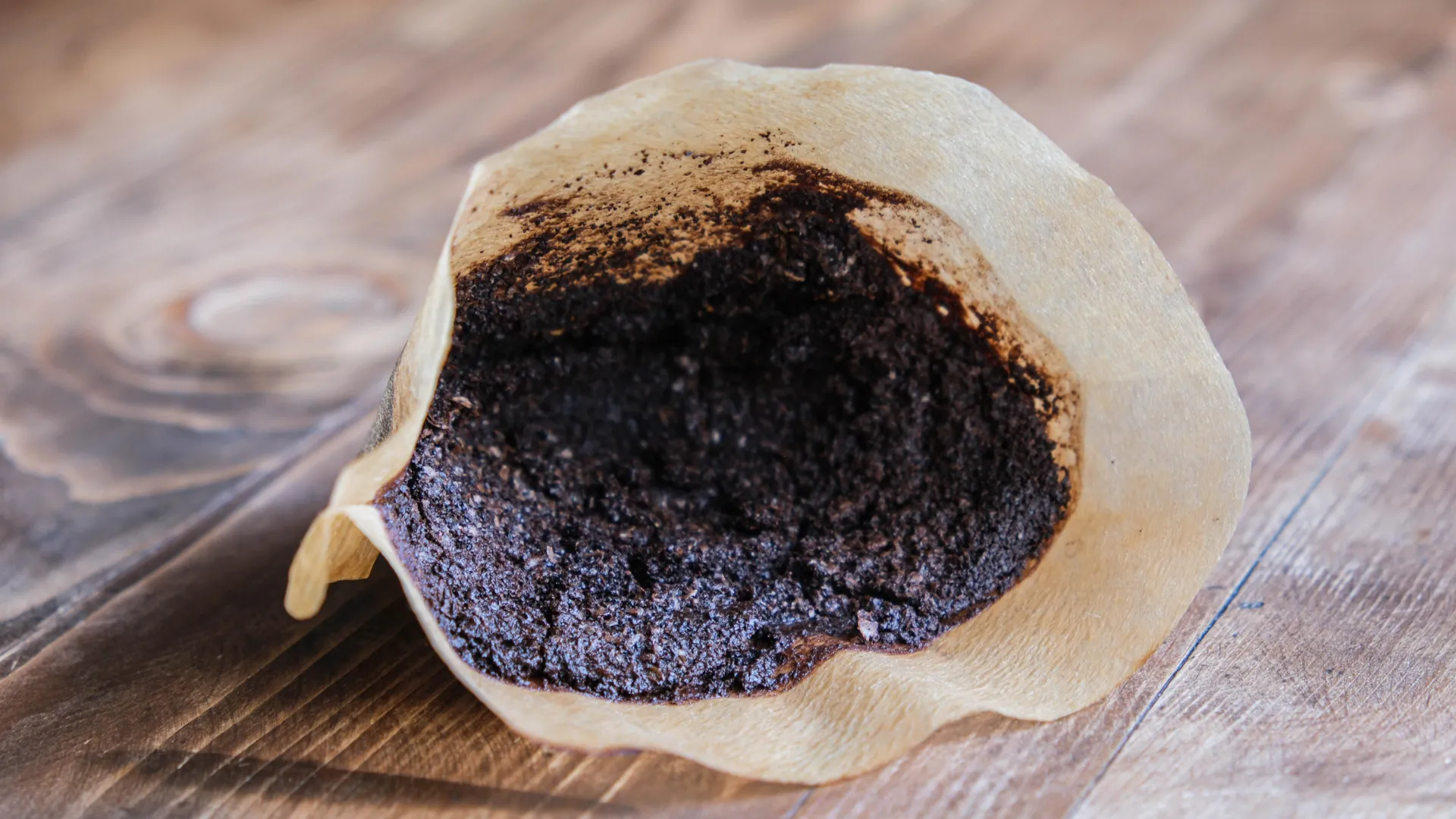
At 45 degrees Celsius, used coffee grounds can give up most of their oil in just one hour, researchers in Tarragona have found. The simple extraction could help turn a common waste product into fuel ingredients while leaving the grounds ready for further use.
Coffee is brewed from only a small part of the bean. Global production is about 10 million metric tons of coffee beans each year, and much of the material left behind becomes waste. Spent grounds contain roughly 15% fats, known as lipids, that can be used to make biodiesel. Recovering those fats efficiently matters because the remaining grounds also hold compounds that may be turned into other fuels and useful chemicals.
A team from Universitat Rovira i Virgili (URV) in Spain tested how temperature, processing time and the amount of solvent affect oil recovery. The researchers were Jorge F. Romero, Alberto Tampieri, Daniel Montané, Magdalena Constantí and Francesc Medina, from the university’s Department of Chemical Engineering. Their study was published in the journal Biomass and Bioenergy.
The team used n-hexane, a solvent commonly used to separate fats from other materials. The best balance came at 45 degrees Celsius for 60 minutes, using 35 milliliters of hexane for each gram of dry coffee residue. Under those conditions, the researchers recovered about 90% as much oil as with Soxhlet, a standard laboratory extraction method that can take longer, use more energy and be harder to adapt to large-scale production.
The recovered oil was also cleaner: it contained 0.3% impurities, compared with 3.9% in oil extracted using Soxhlet. Its main fatty acids, linoleic and palmitic acids, were present across the different test conditions. That composition supports the oil’s possible use as a biodiesel ingredient.
The researchers also checked what happened to the grounds after the oil was removed. Their structure remained largely intact, preserving a mix of cellulose, hemicellulose and lignin known as the lignocellulosic matrix. Those components can be processed into products including bioethanol, lactic acid, phenolic compounds and ingredients for sustainable aviation fuels. Removing fats may even help later processing, since fats can block solvents and catalysts from reaching useful material inside the plant matter.
The team compared the approach with ultrasound- and microwave-assisted extraction. Those methods can speed up early extraction, but the researchers found that they did not offer a strong enough overall advantage when purity, efficiency, energy use and industrial scale were considered. A conventional batch process with n-hexane at moderate temperatures proved the more balanced choice.
The work points to a way for biorefineries—facilities that turn biological materials into fuels and chemicals—to make more use of coffee waste. Rather than treating the grounds as a single-use resource, the method separates out oil and leaves a residue that can still be put to work. The next step is to see how the process performs beyond the laboratory, where turning discarded coffee into several useful products could make the most difference.