When you solve a puzzle — maybe figuring out why your friend's schedule means they can't make lunch, or working out which cup has the most coffee left — does your brain use the same tool it uses to read this sentence? Scientists have argued about this for thousands of years. But a new study from MIT suggests the answer is no.
Researchers at the McGovern Institute for Brain Research in Cambridge, Massachusetts have shown that people can reason logically just fine even when their language abilities are seriously damaged. In research published this week in the journal PNAS, a team led by MIT associate professor Evelina Fedorenko studied two patients who had suffered strokes that harmed the parts of their brains used for language. These patients struggled to understand or produce speech. Yet when the researchers gave them logic puzzles, they performed just as well as people with normal language skills.
The scientists designed games that didn't need words at all. In one puzzle, participants saw two lists of numbers and had to figure out the hidden rule that changed one into the other — like reversing the order or removing anything above a certain value. In another, they looked at geometric shapes and picked which one came next to complete a pattern. Patients communicated their answers using gestures or quick sketches.
"It really upends a theory that says that symbolic rule induction is not possible without linguistic capacities," said Hope Kean, a postdoctoral researcher in Fedorenko's lab.
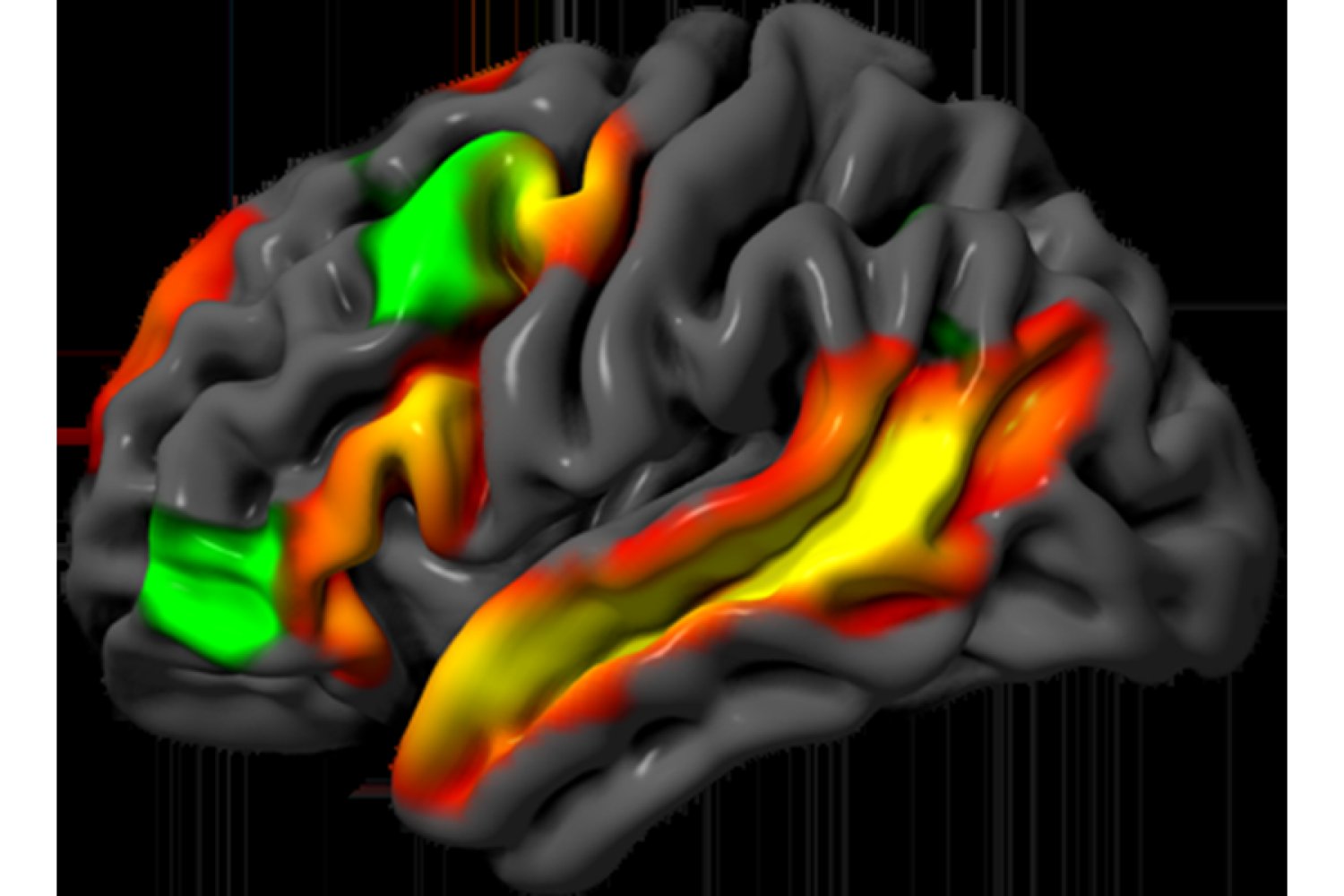
The team also used brain scans to watch what happens inside the brains of healthy adults solving the same puzzles. The MRI images showed something striking: the brain regions normally active when people read or listen are quiet during logical reasoning. Instead, a different network of brain areas — called the "multiple demand network" — kicks in. This system handles complex problem-solving.
Why does this matter? Philosophers and scientists have long debated whether humans need language to think through abstract problems. Some argued that thought is basically "talked through" inside our heads. But Fedorenko and her colleagues point out that language is linear — one word after another — while logical thinking can work in more flexible, nonlinear ways. Sometimes you need to hold multiple ideas in mind at once, or work backward from a conclusion, which language doesn't always handle well.
"There are aspects of thinking that seem to go beyond some of the limitations of language," Kean explained.
The findings suggest that while we depend on language to communicate our reasoning — to explain a math problem or describe how we solved it — the brain may keep its language and logic in separate neighborhoods. For the two stroke patients in the study, that separation may have been a lifesaver: even though speaking and understanding words had become difficult, their ability to think through problems stayed intact.
For the rest of us, it means your brain has more than one way to think. Language is powerful — but it's not the only tool in the drawer.