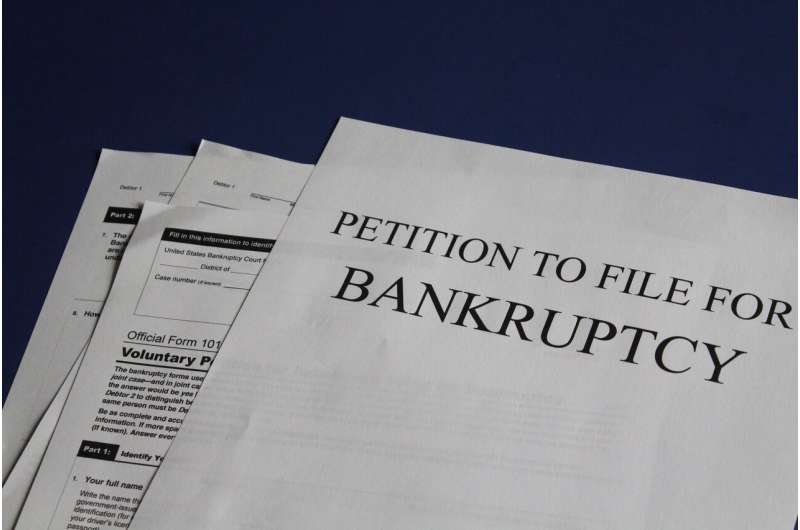
Sónia Silva has done something that could transform how lenders, investors, and business owners protect themselves from financial catastrophe: she's built a machine that can see three years into the future of a company's health. The forecasting model, developed from analyzing more than 24,500 European companies over eight years, can predict when a small or medium-sized enterprise will fail with 82% overall accuracy—and crucially, it can sound the alarm years before insolvency actually strikes.
This matters because SMEs are the backbone of modern economies. They account for most businesses across OECD nations and roughly two-thirds of employment, yet corporate finance research has historically focused almost exclusively on large, publicly listed companies. That gap has left millions of business owners and their stakeholders flying blind when financial trouble was brewing. Now there's a light in the darkness.
The model Silva developed, published in the Global Business and Economics Review, identified more than 70% of insolvencies three years in advance when tested on data with known outcomes. It works by monitoring seven specific financial indicators: cash ratio, contribution per interest paid ratio, solvency ratio, short-term financing, leverage, debt-assets ratio, and return on assets. Together, these seven numbers paint a comprehensive picture of a company's liquidity, debt burden, financial resilience, and profitability—the vital signs of business health.
The elegance of this approach lies in its simplicity and reach. Instead of requiring intricate proprietary data or constant updates, the model relies on financial ratios that businesses of all sizes already calculate and that their lenders have access to. A bank extending credit to a local manufacturer or a venture capitalist evaluating a growth-stage startup could plug those seven numbers into the model and get a clear probability that the company might stumble within the next three years. That's not a guarantee; it's a signal—an invitation to take action while there's still time to turn things around.
Silva acknowledges that her model could become even more accurate if smaller businesses disclosed more financial information than they currently do. But she's realistic about that prospect. The nature of smaller enterprises—often family-run, closely held, operating in leaner circumstances than their larger counterparts—makes comprehensive voluntary disclosure unlikely. Even without it, the 82% accuracy rate is a remarkable achievement that addresses one of the most pressing blind spots in modern finance.
The implications ripple outward. A lender armed with this model might offer early intervention and restructuring support rather than simply calling in a loan. An owner might recognize warning signs and seek strategic advice or pivot their business before crisis sets in. Investors could make more informed decisions about which promising startups are actually sound. And throughout the economy, the stabilizing effect of countless companies catching their problems early could reduce the cascading failures that sometimes trigger broader financial turmoil.
What Silva has demonstrated is that with enough data and the right questions, the future becomes slightly less opaque. Three years of warning time is precious in business—enough time to restructure, refinance, retool, or make hard decisions from a position of choice rather than desperation. For millions of small and medium enterprises navigating the uncertainty of economic life, that gift of foresight could change everything.