Every electric car on the road today runs on lithium-ion batteries. But these batteries rely on minerals like lithium, cobalt, and nickel — resources that are expensive, hard to find, and concentrated in a few countries. That dependency could become a problem as more people switch to electric vehicles and clean energy storage needs skyrocket. Now, researchers at MIT may have found a solution hiding inside a tiny molecule.
The team, based in Cambridge, Massachusetts, and led by Ju Li, a professor of power engineering, has developed a new material that could make a different kind of battery — one built with sodium instead of lithium — work much better. Their findings were published in the journal Joule with 15 researchers listed as authors.
Sodium is extraordinarily abundant. It is found in seawater and ordinary salt, and it is roughly 1,000 times more common in Earth's crust than lithium. Pound for pound, sodium costs about one-hundredth as much. If batteries could tap into sodium instead of lithium, the price of storing energy could plummet.
The challenge is that sodium metal is highly reactive, like a small Version of sodium left out in damp air. When sodium inside a battery touches the liquid electrolyte that carries electrical charge between electrodes, unwanted chemical reactions occur. These reactions create a gunky buildup that blocks the flow of ions and eventually kills the battery. Until now, no electrolyte could keep sodium batteries stable at both ends of the battery simultaneously while also allowing for fast charging.
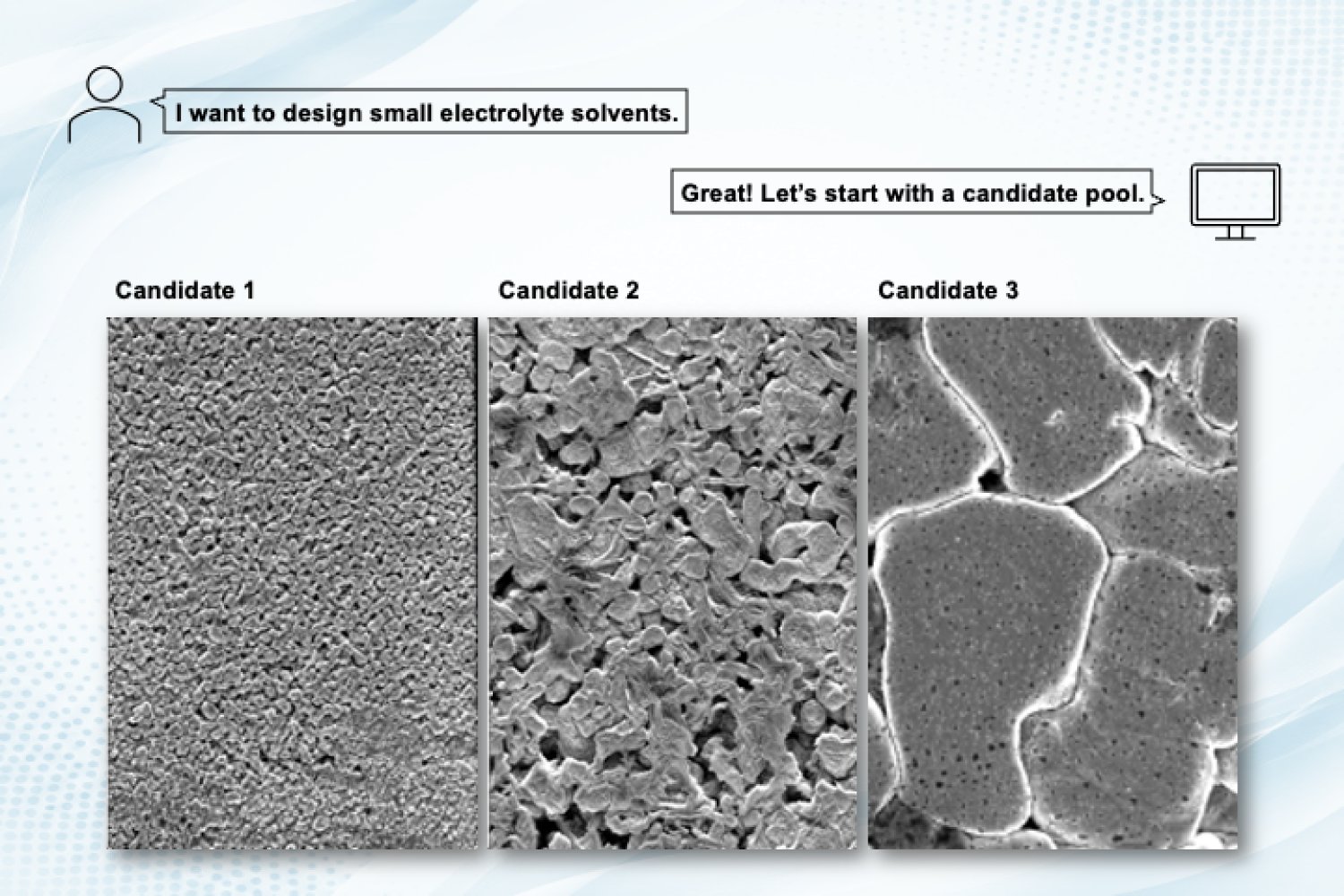
The breakthrough came from a molecule called DMTMSA, which was first discovered by the team in 2021. DMTMSA proved remarkably stable in lithium batteries. The researchers wondered if a similar molecule might work for sodium. To find out, Chia-Wei Hsu, a PhD student at MIT, built an AI program that designed 100,000 candidate molecules on his computer in just 24 hours.
The winning molecule turned out to be smaller than DMTMSA. Weiyin Chen, a postdoctoral researcher at MIT and one of the lead authors, explained the advantage using a simple analogy. Imagine crossing a crowded street, she said. You can move more quickly with a small backpack snug against your body rather than dragging a bulky suitcase. Smaller solvents let sodium ions travel faster, enabling quick charging without sacrificing stability.
This matters because most electrolytes force a trade-off: either the battery charges quickly but wears out fast, or it lasts long but charges slowly. By shrinking the solvent molecule, the MIT team found a way around that compromise.
The implications stretch beyond laboratories. If sodium-metal batteries can finally deliver both longevity and speed, they could become a practical, low-cost alternative for storing energy from solar panels and wind turbines. Electric vehicles might one day cost far less to own and operate, especially in regions where lithium imports are expensive or politically complicated.
For now, the work is still in the research phase. But with 100,000 candidates already screened and a new electrolyte in hand, the path from lab bench to garage charger suddenly looks a lot shorter.