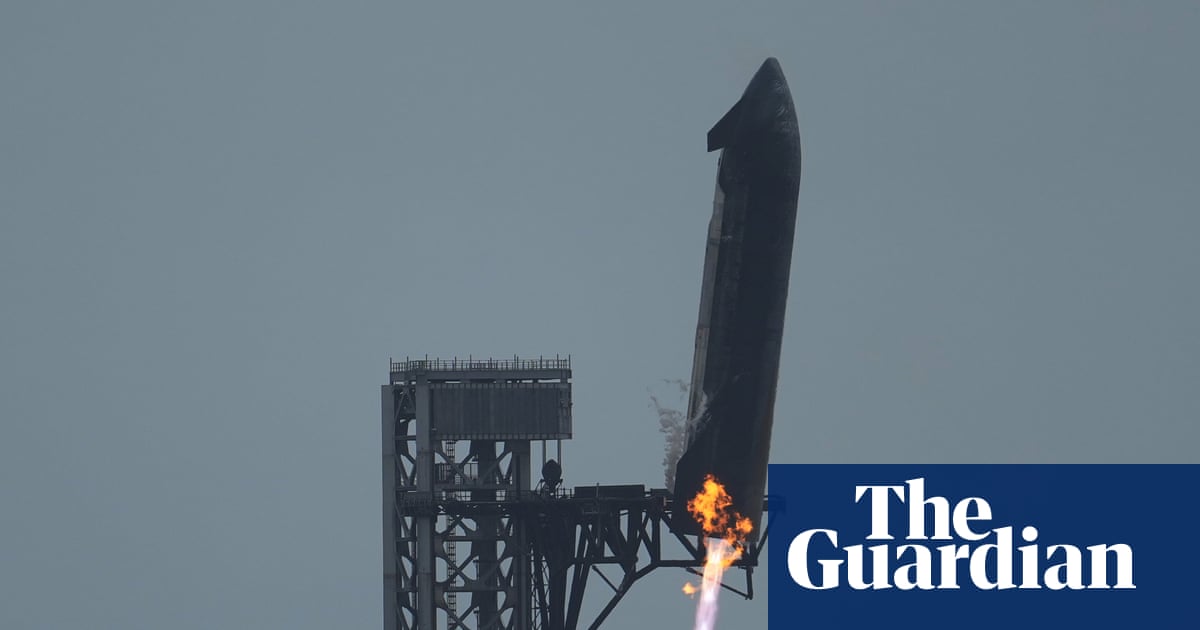
At Starbase, Texas, a 171-foot Starship slipped between the launch tower’s mechanical arms on Saturday, bringing a 22-hour flight around Earth to a carefully controlled end. The upper stage had circled the planet 14 times before returning to the tower in a first for SpaceX.
The landing marked a practical step toward making Starship reusable and, one day, fit to carry people. SpaceX wants the rocket to take off and land repeatedly, more like an airplane than a vehicle that is discarded after a flight. Reusing the hardware could help the company carry out more launches, though this test showed that recovering every part is still a challenge.
Starship has two main sections. Its lower booster, called Super Heavy, uses Raptor engines to power the rocket’s climb. The upper section is also called Starship. On the 15th test flight, SpaceX hoped to bring both stages back to the launch site in a “double catch,” instead of recovering parts from the sea as it has on some earlier flights.
That plan ended a few minutes after Friday’s takeoff, when Super Heavy diverted from its intended path and exploded in the Gulf of Mexico. SpaceX spokesperson Dan Huot said the booster’s guidance, navigation and control system had triggered a no-go because the rocket was not in the right position for a catch. “It was doing what it was supposed to do,” Huot said early Saturday, describing how the system stopped the attempt rather than allowing an unsafe recovery.
The upper stage’s return was still a notable achievement: SpaceX had never before caught that part of Starship. The flight showed that the company could guide the large spacecraft through a long journey in orbit and bring it back to the launch tower. But the lost booster also made clear that a full double catch will require further testing.
The work matters beyond SpaceX. NASA plans to return people to the lunar surface in 2028 and has contracted both SpaceX and Jeff Bezos’s Blue Origin for the mission. Starship is part of SpaceX’s effort to support that goal. Chief executive Elon Musk has said the company wants to increase test flights to once a week, then twice a week. Those are ambitions, not yet a demonstrated schedule, and the latest flight suggests the company will need to keep improving both launch and recovery systems.
Musk has also promoted a longer-term goal of sending people to Mars. For now, Saturday’s catch offers a more immediate sign of progress: one Starship stage made it back to its tower after orbiting Earth, while the booster’s failure showed what remains to be solved. Each test adds evidence about whether the rocket can become a reliable vehicle for frequent flights and future human missions.