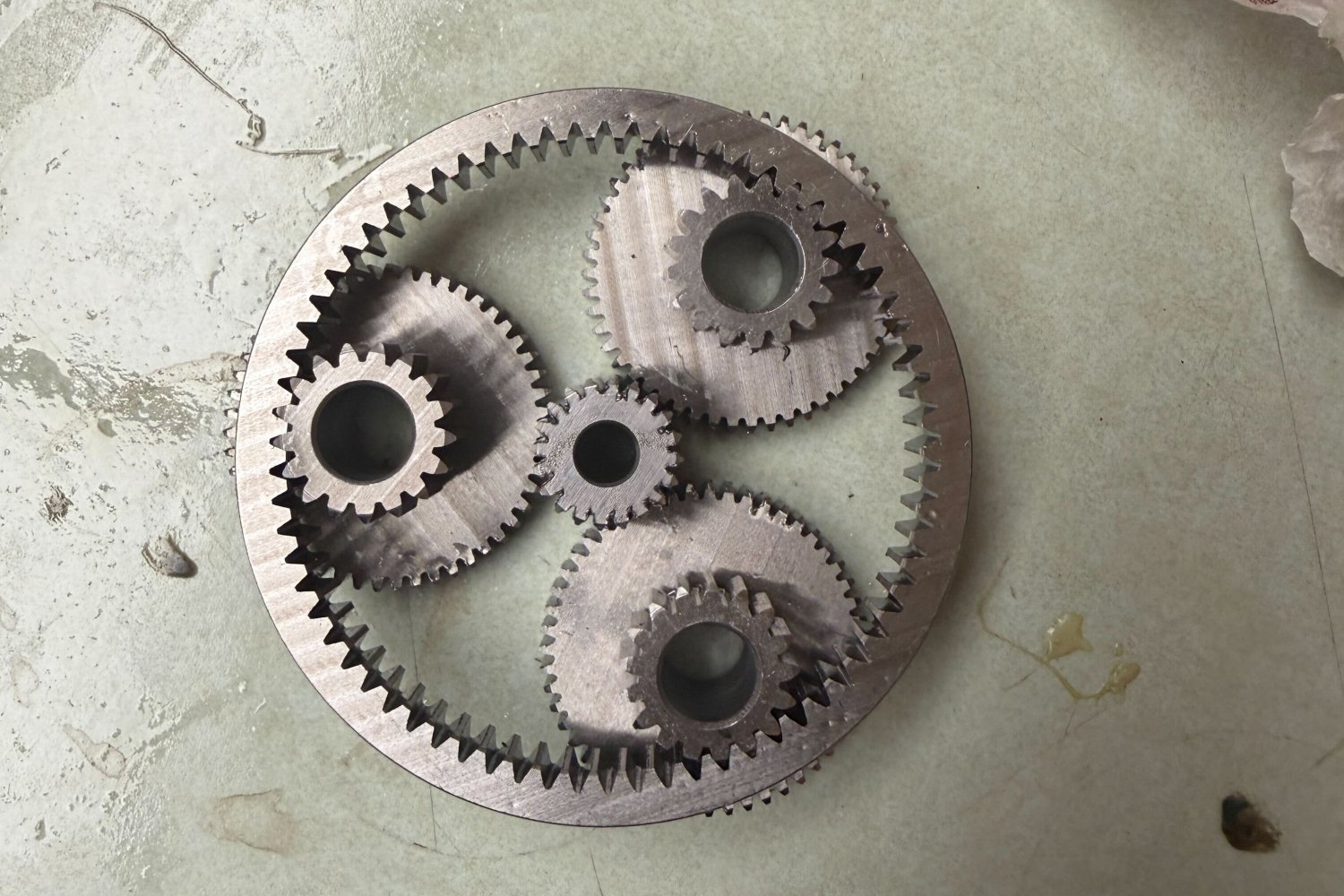
When the MIT Motorsports team fires up their 2026 electric race car for the Formula SAE Electric competition this June, the whir of the drivetrain will carry a legacy forged in Cambridge labs and proven on the world’s most punishing tracks. At the heart of their custom-built gearbox lies a steel born from a 1985 vision: Ferrium C61, a material designed not by trial and error, but by computation, and now making its way back to its intellectual home. This isn’t just a story of stronger metal—it’s the culmination of a four-decade journey that reshaped how we invent materials.
Gregory B. Olson, professor of the practice in MIT’s Department of Materials Science and Engineering, launched the MIT Steel Research Group with a radical idea: use computers to predict and design materials from first principles. In an era when materials discovery was slow and empirical, Olson’s team pioneered computational materials design, a field that would later inspire the national Materials Genome Initiative. Their first major breakthrough came in the late 1980s with Army-funded research on helicopter gears—work that caught the eye of PBS’s "Infinite Voyage" science series. During a live taping, Olson mentioned a personal passion: race cars. That offhand comment sparked a connection with the Newman/Haas Racing team, then driven by Michael and Mario Andretti, and set the stage for a weekend of intense innovation.
Working against the clock, Olson and his colleagues engineered a steel with the surface hardness of conventional gear steel but the core toughness of armor plating. That material became Ferrium C61, the first commercial product of QuesTek Innovations, the company Olson co-founded. Though it never raced with Newman/Haas, C61 found its proving ground in the Baja 1000, where dune buggies launch off sand dunes and crash down with bone-jarring force. There, conventional gears lasted just 60% of a race on average. With C61, that jumped to six full races—an order-of-magnitude leap in durability.
That performance caught the attention of Red Bull Racing, the British-licensed Formula One powerhouse. With gearbox failure the leading mechanical issue in F1, Red Bull adopted C61 for their gearsets—and never suffered another. The result? Four world championships in the last decade. Now, full circle, the steel is back at MIT, where students from MIT Motorsports, most of them undergraduates, forged their own gears using a discounted batch of C61 supplied by QuesTek, complete with precise heat-treatment instructions.
For these students, it’s more than a material—it’s a mentorship from history. As they prepare to compete against engineering teams from across the globe, they carry not just a stronger gear, but the legacy of a revolution in materials science—one that began with a question on live television and now powers the future of high-performance engineering.