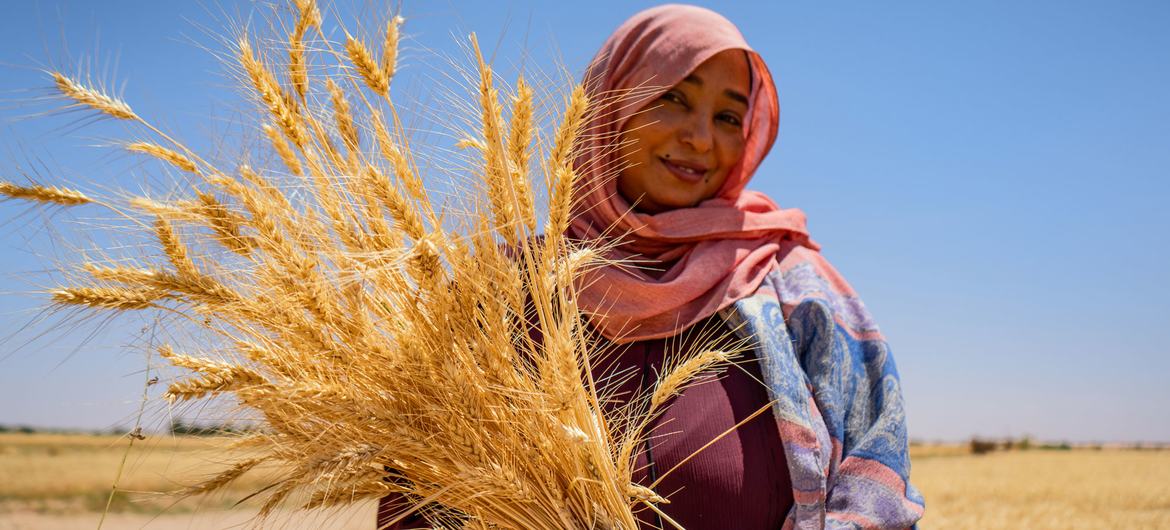
Mohamed el-Tayeb stood in the cracked earth of his farm outside Khartoum, seeds cupped in his hands but no tractor to plow the soil. Like millions of Sudanese farmers, he’s ready to grow food again — if he can just get the tools, the fuel, and a way to reach buyers. After two years of war that shattered Sudan’s economy, a new hope is taking root. This week in Khartoum, more than 300 people from 20 countries — government leaders, bankers, farmers, and investors — gathered for a UN-backed dialogue that could help turn the tide. They left with a clear plan: unlock private investment to revive Sudan’s farms, the backbone of a country where hunger now grips over 19 million people.
Before the war, Sudan was a major player in global agriculture, supplying 12 to 13 per cent of the world’s sesame. Today, that share has halved. Crop yields have dropped by as much as 70 per cent in some areas, and the cost of fertilizer and fuel has soared. Yet, fields are still being planted, markets still open, and goods still move — proof that the economy, though broken, is not dead. The missing piece? Private investment. With 98 per cent of jobs tied to the private sector, its return is essential. But most farmers can’t access loans, and businesses lack the capital to rebuild.
The dialogue, led by the UN Development Programme and Sudan’s Ministry of Finance, ended with three breakthroughs. First, a shared recognition that recovery depends on engaging both local and international businesses. Second, the adoption of a clear roadmap to rebuild the agricultural sector. And third, a promising signal: nearly $155 million in potential investment from countries including Pakistan, India, Türkiye, Egypt, and Syria. This isn’t just about money — it’s about systems. UNDP is working to restore a warehouse receipt system, allowing farmers to store crops and use them as collateral for loans. They’re also pushing for trade reforms to make it easier to move goods through ports and across borders.
For farmers like Mohamed, these changes could mean the difference between survival and revival. With credit guarantees and better market access, they could plant more, sell more, and feed more. Already, 90 per cent of Sudanese farmers lack financing — aid alone won’t fix that. But development can start now, even amid crisis. As Arvind Kumar of UNDP put it, “There is an opportunity and a space to bring development back on track.” The fields are waiting. The people are ready. Now, the world has a chance to help them grow again.