Michael Jackson's 1993 Super Bowl 27 half-time performance was so electrifying that Dallas Cowboys players sneaked out of their locker room just to witness the King of Pop — a moment that Tim Tubito, the NFL's director of global event presentation, music and entertainment since 2021, describes as the show that "changed everything."
For decades before Jackson took the stage, Super Bowl half-time entertainment meant pageantry: dancers and marching bands filling the intervals between plays. That all shifted in the 1990s when New Kids on the Block and Gloria Estefan proved that music could command the moment. Jackson's performance revolutionized everything, setting a standard for spectacle that transformed how the world viewed half-time shows. Since 1998, headliners have been world-famous music acts spanning genres and generations — from Prince performing "Purple Rain" in actual rain in 2007, to Dr. Dre, Eminem, and Snoop Dogg in 2022, to Kendrick Lamar in 2025, whose performance surpassed Jackson's as the most watched Super Bowl half-time show of all time with 133.5 million viewers.
Since 2019, Roc Nation — the entertainment company owned by Jay-Z — has collaborated with the NFL on artist selection and production, a partnership that has propelled the US television audience beyond 120 million for each of the past four shows. The process is careful and thorough. Tubito says the NFL "don't like to be surprised," and the teams go over the entire show and rehearse it so everyone knows what's coming. Yet the approach respects artistic vision: "We never tell an artist what point of view to have or restrict them from doing things," Tubito explains.
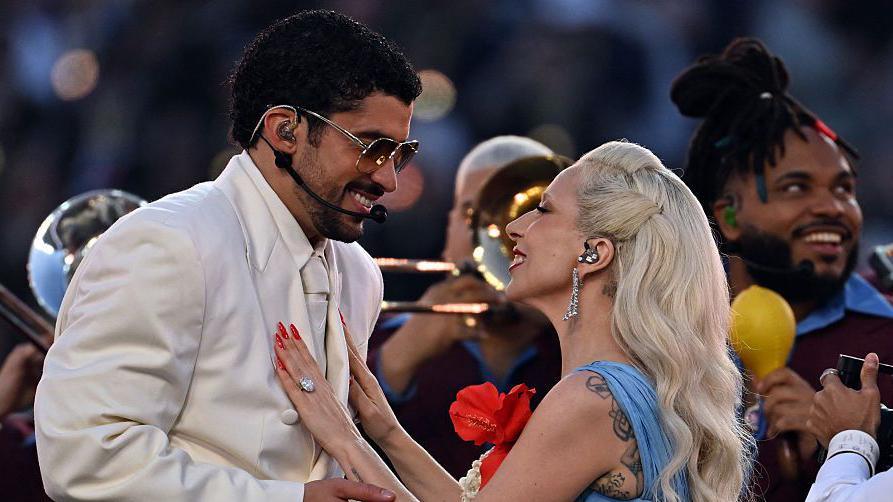
But the real innovation isn't happening in one stadium — it's spreading across the globe. Last season, Tubito's team produced half-time shows at six of seven international games. British artists Raye, Giggs, and Jme performed at two games at Tottenham Hotspur Stadium in London, while Puerto Rican rapper Daddy Yankee headlined the NFL's first game in Spain last November. Bad Bunny, Spotify's most streamed artist for four of the past six years, headlined last year's game in Brazil and returned to perform at Super Bowl 60, where Colombian singer Karol G — who later became the first Latina to headline Coachella — appeared alongside him on the field.
This international expansion reflects a deliberate strategy: finding artists who resonate with local audiences while appealing globally. "We want to be diverse across our talent and relevant in the market that we're in," Tubito says. "It's really important to have that local connection because if the fans in the stadium aren't giving the energy, you can feel that from a broadcast."
The NFL is now staging more half-time shows than ever before, with Australia and France joining the schedule and Mexico returning. Rather than simply chasing the biggest names, Tubito's approach is more nuanced: "You don't always nail it but Raye in London last year, she was kind of about to break. You can do some real special things with those types of people so don't always chase the name, chase the talent — and people who have bought into the same vision that you have." For an organization committed to expanding its reach beyond the United States, that vision means finding the right artist for each market, understanding that great music transcends language and culture.