When Adalberto Luis Val was a boy in rural Sao Paulo, he carried fish home in a jar to find out how they lived. By morning, they were dead. The loss stayed with him, and the question led him to a lifetime of studying how fish survive — and what happens when their waters change.
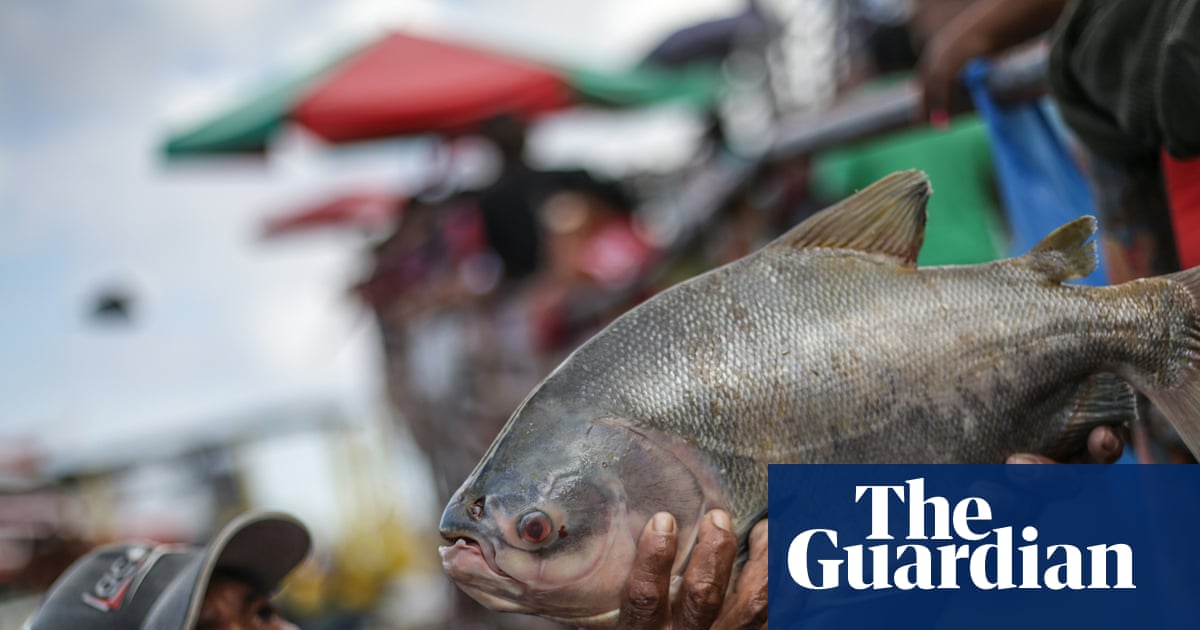
Now 70, Val lives in Manaus, Brazil, where he has helped build a leading center for tropical climate science. His research focuses on the tambaqui, a large freshwater fish prized as food and adapted to the Amazon’s changing waters. As temperatures rise and oxygen in the water falls, the fish comes to the surface to breathe. Its protruding lower lip helps it take in oxygen-rich water there. Val believes watching the tambaqui could offer an early warning of wider changes in the Amazon rainforest.
The need for that warning is growing. Val says the Amazon basin had a reliably stable climate for about 65 million years, with oxygen levels in the water rising during cooler nights and falling during warmer days. “From the Industrial Revolution on, everything started to look different,” he says. Tropical fish are especially sensitive to shifts in heat, humidity and chemicals in the water and air, his research has found.
Climate change is only one pressure. Slash-and-burn farming, illegal mining and chemical runoff also affect rivers and the animals living in them. Drought has hit the Amazon, while rising heat can make warm water hold less oxygen. The source article notes that rainforest fish generally thrive in a narrow temperature range of 27C to 31C; temperatures above that can be deadly.
At the National Institute for Amazonian Studies in Manaus, Val and his team created four laboratory chambers to study tambaqui and other aquatic species. Three simulate mild, medium and extreme climate impacts projected for 2100 by the Intergovernmental Panel on Climate Change, the group of climate scientists known as the IPCC. A fourth chamber acts as a control, matching present-day river-basin conditions. Sensors on a forest tower send real-time readings of temperature, carbon dioxide, light and humidity to help set those conditions. The reported findings begin by noting that excessive warming raises water temperatures and depletes oxygen, but the available account gives no further results from the experiments.
Val’s work is now receiving wider recognition. On 30 July, he travelled to the University of Southampton in the United Kingdom to receive the Fisheries Society of the British Isles’ Le Cren Medal for his contribution to aquatic science. He was the first scholar working in the tropics to receive the award. His record also includes Brazil’s Grand Cross of the National Order of Scientific Merit, the American Fisheries Society Award of Excellence, 22 books and about 280 scientific articles.
For Val and his collaborators, the point is not simply to understand one fish. The Amazon holds exceptional biodiversity, yet its climate and waterways face growing strain. Tracking a species that reacts quickly to changing conditions may help scientists see those pressures more clearly. As Val’s research continues, the tambaqui could help turn changes in a river into an early signal of what is happening across the forest.