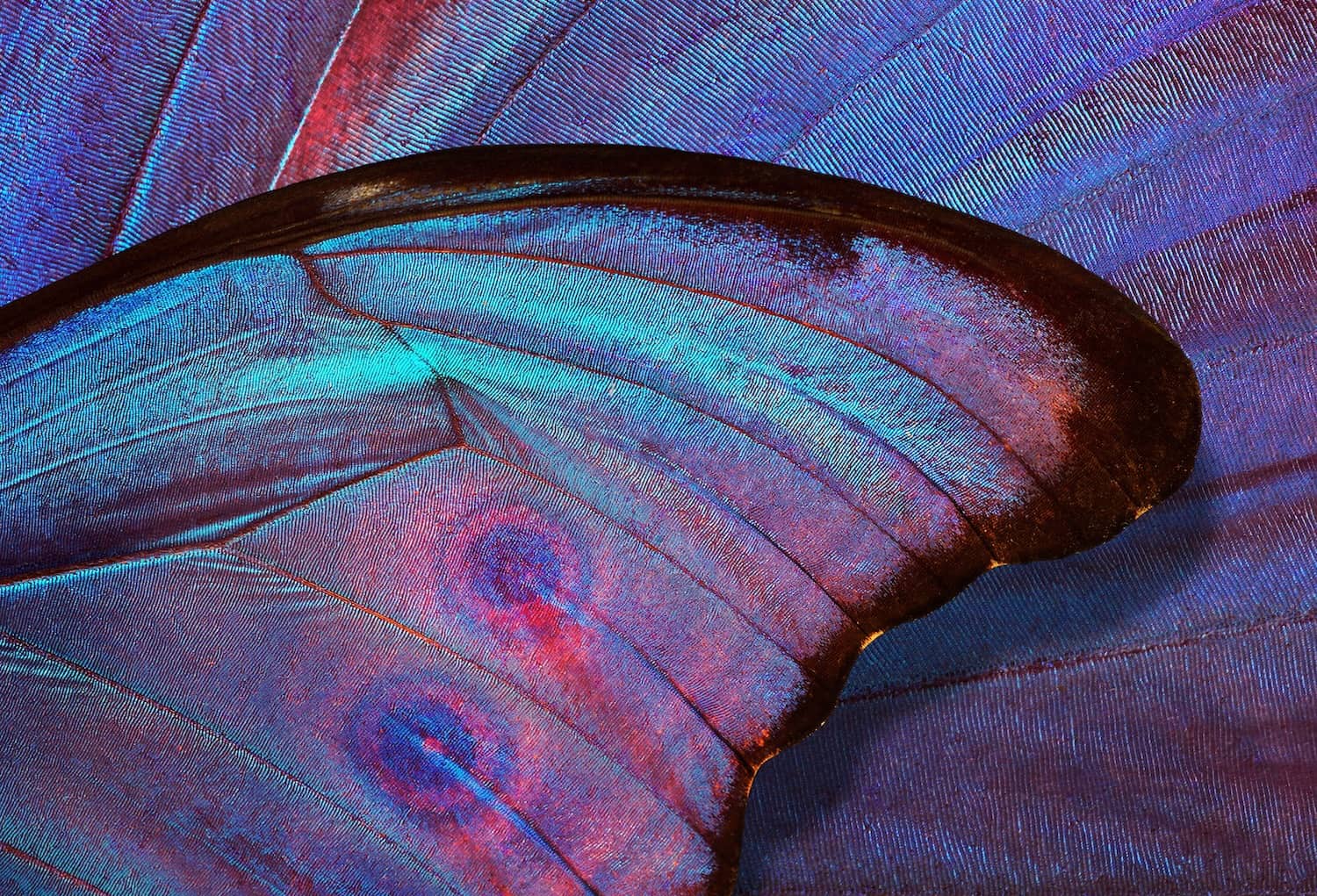
A cabbage white butterfly carries a possible clue to paints that could keep their colour without relying on some of the chemicals used in today’s pigments. At Northeastern University in Boston, researchers are studying tiny crystals found on the butterfly’s wings and how they shape the light we see.
Most familiar colours come from pigments: materials that absorb some colours of light and reflect others. Carrots, for example, look orange because of compounds called carotenoids. But pigments can fade in sunlight, and some synthetic versions contain lead, cobalt or arsenic, chemicals that can harm people and the environment. Finding a different way to make bright, lasting colour could matter for paints and glitter, among other coatings.
The Northeastern team is exploring structural colour, which comes from the way very small structures interact with light. Rather than depending on a pigment, these structures bend and scatter light so that certain wavelengths reach our eyes. The result can be the shimmer seen on butterfly wings and peacock feathers.
Leila Deravi, an associate professor of chemistry and chemical biology at Northeastern, is studying crystalline compounds called pterins on the wings of the cabbage white butterfly. Her team is investigating whether changing the crystals’ size and arrangement could alter the colour they produce. In principle, that could offer a way to make a range of colours without the same reliance on chemical-based pigments.
The idea is promising, but it is still at an early stage. Pterins have not yet been formally assessed for safety, so their natural origin is not proof that they are harmless. Deravi and her colleagues see them as worthy of further study, in part because some synthetic pigment chemicals can persist in the environment and cause harm. Deravi has described pterins as having little downstream toxicity, but that claim will need careful testing as research continues.
There is also a practical hurdle: making enough crystals for commercial use. So far, the researchers have grown only milligram-size amounts, about the size of a grain of table salt. Moving from tiny samples to materials that can be made reliably and at scale will take further work. The team has not yet produced paint or glitter from the crystals.
Still, the research points to a wider source of ideas. Natural colours are all around us in flowers, insects and animals, yet scientists are still working out the structures behind their durability and vividness. If researchers can understand those mechanisms and reproduce them safely, nature’s designs could help inspire coatings that last longer and avoid some harmful ingredients. For now, the butterfly crystals are a small beginning, not a finished product—but they give researchers a new direction to explore.