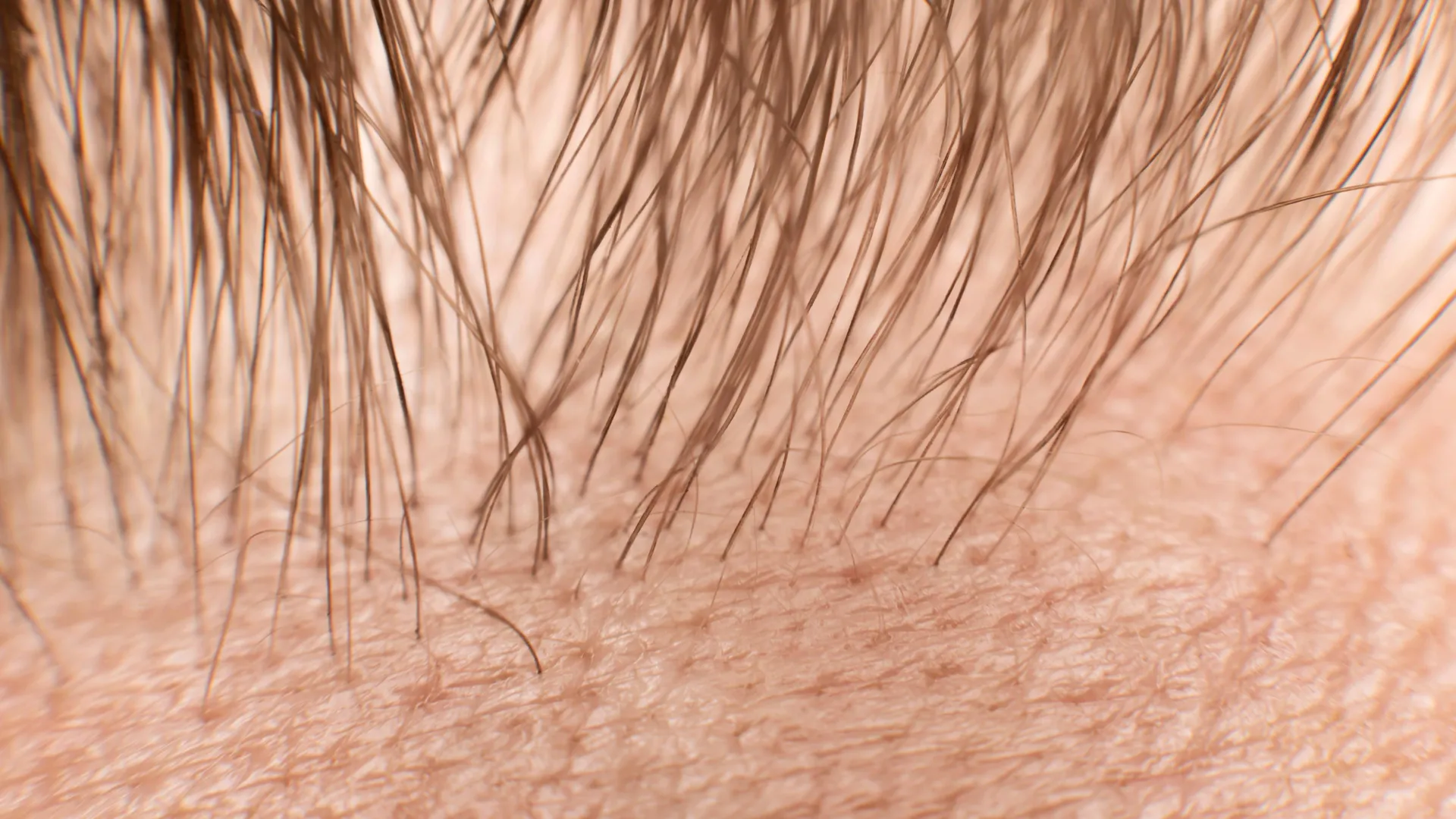
On the skin of a developing spiny mouse, hair follicles line up in a strikingly regular pattern—one that a long-standing theory of hair growth cannot explain. Researchers at the University of Geneva say a simpler process may help show how such patterns take shape.
Hair follicles begin before birth, when small structures called placodes appear in the embryo’s skin. The same early structures help form feathers and most scales. How they arrange themselves into the different patterns seen across animal species has puzzled scientists for decades. A new study, published in PNAS, suggests that the answer may lie in cells moving in response to chemical signals, rather than in a complicated set of instructions for each follicle.
The team, led by Athanasia Tzika and Michel Milinkovitch of the University of Geneva’s Department of Genetics and Evolution, built a mathematical model of cells in the dermis, the layer beneath the skin’s surface. The model tracked how those mobile cells responded to an attracting chemical signal released by the epidermis, the skin’s outer layer, as embryonic skin grew.
That movement is known as chemotaxis. It is also used by white blood cells, which follow chemical signals toward areas of inflammation. In the researchers’ simulations, local cell movement and chemical signals were enough to produce placodes over time.
For laboratory mice, the model recreated the same sequence of follicle formation explained by the traditional expansion-induction theory. That theory says each new placode releases a chemical that stops others from forming nearby. As the skin grows, areas farther from existing placodes can escape that effect and develop new ones. The theory is widely accepted, but scientists had not experimentally shown that it could explain the range of follicle patterns across species.
The researchers then tested their approach on the spiny mouse, a rodent with unusually regular, strongly aligned follicles. Its pattern does not fit the traditional theory. Using information from three-dimensional images of developing spiny mouse skin, the team adjusted the model to reflect the animal’s biochemical features and skin growth. The simulation also reproduced this distinctive arrangement.
The results suggest that one basic process could create different patterns when cells, chemical signals and skin growth vary from species to species. “Our findings show that the observed patterns do not require a complex system telling each placode where to form,” researchers Muhamet Ibrahimi and Ebrahim Jahanbakhsh said. Instead, they wrote, placodes can emerge from local interactions between cells and chemical signals.
The idea could offer a broader way to think about how nature builds varied forms. If simple interactions can produce different follicle arrangements, similar rules may help explain other patterns in animal tissues, including those that develop into feathers and scales. The Geneva team’s work does not settle every question about how these structures form, but it points to a shared mechanism worth testing in more species.