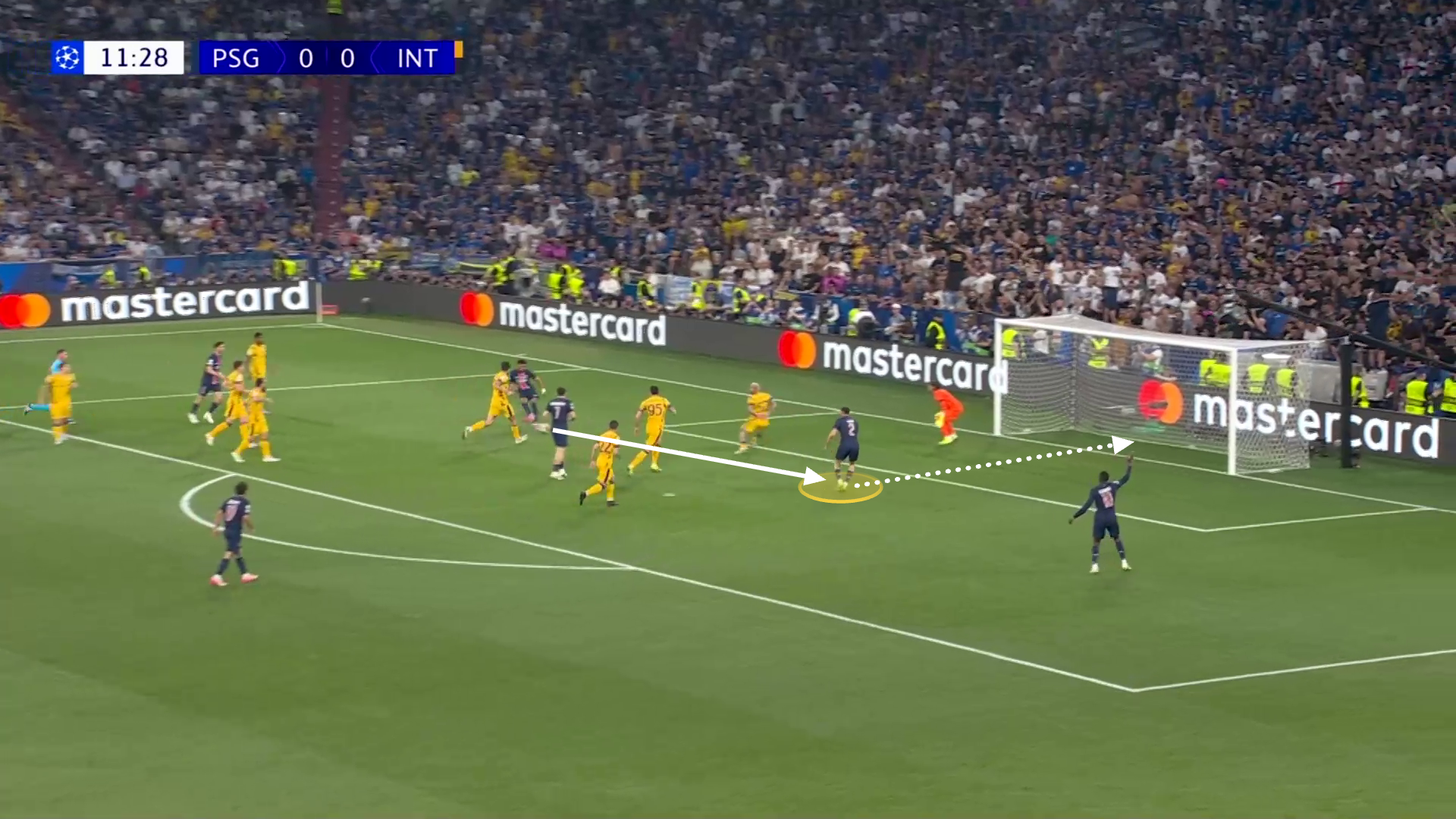
Achraf Hakimi sprinted from his own penalty area to the opposition's box and back again, sometimes twice in a single passage of play. By the time he arrived back in position, his marker had long since lost track of him. This is no accident. At Paris Saint-Germain, Luis Enrique has built a tactical system so fluid it looks like chaos — but behind every player movement is a carefully calculated decision tree running through their heads.
The Spanish coach's philosophy centers on what he calls "positional freedom through structure." When PSG build from the back, their two centre-backs are joined by a third to form a back three. From there, everything depends on the geometry of the moment. If the right-winger drifts inside, Hakimi fills the space out wide. If the winger stays wide, Hakimi attacks centrally and collects the ball in midfield or pushes forward as an extra striker. On the left, Nuno Mendes operates on a different logic — he anchors the back three in possession, but when defensive midfielder Vitinha drops into the defensive line, Mendes suddenly has license to roam. His reference point becomes the winger: if that player has moved inside, Mendes slides to the flank; if the winger is stretched wide, Mendes floats centrally in a free role.
The result is that different players end up in dangerous positions with genuine freedom, creating the illusion that everyone simply roams where they please. In reality, each player is running through mental checklists with each transition. "In an ideal world, Enrique wants 20 players who can play in all parts of the pitch," the article notes — players who could replace each other's zones without any drop in quality.
This matters because the wider football world has shifted toward intense man-to-man marking. Coaches like Pep Guardiola and Mikel Arteta have stressed this all season. But when a team's shapeshifters never stop moving, defenders assigned to mark them eventually lose their assignment — either drifting away unintentionally or making a tactical retreat rather than being dragged across the entire pitch.
It's physically grueling work. The full-backs' sprints — from their own half to the opposition box and back — would destroy most players over a full season. PSG's advantage is the quality gap in Ligue 1. They win comfortably enough to rotate constantly, keeping key players fresh. This season, Nuno Mendes has played just 46 percent of PSG's total league minutes — a workload that leaves him in peak condition for the moments that matter most, like the Champions League knockout stages.
Fellow semi-finalists Arsenal, by contrast, face a grueling Premier League title race that offers no such luxury. With the squad depth and tactical intelligence Luis Enrique has cultivated, PSG have emerged as one of football's most exciting teams in recent memory — a beautiful machine built from trust, preparation, and the simple joy of knowing exactly where your teammate will be before they get there.