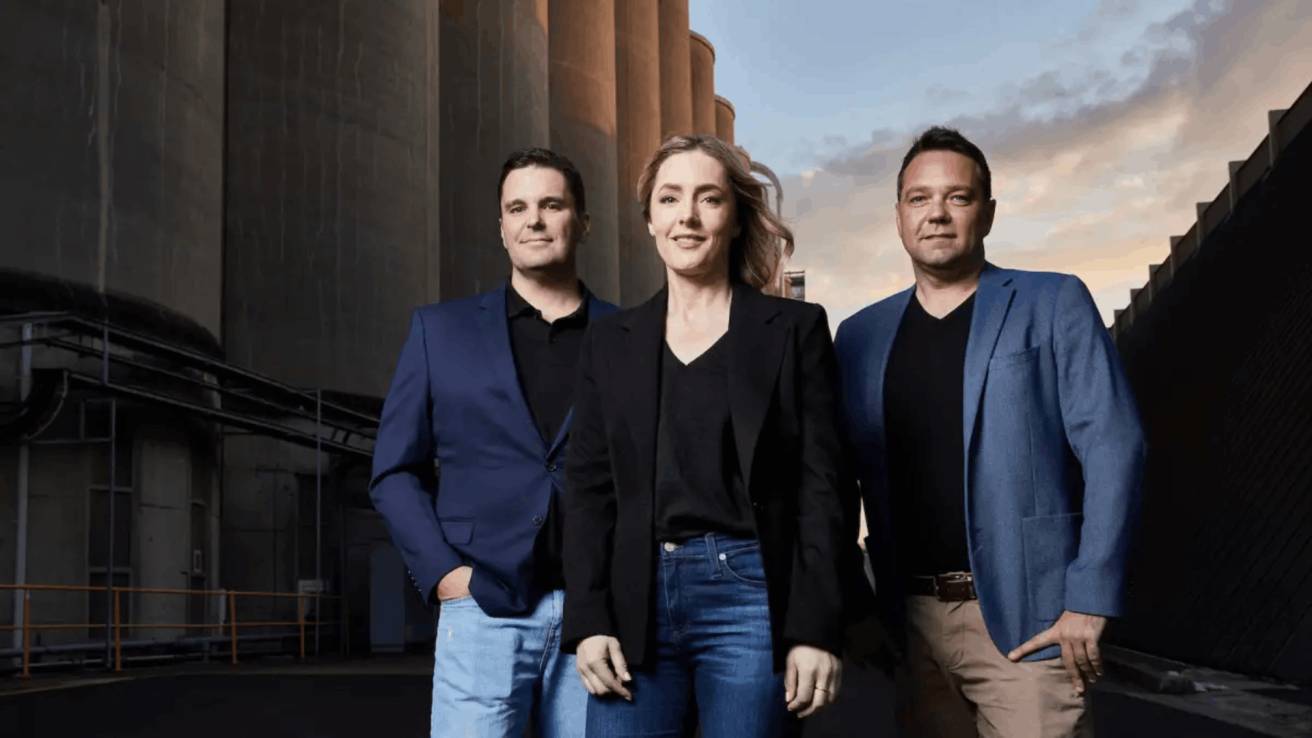
Dr Tuan Nguyen stood in a Melbourne lab last month, holding a handful of pale grey gravel — not from a quarry, but from rubble once destined for landfill. This is the future of concrete, he says: cleaner, smarter, and built from what we’ve already thrown away. His startup, R2Crete, just raised $750,000 to prove it can work at scale. They’re not alone. This week, three Australian startups pulled in a combined $18.75 million to tackle some of the world’s toughest challenges — from cancer care to crumbling infrastructure.
In Melbourne, Skopos Bio secured $12 million — one of Australia’s largest seed rounds ever for a biotech startup. Backed by investors including Andrew Forrest’s Tenmile, John Wylie’s Tin Alley Ventures, and Yosemite (led by Steve Jobs’ son Reed Jobs), the team is developing tiny radioactive particles that hunt down cancer cells like guided missiles. Founded by leading oncologists from the Peter MacCallum Cancer Centre, their radiopharmaceuticals aim to treat more cancers with fewer side effects by delivering radiation precisely where it’s needed. Human trials are on the horizon, and early confidence is high. "We think that in relatively short order we can show that this technology works," said Tin Alley’s Andrew McLean.
Meanwhile, Sydney-based Trendspek raised $6 million to expand its AI-powered platform that helps engineers inspect critical infrastructure without leaving their desks. Founded by former Qantas pilots, the company builds detailed 3D digital records of ports, energy plants, and telecom networks. More than 860 organisations — including Chevron, Woodside Energy, and the Port of Rotterdam — now use Trendspek to track wear and tear across 1,700 sites. With over 128,000 virtual site visits completed, the tool saves time, cuts emissions from travel, and helps prevent costly failures. Revenue has grown 165% each year for the past three years, and the new funding will fuel expansion into North America and Europe.
Back in Melbourne, R2Crete’s innovation could reshape construction itself. Their patented method recovers up to 75% of cement from old concrete, replacing the need for fresh sand, gravel, and limestone. The result? A new building material that performs just as well as traditional concrete but cuts carbon emissions by half. Now, with support from the University of Melbourne’s Genesis Pre-Seed Fund and Uniseed, they’ll build a pilot plant to test whether this lab success can become an industry standard.
Together, these startups represent more than just promising science — they’re practical solutions gaining real traction. From targeting tumours with precision to reimagining waste as a resource, Australia’s innovators are showing how local ingenuity can have global impact. And with millions now flowing into their work, the next chapter is being poured — one smart breakthrough at a time.