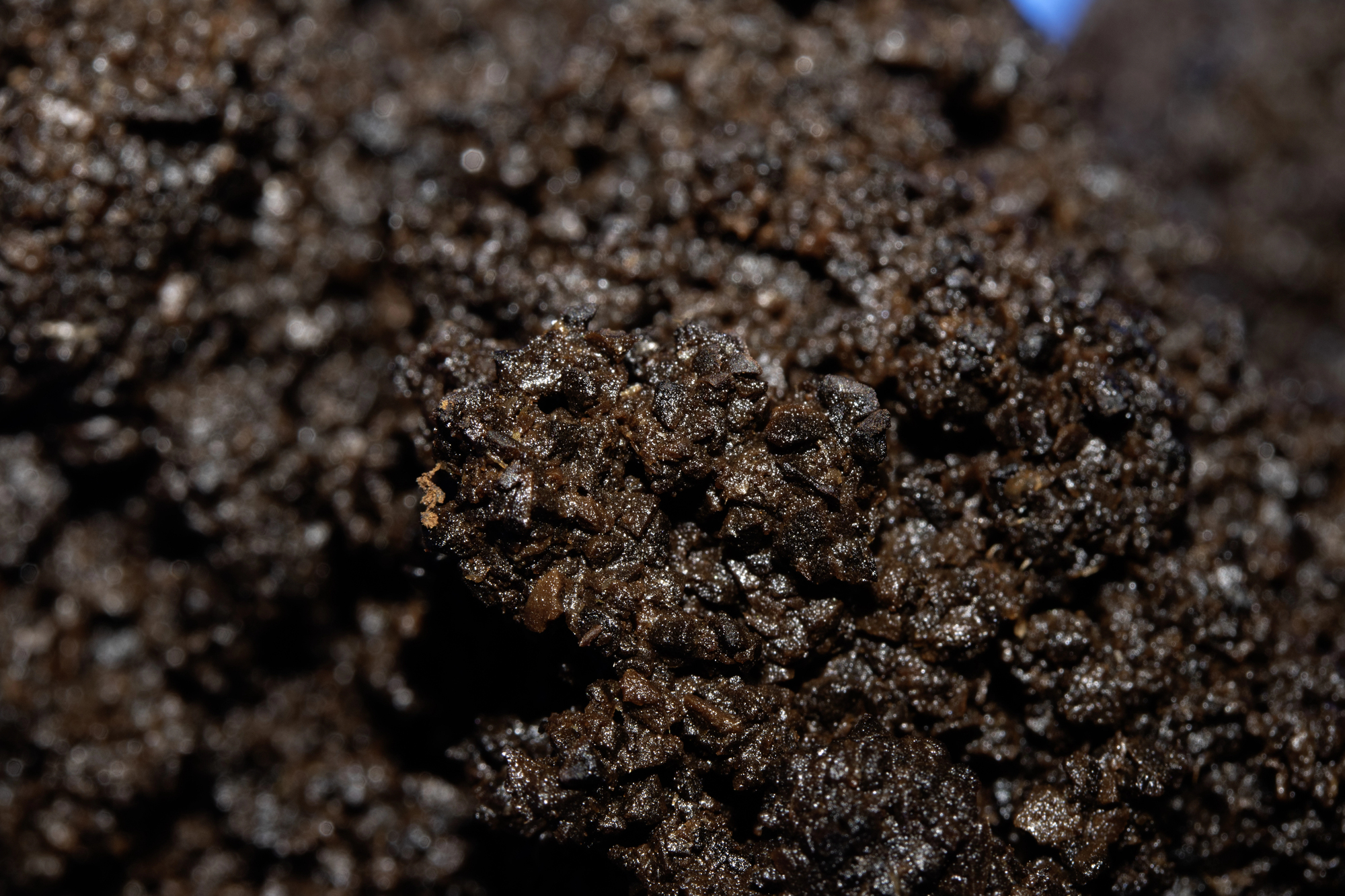
Dr. Taejun Park's coffee smelled like any other morning brew, but what happened next in his lab was anything but ordinary. At the Korea Institute of Geoscience and Mineral Resources in Daejeon, South Korea, Park and his team figured out how to turn wet coffee grounds—still soggy from yesterday's espresso—into fuel that burns like coal, in less time than it takes to brush your teeth.
The process takes just 90 seconds.
The science behind this trick lies in something the researchers call the "popcorn effect." Their Flame Plasma Pyrolysis system shoots plasma flames—superheated gas reaching 1,470 to 1,900 degrees Fahrenheit—directly at wet coffee grounds. At those temperatures, the water trapped inside each coffee particle turns to steam instantly, building pressure until the particles burst open like tiny kernels. This fracturing creates pores (tiny holes) throughout the material, making carbonization happen much faster than traditional methods, which require drying the grounds first.
Here's why that matters: spent coffee grounds are extremely wet, and for decades, that moisture has been treated as a problem. Most existing technologies make you dry out biomass before converting it into energy, which costs money, energy, and time. Park's team flipped that thinking upside down. Instead of removing the water, they made it part of the solution.
The results are impressive. The resulting biochar (a carbon-rich solid) has a heating value of 29 megajoules per kilogram—about 33 percent higher than untreated coffee grounds. Fixed carbon content jumped from 15.6 percent to 46.2 percent. Even better, the process completely eliminated sulfur compounds, which are pollutants that regular coal still releases when burned.
To understand how fast this is, consider this: other methods for processing wet biomass take anywhere from 30 minutes to six hours. Park's system does the same job in a minute and a half.
The team published their findings in the journal Chemical Engineering Journal and tested the process on spent coffee grounds specifically, but they see much bigger possibilities ahead. Food waste, sewage sludge, and agricultural leftovers all share the same wet, difficult-to-process characteristics. Park put it simply: wet organic waste is a feedstock, not a disposal problem.
The material produced isn't just useful for burning, either. Its porous structure makes it valuable for filtering water, cleaning air, and industrial uses beyond energy. Commercial-scale testing with other types of waste is the team's next step.
Globally, we throw away millions of tonnes of coffee grounds every year. If even a fraction of that waste could be converted into clean-burning fuel in under two minutes, the math adds up quickly—not just for Korea, but for any city wrestling with what to do with its garbage.