Joachim Klement, a self-described pessimist who has spent the last decade in the UK, never meant to become a World Cup oracle—but three consecutive correct predictions have thrust him into a role he never sought. The economist's original mission was almost the opposite: to expose what he calls "the hubris of economists who think they can forecast stuff that they actually have no clue about." Yet when his model correctly predicted Germany's victory in 2014, France's triumph in 2018, and Argentina's championship in 2022, something unexpected happened. People started treating him like a guru.
This curious turn of events reveals something both amusing and troubling about human nature: once you're right a few times in a row, people assume you've unlocked a formula, even when you're desperately insisting you haven't. Klement, who works as a strategist at investment bank Panmure Liberum, has tried repeatedly to pump the brakes on expectations. He emphasizes that his model accounts for only half the story of World Cup outcomes. Measurable "systemic" factors—national population, wealth, climate, and FIFA world rankings—do explain part of success. But the other 50%, he stresses, belongs entirely to luck: the form of the day, a referee's call, whether a ball hits the post or crosses the line.
The specificity of his warning matters. When elite teams face off with nearly equal skill and quality, prediction becomes almost futile. A single moment of brilliance or misfortune can swing an entire match. In that context, Klement's string of successes looks less like mastery and more like what he jokingly describes: being "lucky often enough" that people believe you must know something special.
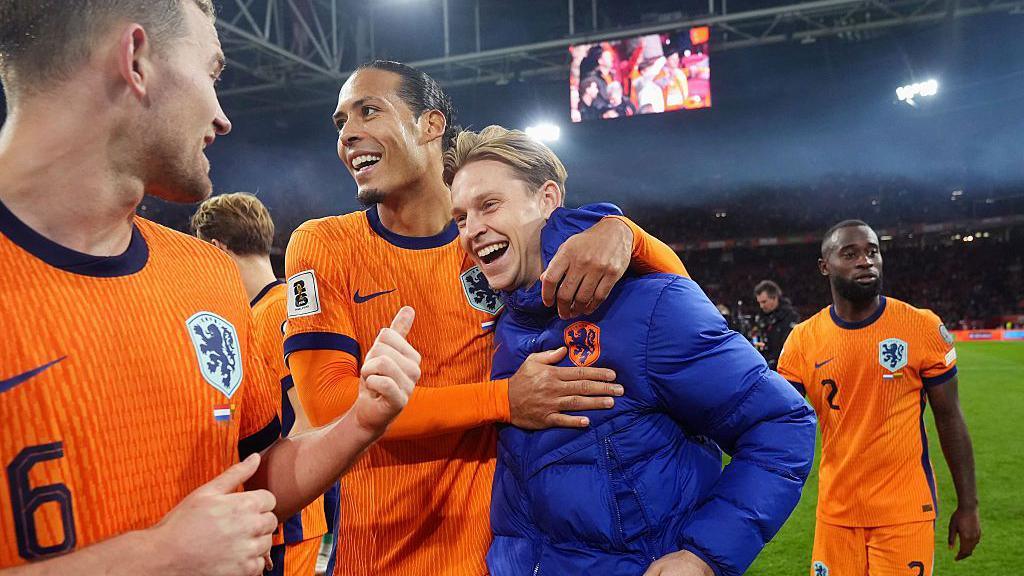
Yet Klement's quadrennial exercise now serves a different purpose than he originally intended. With each successful prediction, his forecast has grown in popularity—and in his latest analysis, his model picks the Netherlands as the winner. For Klement, this project has become something altogether more human than proving an economic point. "In particular in 2026, when there are so many crises, wars and things going on," he explains, "it is something that makes me feel good and hopefully the readers feel good and gives them a little bit of a distraction from all the kind of bad stuff that is going on in the world."
The weight of that role is becoming tangible. Colleagues in his office now barrage him with questions about how specific player injuries—like Dutch Tottenham midfielder Xavi Simons' ACL injury—might affect his model's calculations. Some have even placed bets on the Netherlands based on his analysis. The stakes, both professionally and personally, have risen considerably. Klement has joked grimly that if the Netherlands are eliminated, "the next day I have to work from home."
This tension between Klement's disclaimers and the world's hunger to believe in his formula reveals an uncomfortable truth: we want prediction to be possible, even when the evidence suggests it isn't. His model may be sound, but it remains vulnerable to the very randomness he keeps warning about. As the tournament approaches in June, Klement braces himself for either vindication or the awkward aftermath of being proven, at last, to be refreshingly, humanly wrong.