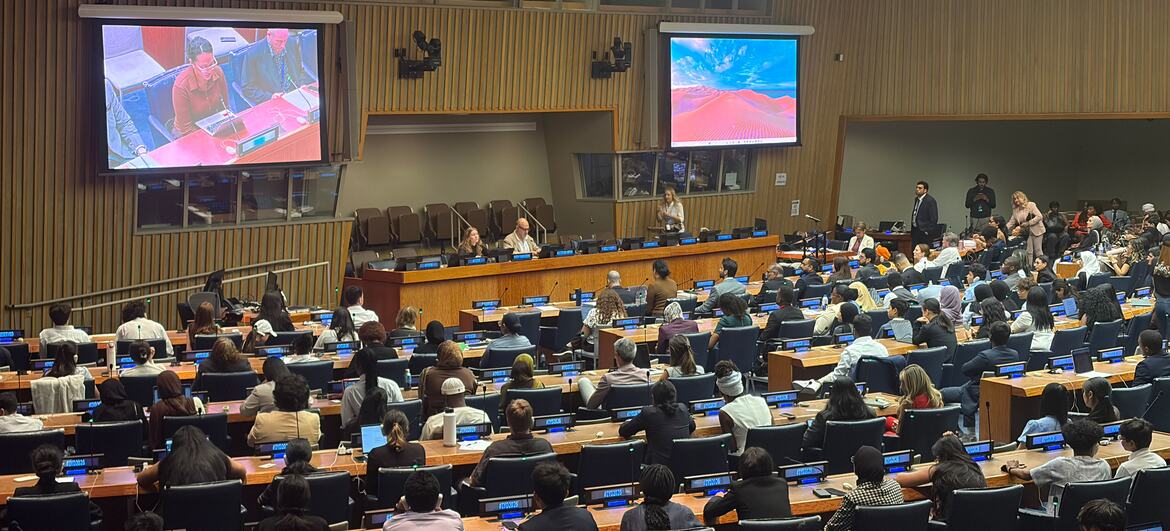
Samara Allen never expected to help shape the future of artificial intelligence when she started college. But on August 12, the 19-year-old University of California-Los Angeles student found herself moderating a historic summit at the United Nations, where more than 600 young people from every corner of the globe gathered to demand a seat at the table when decisions about AI get made.
The event took place on International Youth Day, a date the UN has marked every August 12 since the year 2000 to celebrate young people as partners in building a better world. This year's gathering felt especially urgent. Delegates at the New York summit released a Youth-led Declaration on AI Policy and Governance, a document meant to guide how the UN shapes global rules for AI technology going forward.
"Young people are sometimes included in these conversations, but they're actually included only at a few moments," said Felipe Paullier, the UN's Assistant Secretary-General for Youth Affairs. "Meaningful youth participation is not about being consulted in a tokenistic way at the end of a process. It's about involving them at the beginning."
That message resonated with ambassadors from countries like the Bahamas, Dominica, Pakistan, and Tonga, who helped organize the summit. They stressed that developing nations risk being left behind in the AI revolution unless young voices from those regions help write the rules. Sheikh Jaffar Khan Mandokhail, governor of Balochistan in Pakistan, told delegates that technological progress alone does not automatically improve people's lives. "We want AI to help reduce inequalities, not to deepen them," Paullier said.
Ambassador Philbert Aaron of Dominica put it plainly: "This is not simply a conversation about technology. It is a conversation about power, dignity, opportunity, culture and the future we choose to build together."
The stakes are real. Just before the summit, the UN's International Labour Organization released a report showing that 6.1 percent of jobs currently held by young people aged 15 to 29 fall into categories most exposed to being automated by AI. Youth unemployment worldwide is also worsening again after a post-pandemic recovery, leaving millions struggling to land their first job.
But the young people in the room saw themselves not just as victims of change, but as its architects. Mandokhail urged attendees to embrace their role. "The future of AI should not simply happen to your generation," he said. "My message to you is therefore simple: Learn, question, innovate and lead to build fairer societies, stronger communities and a more sustainable world."