Latest News
Positive stories from around the world · Good news by country
Showing 33721–33744 of 37373 articles

First archaeological case of cleft lip identified in China reveals inclusive care in Qing dynasty community
Archaeologists in northern China's Shanxi Province have identified the first ancient case of cleft lip and palate ever found in the country. The remains belong to a young man aged 16–18, buried during the Qing dynasty (1796–1820).Despite needing special care from birth, he survived into late adolescence with no signs of malnutrition. His burial in a family tomb alongside a wife and normal grave goods suggests he lived a fully integrated life, free from the stigma his condition often brought in ancient cultures.

Biodegradable magnesium alloys gain strength and resist corrosion for safer implants
Scientists at Flinders University in South Australia have developed new magnesium-based alloys for medical implants. The alloys are stronger and resist corrosion better than previous materials. They are designed to safely break down in the body after a patient heals, so follow-up surgeries to remove them may no longer be needed. Researchers say this could lead to safer implants and lower healthcare costs.

Vaccination Trends | Respiratory Illnesses | CDC
The CDC maintains a public dashboard tracking vaccination coverage for three major respiratory illnesses: COVID-19, seasonal flu, and RSV (respiratory syncytial virus). Data is collected through weekly national surveys and broken down by age groups, including both children and adults. This information helps public health officials monitor immunization trends and identify communities that may need additional outreach or resources.

Q&A: Will agentic AI replace human scientists?
A Q&A with scientist Jason Moore at Cedars-Sinai explores how "agentic" AI helps biomedical researchers. Agentic AI coordinates multiple AI tools to handle different research tasks, like a virtual team. Moore says the technology lets labs complete complex projects in days instead of months. He believes AI won't replace human scientists—instead, it will let researchers focus on creativity and human skills. Moore says AI could make each scientist 10 to 100 times more efficient.

Previously unknown stem cells may power children's height gain during puberty
Researchers at the University of Gothenburg have identified two previously unknown stem cell types in the growth plate — the area of bone that determines adult height. These cells come in two varieties: one acts as a reserve, while the other actively creates new cartilage cells that become bone. The team found that growth hormone activates these stem cells directly, which could explain why some children grow taller than others.
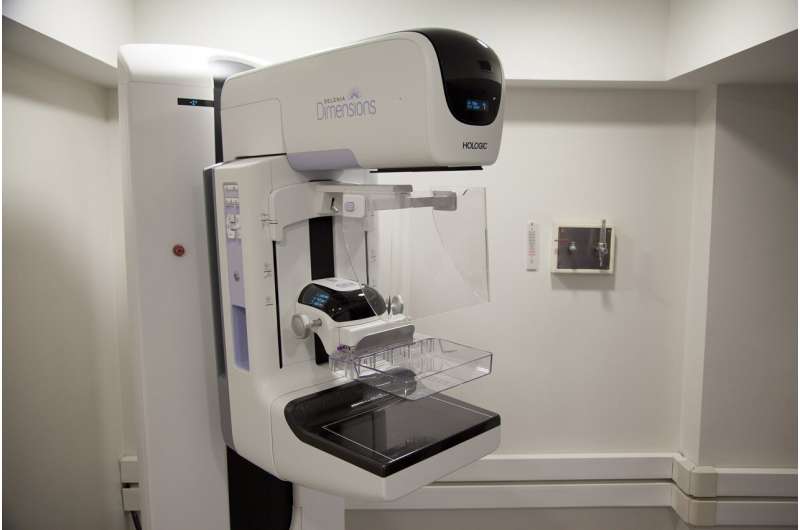
New guidance says all average-risk females aged 50–74 should undergo biennial mammography screening
The American College of Physicians issued new breast cancer screening guidelines recommending biennial mammography for average-risk women aged 50-74. The guidance aims to balance screening benefits against potential harms like false positives and overdiagnosis. Women aged 40-49 are advised to discuss individual risk with their doctor. Women 75 or older with limited life expectancy should consider stopping routine screening.

St. Kate’s celebrates student achievement at 2026 Honors and Awards Ceremony - | St. Catherine University
St. Catherine University in St. Paul, Minnesota, celebrated student excellence at its 2026 Honors and Awards Ceremony. Thirteen students received recognition across six award categories, including the Mary E. McCahill Memorial Award for highest university honor and the Dean of Students Award for community leadership. These awards celebrate students who demonstrated outstanding academic achievement, loyalty, and commitment to service throughout their college years.

CYP Now - Support for struggling families improves young children's language and cognition - CYP Now
Big Hopes Big Future (BHBF) is a program run by Home-Start UK that helps families in Southwark and Lewisham get their young children ready for school. Trained volunteers visit families weekly, using activity packs focused on four areas: language skills, daily living skills, cognitive skills and behaviour. The program supports 200 children a year through 83 volunteers, with 50 children receiving extra targeted support.

Researchers directly observe muonic molecules critical to muon catalyzed fusion
Researchers have directly seen muonic molecules for the first time. These tiny particles are made of two hydrogen nuclei (deuterium) stuck to a muon, a heavier cousin of the electron. Using a sensitive X-ray detector, the team identified quantum states in these molecules that make fusion possible at room temperature. Normal fusion needs -degree heat, but muons let nuclei fuse much more easily. This understanding could help develop cleaner fusion energy.
Scots ready for England juggernaut & historic home crowd
Scotland's women's rugby team is set to make history on Saturday with a record crowd of around 28,000 fans expected at Murrayfield Stadium for their Six Nations match against England. This figure dwarfs their previous record of 7,774, set at the Hive stadium in 2024, and even surpasses Scotland's biggest women's football attendance of 18,555 from 2019.

Meet the Oxford Library Cat Who’s Purr-fectly Content Being the Unofficial College Mascot
Issy the cat has been commuting to Lady Margaret Hall at Oxford University for 6 years, becoming the beloved unofficial mascot. His owner Jamie Fishwick-Ford, a librarian, brings Issy on the bus each day — and the cat meows if he does not get enough attention from passengers. Issy has become especially popular among students missing their own pets at home. He provides comfort to those feeling down, staying calm when students visit him in tears after stressful events like accidentally deleting their work.
What does the Saudi Arabia PIF's change in approach mean for Newcastle?
Saudi Arabia's sovereign wealth fund, the PIF, has announced a new strategy prioritizing sustainable investments after recording a $73bn budget deficit last year. The fund is selling its stake in Al-Hilal but claims it remains fully committed to Newcastle United, where it holds a majority stake. Newcastle officials have been reassured that the club is unaffected, and PIF delegates are still scheduled to visit. However, the club currently sits 14th in the Premier League, far from its goal of competing for the biggest prizes by 2030.

Conservation in Action: Protecting the Atlantic Flyway | Mattamuskeet Goose Club
The Mattamuskeet Goose Club in Hyde County, North Carolina protects migrating waterfowl by managing wetlands as essential "fueling stations" along the Atlantic Flyway. Hunters traveling from Canada and the northern U.S. rely on these managed lands after losing natural wetlands over the past century. The club uses moist-soil management—manipulating water levels to grow native plants like smartweed and wild millet—providing birds with seeds, tubers, and protein-rich aquatic invertebrates.

Child Nutrition Education at Hunger Task Force Enhances Kids’ Health and Wellness - Hunger Task Force
In Milwaukee, Wisconsin, the Hunger Task Force runs a Child Nutrition Education program that teaches children how to grow fruits and vegetables, cook nutritious meals and make healthy eating choices. The program uses a "Garden to Plate" model where students plant seeds, harvest produce and prepare meals themselves. By partnering with three local school districts, the program reaches children who face the greatest barriers to healthy food access.

Key gene enables tomato seed germination under high-temperature conditions
Scientists at University of Tsukuba in Japan have found that tomatoes missing a gene called SlIAA9 can still grow properly even when temperatures get very hot. Normal tomatoes struggle to germinate when it is warm, which threatens crop yields as the planet heats up. The researchers discovered that without SlIAA9, tomato seeds produce more protective proteins and are less sensitive to a hormone that normally stops germination in hot conditions.

Songbird brains can generate new neurons: Can human brains do the same?
Researchers at Boston University have found that new neurons in zebra finch brains push and tunnel through existing brain cells to reach their destination, rather than carefully navigating around them. This discovery, made using powerful electron microscopy, shows that bird neurons behave like explorers forging through a dense jungle. Unlike birds, humans and other mammals have very limited capacity to generate new neurons in adulthood.

Saving coral reefs will require ruthless selection over generations to beat future heat waves
Scientists at Newcastle University in the UK have spent 8 years creating a family tree for corals to find which traits help them survive heat waves. Their study shows that to keep pace with climate change, coral breeding programs should select only the top 1–5% most heat-tolerant corals as parents. The good news: improving heat tolerance didn't come at the cost of other important traits like growth or reproduction.

Women’s World Cup | History, Winners, & Facts | Britannica
Spain claimed the 2023 Women's World Cup title by beating England 1–0 in the final match. The tournament brought together 32 national teams from around the world. This was the first time Spain's women's team won the championship. The event was hosted by Australia and New Zealand. Since the first Women's World Cup in 1991, the tournament has grown from 12 to 32 teams.

Michigan's Wolves Are Pushing Beyond Protected Areas, and That's Exactly the Point - Animals Around The Globe
Gray wolves have made an extraordinary comeback in Michigan's Upper Peninsula, growing from fewer than 10 animals in the 1960s to at least 762 today. The population has surpassed federal and state recovery targets for 22 consecutive years and reached what biologists call natural equilibrium with the available habitat. Wolves are now naturally expanding beyond their traditional territory, including sightings south of the Mackinac Bridge. The 2024 winter survey recorded 158 packs averaging nearly five wolves each.

UN office's recovery plan advances flood relief efforts in Pakistan
A UN-backed relief plan is helping Pakistan recover from devastating glacier floods that hit Hassanabad village in the Hunza Valley. The July 2025 disaster, caused by a bursting glacial lake, destroyed homes and irrigation systems. OCHA's recovery plan targets 1.4 million people across 14 districts over six months. Relief workers report that emergency food supplies successfully reached vulnerable households, with aid distribution praised for transparency and community coordination.

Swedes set a high bar for AI in health care, survey shows
A study from the University of Gothenburg asked 1,000 Swedes about their views on AI in healthcare. The results show high expectations: many people want AI to be perfect and never miss a serious illness. However, trust in AI tools is only moderate. Seven in ten physicians have tried chat-based AI tools, but few actually use them when making medical decisions. The researchers say developers, doctors, and patients need to discuss together how much error is acceptable for AI to be useful.

As modern crops turn 'lazy' underground, old sorghum may hold key to future food security
Scientists at the University of Queensland compared how traditional and modern sorghum varieties access phosphorus from fertilizers. Traditional sorghum grew bigger and pulled more nutrients when given recycled phosphorus sources that were harder to dissolve. The key difference was root exudates—chemicals roots release to unlock nutrients. Modern crops bred for easy-access fertilizers had become "lazy" underground, while traditional varieties adapted to nutrient-poor soils still had stronger root systems.

CM Wong announces passage of two Earth Day bills to improve parks and protect urban wildlife – QNS
New York City Council Member Phil Wong announced the passage of two Earth Day bills on April 16, 2026. Intro 805 will launch a cool pavements pilot program in parks across all five boroughs, testing special pavement that reduces temperatures and makes playgrounds safer during hot summer months. Intro 806 creates a citywide wildlife management advisory board to develop a comprehensive plan promoting biodiversity, protecting public health, and ensuring humane treatment of urban animals.

DeBriefed 17 April 2026: Fossil-fuel power slumps | ‘Super’ El Niño warning | Afghanistan’s climate struggle
Carbon Brief's weekly roundup shows climate progress amid turbulence. Oil prices jumped 7% after US-Iran peace talks failed and Trump ordered Iranian port blockades. However, European nations responded with support packages totaling billions, while France announced plans to double its electrification spending to €10bn yearly through 2030. Meanwhile, climate scientists warned of a potential "super" El Niño driving extreme weather, and Hungary's opposition victory may open new paths for European climate cooperation.