Latest News
Positive stories from around the world · Good news by country
Showing 49–72 of 37342 articles

New research establishes fundamental complexity limit for quantum circuit optimization
Researchers at Kvantify proved that finding the most efficient quantum circuit is extremely hard. Quantum circuits are the step-by-step instructions that run quantum computers. The team linked this task to a known hard puzzle, the Hamiltonian path problem on grid graphs. The result explains why engineers struggle to optimize these circuits, which matters for future quantum chemistry and error correction.

Fiber-optic sensing unearths surprising complexity in small California earthquake
Scientists studied small earthquakes in California's Brawley Seismic Zone using fiber-optic cables buried along a fault. The cables act like thousands of tiny sensors, giving a much clearer picture than old instruments. A magnitude 2 quake broke in two spots just 42 milliseconds apart, and the first break seemed to trigger the second. The findings could help researchers better understand large, dangerous earthquakes.

Engineers reveal the interlayer elastic limits of van der Waals crystals
Researchers at The University of Hong Kong and Tsinghua University studied two layered materials: graphite and hexagonal boron nitride. They measured the elastic limit between the layers, which is how far the layers can be pushed before they permanently change shape. The team also found the physical mechanism that sets this limit. The results were published in the journal Nature Communications.

Using a drone and a poop-sniffing dog, scientists perform health checks on endangered orcas
Every fall, researcher Deborah Giles searches for endangered orcas, also called killer whales. Scientists now use drones to fly over whale pods and collect breath samples. A specially trained dog also sniffs out orca droppings, which tell researchers how healthy the whales are.

Newly discovered barrier could explain why nucleic acid medicines remain trapped inside cells
Researchers at the University of Hong Kong found a cell barrier that may block some promising nucleic acid medicines. Nucleic acid medicines are drugs made from genetic material, such as DNA or RNA. Once inside a cell, these drugs often get stuck and cannot reach their targets. The team published the findings in Nature Cell Biology, and the results could help scientists design better ways to deliver these drugs.

Denisovan remains and an unknown archaic human lineage discovered in southern China
Scientists studied four ancient fossil teeth from two caves in southern China. The teeth show signs of Denisovans, an ancient human relative. They also point to a more primitive human group whose identity is still unknown. The study was published in the journal Nature.

Strawberries, cucumbers and lemon basil show promise for future moon and Mars menus
NASA is testing crops that could feed astronauts on future moon and Mars missions. Strawberries, cucumbers and lemon basil have shown promise in tests at Kennedy Space Center in Florida. Cucumbers produced a steady stream of edible fruit under space-like conditions. Plants like these can also take in carbon dioxide, make oxygen and recycle water.

Cancer can evade immune attack by disrupting the teamwork of immune cells
Cancer fights back against the immune system in a clever way. Scientists learned that tumors can break up the teamwork among immune cells. Killer cells alone are not enough to stop a tumor. Some immune cells must spot danger, call for reinforcements, and train others. Understanding this could help doctors design better cancer treatments.

Melting Barents Sea ice gives Eastern Europe's farmers a spring boost
Less sea ice in the Barents Sea, north of Norway and Russia, has changed weather across Europe. Spring is warmer in Eastern Europe, so crops start growing earlier and face fewer frosts. In Belarus, wheat yields were about 16.5% higher in low-ice years, while Spain saw wheat drop about 5%.

Study shows path to more resilient future for Canada's forests
Mountain pine beetles have killed millions of lodgepole pines across western North America since the 1990s. Some trees survive better than others. New research suggests part of this strength comes from genes. The resistance can also be passed down from parent trees to their offspring, offering hope for forests in Canada.

New educational program developed for an often-overlooked group of gifted children
Gifted children from lower-income families often do less well at school. They are also less likely to be identified as gifted. Lineke van Tricht, a PhD candidate at Radboud University in the Netherlands, has developed a program to help these pupils make the most of their talents. She says it matters for the young people and for society as a whole.
A Quantum Attack Could Need Just Two Keys to Freeze a Blockchain
Researchers studied fifteen proof-of-stake blockchains, which are networks like Ethereum and Solana that confirm transactions by a vote. Each vote uses secret keys that a future quantum computer might crack from public information. For fourteen networks, only 2 to 18 broken keys could defeat security. The authors urge moving to new, quantum-safe signatures before such machines exist.

Ocean-wave forecasts may be getting the right energy loss—and the wrong waves
Researchers studied how ocean waves lose energy and share it across different wave sizes. Current forecast models treat these two effects as separate, which can misplace energy. The team derived a new equation that links them together. It keeps total energy loss about the same but spreads energy across wave frequencies more accurately, and it is more stable with numbers.
A neural network that cannot step outside its safety rules
Neural networks are computer programs that learn from examples. Many real jobs, like robot control, need answers that follow physical rules and safety limits. The new SOC-Net design builds those rules directly into the network, so every answer stays safe, even for new inputs. In tests on robot contact forces and obstacle avoidance, it met every limit and ran faster than the other methods tried.
A better way to make power converters behave like stabilizing neighbors
Power converters are devices that connect solar panels, wind farms and batteries to the grid. As more of these replace old spinning generators, grids can become less stable. This paper offers a mathematical method that tunes converter controllers to keep the grid steady over chosen frequency ranges. Engineers tested it on a single converter and a small microgrid.

Artificial protein activates faulty insulin receptors and lowers blood sugar in mice
Some inherited diseases cause mutations that stop insulin receptors from working. Insulin is the hormone that tells cells to take in sugar from the blood. A new study in Science Translational Medicine describes an artificial protein that activates one of these broken receptors. In mice, the protein lowered blood sugar.

How mammals zigzagged their way to modern posture
Early mammals and their ancestors left fossil bones and footprints behind. Scientists used these clues to study how these animals moved. Over time, their legs shifted from sprawling out like lizards to standing directly under the body. This change let them move faster and helped mammals later come to dominate the Earth.

Researchers call for a better understanding of who benefits from new green space
Parks, woodlands and rivers can improve health and help cities handle heat and flooding. But researchers at the University of Manchester found that new green spaces do not help everyone equally. They built a framework called GIFT to help planners judge who benefits and why. It was tested on a community park in a poor Manchester neighborhood.

ATLAS finds hints of the hidden structure of the vacuum
Scientists at CERN's Large Hadron Collider in Switzerland studied particle collisions with the ATLAS detector. They saw more collisions with an even spread of particles than expected. This may be a sign of QCD instantons, which are shifts in the structure of empty space predicted about 50 years ago. The result is not confirmed yet, and the team plans more tests.

mRNA Ebola vaccine trial starts in Uganda: Institute
Clinical trials of an experimental Ebola vaccine have begun in Uganda, according to the country's virus research institute. The vaccine targets the Ebola strain causing the current outbreak in the neighboring Democratic Republic of Congo. The vaccine uses mRNA technology, the same approach used in some COVID-19 shots. Starting trials next door could help speed up protection for people at risk.

In a first, ultrasound maps blood flow through an entire human kidney in 3D
Researchers at the Inserm Institute of Physics for Medicine in Paris have mapped the whole blood vessel network of a human kidney. They used a new ultrasound technique, first tested in animals. The method shows how blood flows in 3D. It could help doctors better understand and diagnose kidney diseases linked to vessel damage.
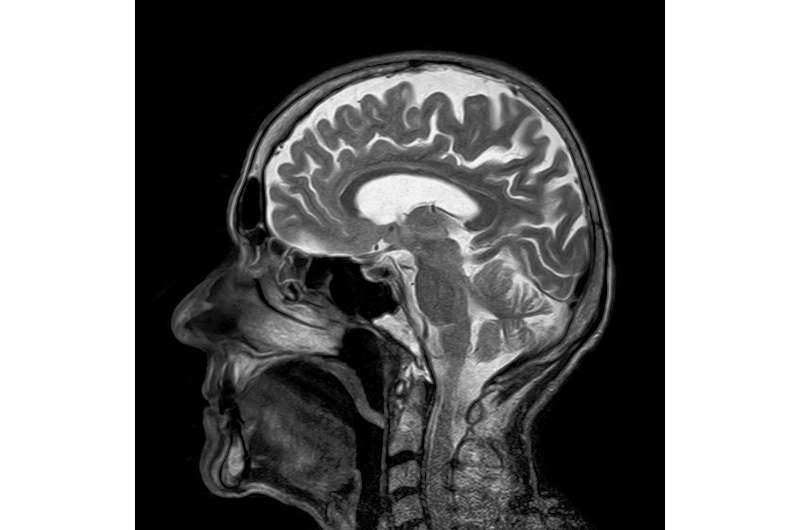
A new map reveals how individual brain cells use different RNA versions of the same genes
Researchers at the University of Helsinki in Finland developed a new method to map which gene versions brain cells use. Genes can make different RNA copies, and wrong copies are linked to diseases like ALS and Alzheimer's. The method works at a scale of 500 nanometers, smaller than one cell. It was tested on mouse brain samples and published in Nature Methods, and the team plans to apply it to human data next.
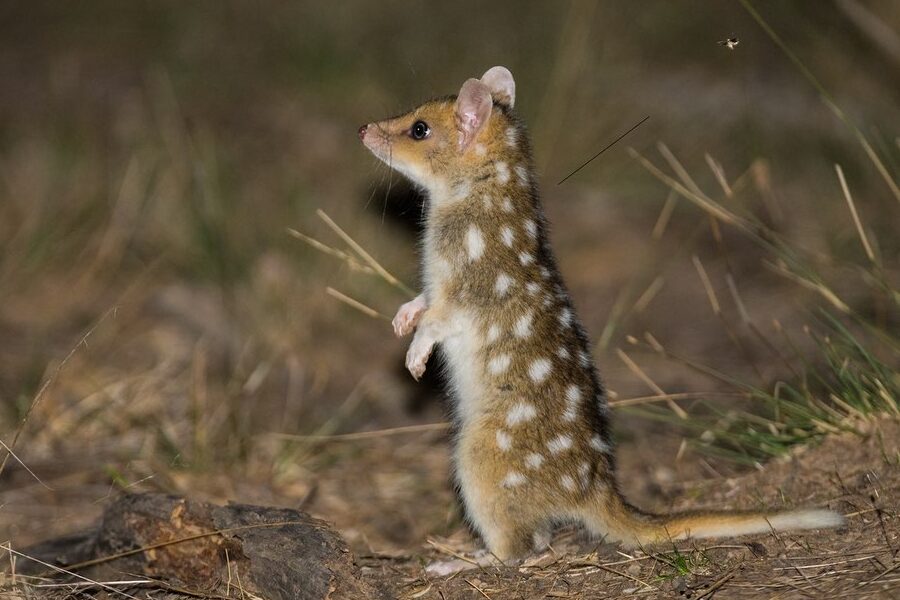
Sanctuary nurtures lost wildlife back to Canberra - Queanbeyan CityNews
On the northern outskirts of Canberra, Australia, a predator-proof fence is helping wildlife come back. Native animals that disappeared from the area decades ago are now living there again. The fence also helps restore an ecosystem that was once close to being lost.

Scientists identify brain circuit behind sensory hypersensitivity in autism
Researchers from the Institute for Basic Science and KAIST studied mice with a gene change linked to autism. These mice reacted too strongly to touch, heat and electric shocks. The team found overactive neurons in the anterior cingulate cortex, a brain area that handles pain feelings. Turning off a selected group of these neurons calmed the mice's extreme reactions.