Latest News
Positive stories from around the world · Good news by country
Showing 889–912 of 37346 articles

A robot built a circuit board—and caught a test that would have failed it
Researchers built JARVIS, an AI agent that controls a robot arm, a circuit printer, and a pick-and-place machine. Given one text instruction, it designed, made, and tested a circuit board with no human help. The board filters out 60 Hz electrical hum, the frequency of most power grids. A digital test run first found five problems, including a test rule that would have wrongly rejected a good board.
A fractional epidemic model can mistake changing behavior for memory
A new math study looks at a popular way of modeling disease spread. This model adds a "memory" setting, meant to show how past infections affect new ones. The authors found that this setting can look convincing even when it reflects only changing behavior. They tested the idea on early COVID-19 data from Bangladesh and the United States.

A new way to follow the randomness inside cells—and epidemics
Researchers built a new mathematical method to predict random changes in small groups of molecules. These changes happen in cells, gene switches, enzyme reactions, and the spread of infections. Standard tools often fail when only a few copies are present. The new method matched these systems well in tests, including steady states that older tools missed.

Mapping the microbes' arms race with viruses at planetary scale
Scientists at the DOE Joint Genome Institute built a new tool called SpacerExtractor. It reads small DNA records that microbes keep of viruses they have fought. The team used about 400,000 public microbiome datasets to build a database with over 100 times more data than before. The tool helps researchers find which microbes each virus infects, which could help future efforts to guide microbiomes.

Immune aging blueprint offers new clues to fighting cancer
Researchers at Monash University in Australia mapped how genes change in aging immune cells. Their study, published in Science Immunology, used mice. It found three separate ways aging weakens CD8 T cells, the body's frontline defenders against infection and cancer. The team also found a new group of aging cells that actively slow down other immune cells. The work could lead to therapies that keep immune systems stronger for longer.

Nearly half of adults over 70 benefited from exercise training across several areas of physical function
A yearlong exercise program was tested on 314 adults over 70 at the University of Jyväskylä in Finland. On average, muscle strength, walking speed and walking endurance improved. Nearly half of the people improved in several measures of physical function. Regular strength training was a key factor in success.

Cell biologists uncover key mechanism behind a rare cause of childhood epilepsy
Scientists at the University of Liverpool studied a protein called CDKL5. Mutations in its gene cause a rare disorder that brings severe seizures from early infancy. The team found a docking point that holds the protein at connections between nerve cells. Their work suggests some mutations cause harm by keeping the protein in the wrong place.

Inner ear study challenges canonical understanding of hearing
Researchers studied guinea pig ears and found the inner ear picks up low-frequency sound across distant areas at nearly the same time. This challenges a 1960s theory that each sound pitch maps to one fixed spot. The discovery could help design better cochlear implants, devices that help people with hearing loss. The study was published in Science Advances.

Can psychedelics improve decision-making?
Boston University researchers studied how psychedelic drugs affect decision-making in mice. Mice were trained to find a reward using light signals. After getting psilocybin or ketamine, the mice made fewer mistakes and relied less on habit. The researchers say this may explain part of how psychedelics help with depression.

El Niño created a skiers' paradise in Chile—now it's Sierra Nevada and southern Rockies' turn
A strong El Niño is bringing heavy snow to California's Sierra Nevada and the southern Rockies. Tahoe-area resorts got several feet of snow in mid-November 2026 and some opened early. The same storms caused destructive floods in the Four Corners region. The snow may also help refill Lake Powell and Lake Mead, which fell to record lows after last year's snow drought.

Custom MRI tool could show within weeks if pancreatic cancer treatment is working
Doctors at Ohio State University are testing a new MRI scan method for pancreatic cancer. About 60% of patients cannot have surgery at first because their tumors are too large. Chemotherapy aims to shrink these tumors so surgery becomes possible. The new tool, called P4, helps doctors measure within weeks whether treatment is working, so they can switch therapies sooner.

Practical organ-on-a-chip platform helps assess the toxicity of environmental chemicals
Thousands of everyday chemicals have little safety data, and much of it comes from costly animal tests. Researchers at Seoul National University of Science and Technology built a small liver model on a chip. It can run 12 tests at the same time and needs no tubing. In tests, it detected liver harm from a flame retardant at lower concentrations than standard dish-based tests.

New sources of neurotoxin linked to algal blooms uncovered in Florida and Kansas
Researchers found two freshwater algae strains that can make guanitoxin, one of the strongest algae nerve toxins known. One strain came from a stormwater pond in Florida and the other from a bloom in Kansas. The toxin breaks down fast, so it is hard to catch after animals die. The team also found shared genes that can help detect the toxin in lakes and ponds.

Bumblebees challenge long-held beliefs about brain size and intelligence
Bumblebees have brains with fewer than a million nerve cells, yet they can solve puzzles and learn by watching other bees. They can also move a ball and climb on it to reach nectar. Two scientists, Lars Chittka and Stanley Heinze, reviewed past research on bee behavior and brain wiring maps. Their work suggests bee smarts may not need brand-new brain designs.

Preventable vision loss affects more than a billion people globally—and uneven access to care is the major culprit
More than 1 billion people live with vision loss, and most cases are avoidable. Simple fixes like eyeglasses and cataract surgery are among the cheapest health treatments available. A recent report found that every dollar spent on eye health in low- and middle-income countries returns $28 to their economies. Global support for eye care grew after a 2021 United Nations resolution passed unanimously.

Open-source platform combines brain commands, spinal circuits and muscle responses in one simulation
Researchers at FAU in Germany and partners in Brazil built MyoGen, a free computer model. It joins brain commands, spinal cord nerve circuits, muscle feedback, and muscle signals into one simulation. Until now, these parts were mostly studied separately. The open-source tool can support clinical research and help improve wearable devices for people who are paralyzed.

Witnessing generosity from low-income donors more likely to elicit giving from observers, research finds
A University of Kansas study found that people feel more inspired to give when a lower-income person makes a donation. The researchers ran nine experiments with hundreds of U.S.-based participants. Observers felt more moral uplift when they believed the donor cared about others. The people who gave the most were not the richest ones. The findings were published in the Journal of Personality and Social Psychology.

Indigenous protesters board soy and oil barges on Brazilian Amazon river
Hundreds of Indigenous protesters used small boats and canoes to stop barges carrying soybeans and fuel on Brazil's Tapajós River. The two-day protest on November 14 and 15 near Santarém drew more than 650 people. They want the river protected from heavy industry and want their lands formally recognised. The government recently repealed a decree that could have blown up sacred river islands.
A men's netball World Cup - not a question of if, but when?
Men's netball is growing quickly, especially in England. The England men's team played its first international in October 2022. Last year, England launched its first men's Super League. World Netball, the sport's global body, is now developing plans for an inaugural men's World Cup.

Spiders, beetles and one garage alligator: Largest study to date reveals wildlife sharing our indoor spaces
An international team of researchers studied the animals that share our indoor spaces. They covered homes and other buildings across the United States and Canada. The team built a database with more than 20,000 entries. It lists more than 2,000 species, from spiders to beetles.

Experimental anesthetic may also blunt pain at nonsedating doses
Scientists are testing a new experimental anesthetic, a drug used to block pain during medical care. It may also relieve pain at doses too low to cause sleep. Today's common options, propofol and etomidate, usually need extra pain medicine. They can also cause low blood pressure, slowed breathing, or hormone problems.

Deep Venture: A new class of ocean exploration vehicle developed
Scientists at Woods Hole Oceanographic Institution, working with NASA's Jet Propulsion Laboratory in California, built a new robot submarine called Deep Venture. It runs on its own, without a driver on board. It can survive huge water pressure, so it can reach the deepest places on Earth. It can also support many kinds of science missions, from shallow coastal water to the deep sea.

A new way to extract oxygen from lunar soil could support bases on the moon
Researchers have found a new way to extract oxygen from lunar soil. The method borrows ideas from computer chip manufacturing. Oxygen could help astronauts breathe and make rocket fuel on the moon. This could make long-term moon bases more practical.
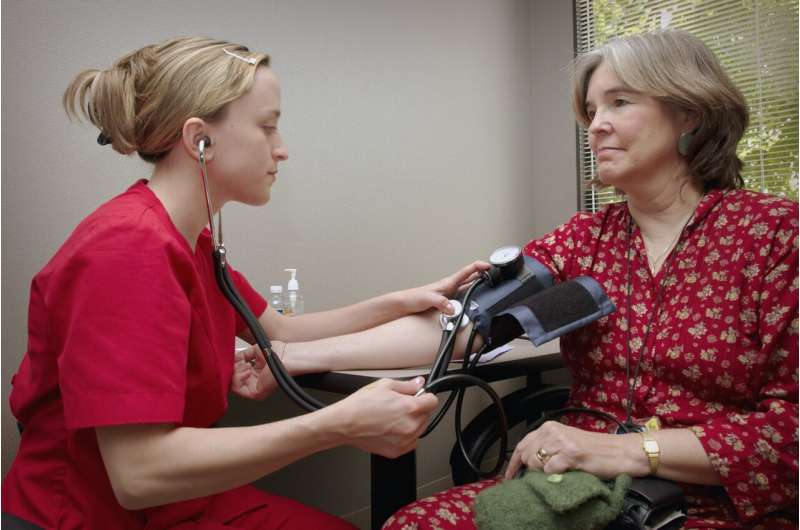
Blood pressure medication more likely to prevent heart attacks and strokes than cause serious falls, study finds
A large study led by researchers at the University of Oxford looked at blood pressure medicines. It found these drugs are more likely to prevent heart attacks and strokes than to cause serious falls. This holds true even for older people and those living with frailty, meaning poor overall health and weakness.