The Year Researchers Stopped Guessing
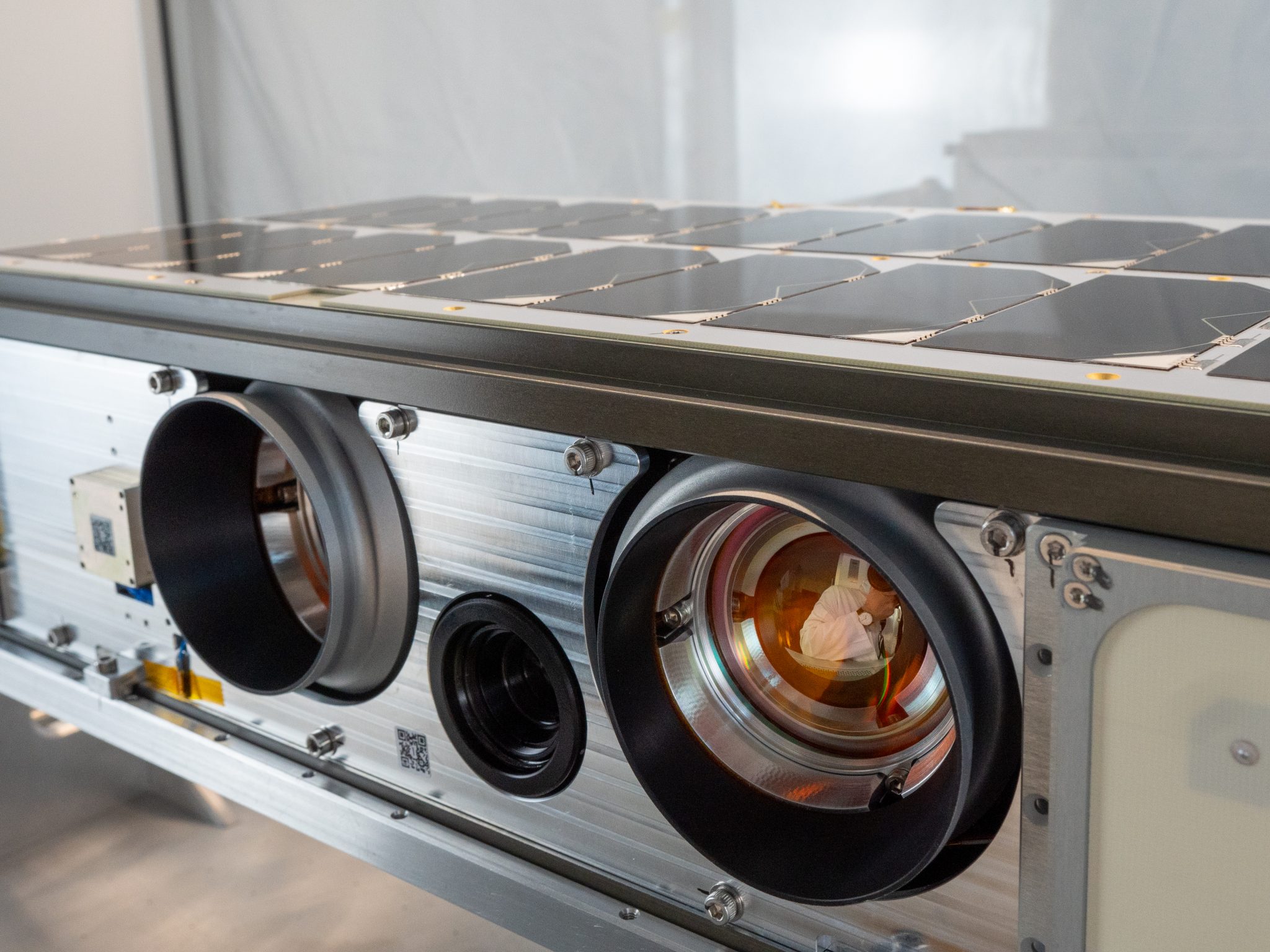
In May 2026, four satellites smaller than carry-on bags slipped into low Earth orbit and began watching Greece for fires the size of a car. By comparison, conventional satellites can't spot a blaze until it's roughly the size of a cruise ship. The OroraTech nanosatellite constellation—deployed by the first country to build a satellite network specifically for wildfire response—can catch flames at just four meters across, then feed AI models that filter out solar panels and sun-warmed rocks before anything reaches emergency services.
It's one of those moments where a number tells the whole story: four meters versus hundreds of feet. The difference between a controlled burn and an inferno. The difference, if you live in a fire-prone region, between your house standing and gone.
But Greece's tiny sentinels are just one front in a broader reckoning happening across fields of research. In 2026, scientists and engineers seem to be doing something different. They're not just building faster or cheaper. They're designing systems that finally respect how people and environments actually work—not how models assume they do.
Finally Talking to the Land
Walk into a cornfield and it looks uniform. Rows stretch to the horizon, identical and predictable. But "fields might look the same from the road, but they're not," says Jasmine Neupane, an assistant professor at the University of Missouri. "Some areas have better soil and moisture, while others are more prone to erosion or nutrient loss."
For generations, farmers planted the same density everywhere. Now, using AI to analyze data from Ohio farms, Neupane and her team are proving that variable-rate seeding—adjusting seed density based on actual field conditions—can reshape how we grow food. The strategy of planting more seeds to boost production often increases costs without improving returns. Smarter planting with machine intelligence isn't about working harder; it's about paying attention.
Meanwhile, researchers at the University of Illinois Urbana-Champaign are applying similar thinking to cities. Urban heat maps typically rely on satellite data—useful, but distant. What people actually feel at street level can differ dramatically. Led by civil engineering professor Lei Zhao, the team built the first high-resolution urban air temperature dataset for 380 U.S. cities, combining AI with block-by-block analysis that shows heat the way residents experience it, not the way satellites see it. This isn't just more accurate data; it's data that accounts for the people living in those blocks.
Designing for Real Humans
This principle—design that matches reality—appears everywhere in this year's research.
At Carl von Ossietzky University of Oldenburg, researchers tested whether geriatric patients recovering from strokes and surgeries could use nutrition apps independently. The assumption had always been no: too complicated, too unfamiliar, too much cognitive load on top of everything else. But the study, published in JMIR Aging, found that with age-appropriate design—adjusted haptics, simplified interfaces, clearer visuals—patients 70 and older could track their own nutrition. Malnutrition affects up to 20% of rehab patients; another 54% are at risk. An app won't solve everything, but removing a barrier helps.
The insight echoes across domains. At MIT, Daniela Rus and her team have been developing FloatForm, a swarm of self-assembling robotic boats—about the size of a dinner plate at 21 centimeters square—that can form floating platforms, bridges, or stages on demand. "We are essentially turning static water surfaces into dynamic, programmable spaces," Rus says. The boats use magnetic latches and minimal human direction; they assemble, disassemble, and reassemble based on need. It's not about replacing city infrastructure; it's about making the waterfront responsive to how people actually use it.
And in the gig economy, University of Tennessee researchers John Bell and Launce Sanders discovered that platform design matters as much as pay for driver retention. How tasks are allocated, how time is structured, how earnings are displayed—these design elements shape whether drivers find work manageable and worthwhile. The financial incentives are obvious; the design levers had been hiding in plain sight.
The World Isn't One-Size-Fits-All
What unites these varied projects isn't a shared technology or discipline. It's a shared rejection of the assumption that one answer works everywhere.
The old model was universal: one seeding rate, one temperature estimate, one app design, one satellite view. It was comfortable in its simplicity and costly in its imprecision. The research emerging in 2026 suggests we're finally building tools sophisticated enough to match the complexity of the world they're meant to help.
That shift—from one-size-fits-all to context-aware—shows up in how Filipino craftsmanship is finding its footing in European markets. Filipino brands at Ambiente in Frankfurt and Maison&Objet in Paris aren't trying to compete on price or scale. They're bringing stories of cultural heritage, natural materials, and skilled communities. It's design that carries its context with it.
The same pattern holds for the deep reinforcement learning research emerging from robotics labs, where algorithms now allocate sensor bandwidth intelligently across unpredictable environments, adapting to what each mission actually needs.
Looking Forward
None of these breakthroughs will solve everything on their own. Wildfires still need crews on the ground; farmers still need boots in the fields; older patients still need human connection alongside apps. But each represents a different kind of asking: not "how do we apply our solution?" but "what does this situation actually need?"
That question—humble, precise, attentive—might be the most important innovation of 2026. And it's spreading across every frontier researchers are willing to visit.
Sign in to join the conversation.
Comments (0)
No comments yet. Be the first to share your thoughts.