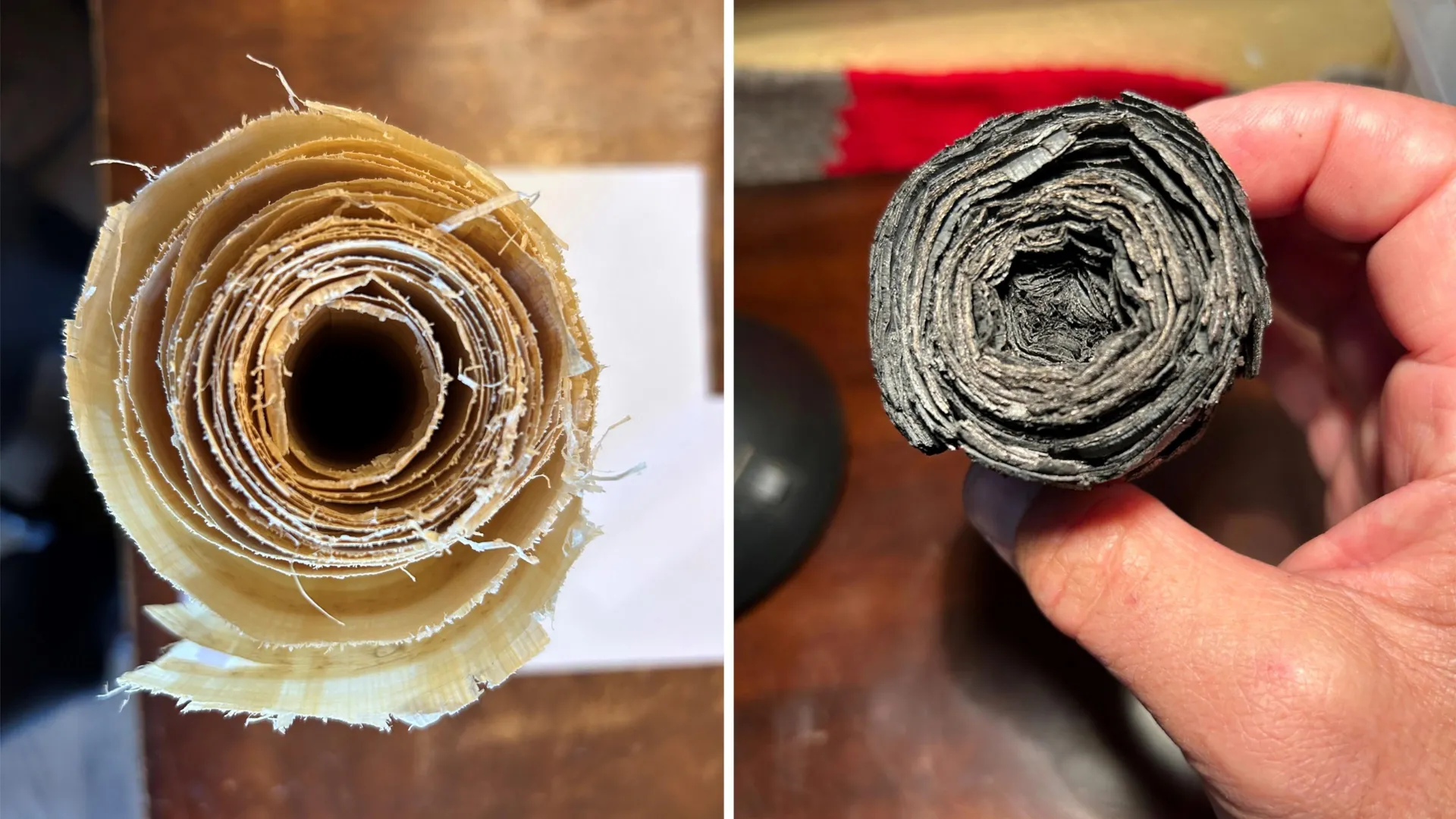
Douglas Seiler didn’t set out to burn sacred texts. But in a lab in California, he torched papyrus scrolls inked with lines from Star Wars and the Bible—on purpose. His goal? To mimic the carbonized ruins of Herculaneum, where a library of over a thousand scrolls was flash-baked by Mount Vesuvius in 79 C.E. For nearly 2,000 years, those scrolls have remained unreadable, their contents locked inside fragile, charcoal-like husks. Now, thanks to a tiny clue—traces of lead in ancient ink—scientists are closer than ever to reading them without unrolling a single page.
This is the quiet revolution of modern research: not just discovering new things, but reimagining how we uncover what was already there.
At Cornell University, researchers made a discovery that blurs the line between parasite and partner. They found that BC200, a gene essential for brain function in humans, is also a "jumping gene"—a mobile genetic element once thought to be evolutionary debris. Published in Science, the study reveals that this gene, derived millions of years ago from a transposon, still retains its ability to move within genomes. "Until now, no one had observed a human gene that is both mobile and required for bodily functions," said Cedric Feschotte, senior author. It’s a living fossil of our evolutionary past, still shaping our biology today.
Meanwhile, at Penn State, scientists are rewriting assumptions about antibiotic resistance in chickens. For years, farmers have turned to probiotics and essential oils hoping to reduce reliance on antibiotics. But the team found something surprising: none of these additives significantly altered the chickens’ resistome. Instead, age was the dominant factor. As the birds matured, their gut microbiomes naturally shifted, reshaping the landscape of antimicrobial resistance genes. The finding, published in Poultry Science, suggests we may need to rethink how we manage livestock health—not by what we feed them, but when.
That same lab in Pennsylvania also uncovered a kind of biological armor on frogs. In Brazil, researchers tested how two tropical frog species survived exposure to chytrid fungus, a pathogen that has decimated amphibian populations worldwide. The answer? Their skin bacteria. The study, in Animal Microbiome, showed a direct causal link between the frogs’ natural microbiome and survival. "It’s not just diversity that matters," said Gui Becker, "but the protective function of these bacteria." This isn’t just about frogs—it’s a lesson in resilience written in microbial code.
On a much larger scale, the PsychAD Consortium has spent years mapping the human brain at single-cell resolution. Their work—nine papers across Nature journals—represents one of the most comprehensive atlases of brain disease ever created, covering Alzheimer’s, Parkinson’s, and schizophrenia. By analyzing thousands of individual cells from postmortem brain tissue, researchers are beginning to pinpoint the exact molecular switches that go awry in disease. Launched in 2019 with support from the National Institute on Aging, this global effort is building a foundation for future therapies.
Even further back in time, scientists at the University of St Andrews have rewritten the origin story of bats. Combining genomic data from 103 species with fossil evidence, they concluded that bats likely originated in Europe 65 million years ago—right after the asteroid that wiped out the dinosaurs. Published in Nature, the study involved 137 researchers from 64 countries as part of the Bat1K consortium. Not only did flight and echolocation evolve early, but the research opens doors to understanding bats’ remarkable longevity and disease resistance—traits that could one day benefit human health.
And beyond Earth, on Saturn’s icy moon Enceladus, hope for extraterrestrial life is growing. Plumes of water vapor erupt from its subsurface ocean, and new studies in Science Advances suggest these jets contain chemicals that could support microbial life. Researchers from Freie Universität Berlin found that certain Earth microbes could survive in simulated Enceladus conditions—hinting that if life exists there, it might be detectable in the particles we’ve already sampled.
Back on Earth, another frontier is being illuminated: the "dark metabolome." Millions of unidentified molecules swirl inside our bodies, invisible to current detection methods. But a new tool called the Molecular Community Network (MCN), developed by Vladimir Boginski and team and published in Cell Reports Methods, is beginning to map this hidden chemistry. With roughly 8.4 million observed but unidentified metabolites, the MCN could unlock new biomarkers for disease, drug response, and nutrition.
From charred scrolls to jumping genes, from frog skin to bat genomes, science isn’t just about answers—it’s about asking better questions. And sometimes, the most powerful discoveries come not from inventing new tools, but from seeing old things in a new light.
Sign in to join the conversation.
Comments (0)
No comments yet. Be the first to share your thoughts.