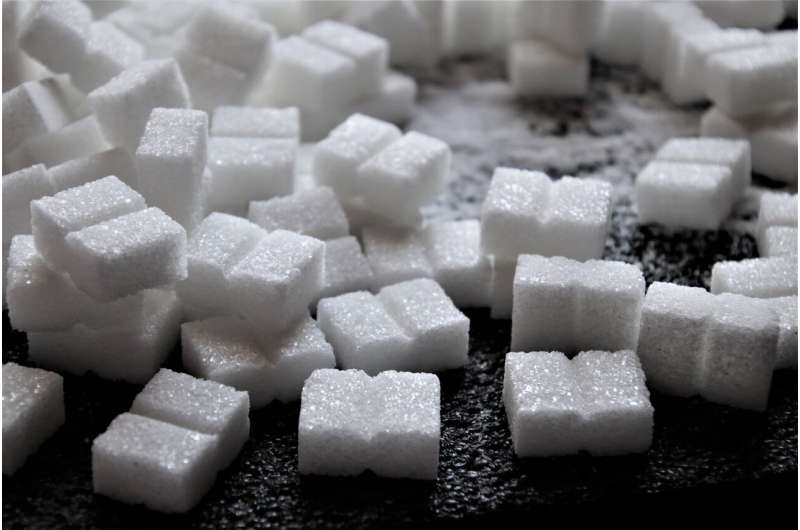
In a zebrafish glowing under a microscope in Bath, England, glucose molecules flicker like fireflies. This isn’t magic—it’s science. Researchers at the University of Bath have engineered fluorescent probes that make sugar metabolism visible in real time, opening a window into how diseases like cancer and diabetes hijack our body’s fuel systems. As these tiny lights pulse, they’re illuminating a much bigger truth: the future of health is being rewritten at the intersection of food, technology, and cellular secrets.
Half a world away, in Oklahoma City, another breakthrough is unfolding—this one inside the tumor microenvironment of pancreatic cancer patients. Led by Dr. Min Li at the University of Oklahoma, a team has identified three elusive cell subclusters forming a triangular molecular network that drives cachexia, the devastating muscle and fat loss affecting up to 80% of pancreatic cancer patients. Published in Cell, their research reveals not just who is responsible, but how they conspire: a feed-forward loop that accelerates wasting. Now, scientists are racing to develop therapies that could silence these cells before treatment tolerance collapses.
Meanwhile, at City of Hope, researchers are putting sugar back on the table—but this time, as medicine. A Nature-published study found that blood cancer patients undergoing intense transplants preserved more of their gut microbiome diversity when they cut back on sweets during antibiotic treatment. “Preserving microbiome diversity has previously been linked with improved clinical outcomes,” says co-senior author Marcel van den Brink. It’s a quiet revolution: what we eat may be as powerful as what we’re prescribed.
And yet, diet’s role in cancer care is far from simple. At McGill University, scientists discovered something counterintuitive: some so-called ‘obesogenic’ diets—often labeled unhealthy—were linked to better responses to immune checkpoint blockade therapy. The reason? A synergistic dance between gut bacteria and food. “Even with the right composition of bacteria in your gut, the foods you eat to nourish those populations can determine whether you respond to treatment,” says physiologist Daniela Quail. The obesity paradox isn’t a contradiction—it’s a clue.
Technology, too, is stepping into the gap between clinic visits. At the University of Miami’s Sylvester Comprehensive Cancer Center, psychologist Frank Penedo and his team have built Precision AI for Survivorship and Supportive Care—a framework to deliver personalized, evidence-based support to cancer survivors via AI. No longer left alone with fatigue, anxiety, or uncertainty, survivors can now access guidance that feels human, even when it’s algorithmic.
But as AI moves into emotional spaces, new questions arise. At the University of Montreal, psychiatrist Alexandre Hudon and colleagues introduced the AWARE framework—five guiding questions to help clinicians assess how patients use chatbots like ChatGPT for mental health support. It’s not about stopping AI use; it’s about understanding it. Because when a patient confides in a bot, their pain is still real.
Back in Boston, a hidden talent was uncovered in an unlikely place: the enzyme FAH. Long thought to play only a metabolic role, it was found lurking in the nuclei of breast cancer cells, driving resistance to CDK4/6 inhibitors. Now, researchers led by Naama Kanarek and Taru Muranen see a path to early detection—and a shot at overcoming drug resistance in HR+ breast cancer.
And at MD Anderson Cancer Center, a quieter but equally vital shift is happening. When first-degree relatives of BRCA-positive patients received personalized navigation through genetic testing, uptake jumped from 51% to 73% in six months. Nearly half carried the mutation. “Simply informing relatives of their risk is not enough,” says Dr. Roni Wilke. Support changes behavior. And behavior saves lives.
Together, these advances paint a picture of medicine transforming—not just from the lab outward, but from the kitchen, the phone screen, and the family tree inward. The tools are different, but the goal remains the same: to give patients more time, more dignity, and more hope. And maybe, just maybe, the next great treatment won’t come in a vial—but in a conversation, a meal, or a molecule that finally glows bright enough to be seen.
Sign in to join the conversation.
Comments (0)
No comments yet. Be the first to share your thoughts.