On a Saturday morning in April, more than 80 middle schoolers arrived at a farm on Long Island's East End and got their hands dirty. Literally. Students from five school districts across Stony Brook's Future Scholars Program spent the day laying the groundwork for a community garden — repotting oregano seedlings, building raised beds, and learning the lifecycle of a sustainable food system. They weren't doing it for a grade. They were doing it for their neighbors.
That spirit — of education as service, of learning as a form of love — turned out to be the defining note of 2026.
"Big-Hearted" Isn't a Soft Word
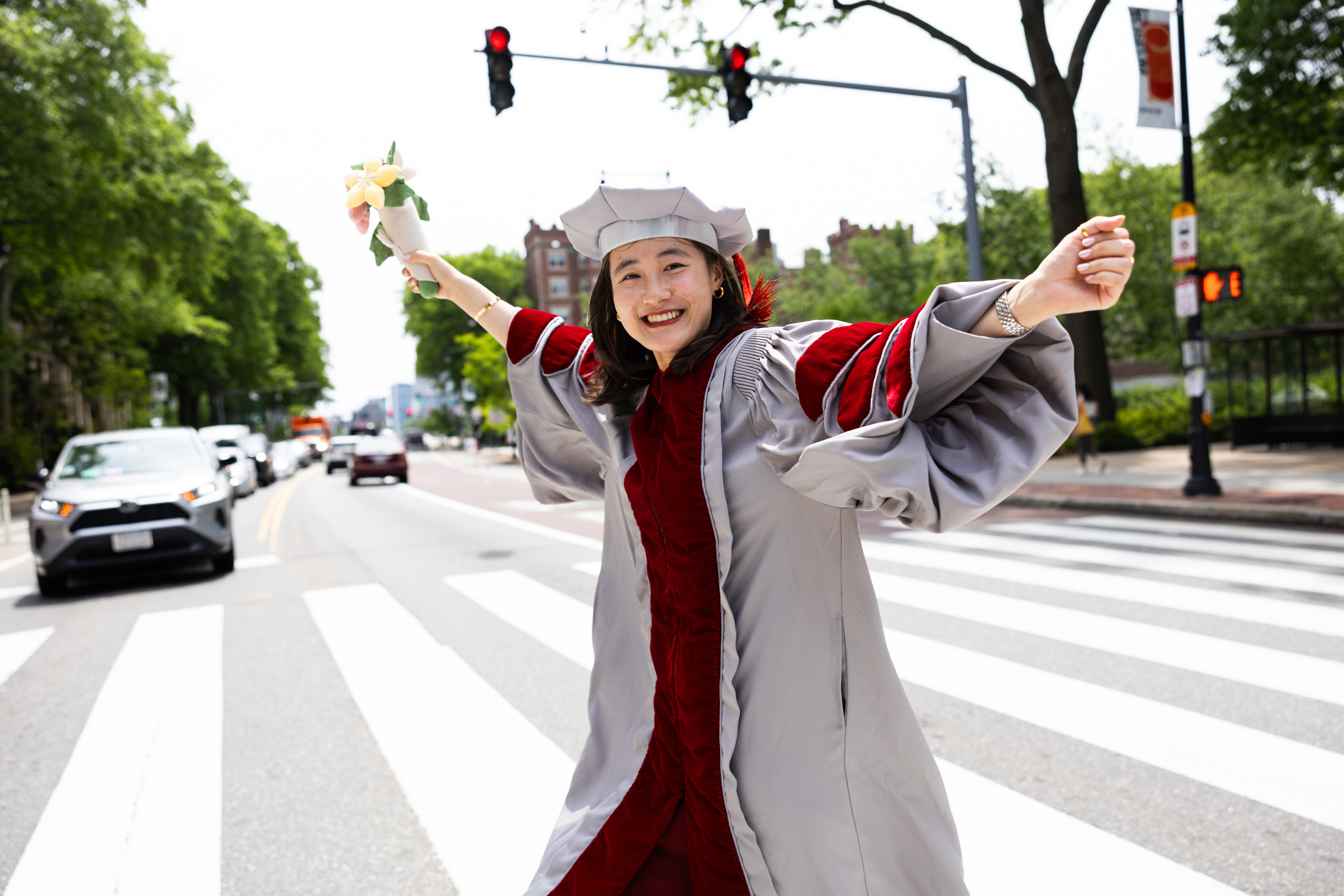
At MIT's School of Architecture and Planning Advanced Degree Ceremony, Dean Hashim Sarkis searched for the right word to describe the 206 graduates standing before him. He landed on this: "They're big-hearted in the way they deal with each other, with their work, and with the world."
It wasn't just rhetoric. The SA+P Class of 2026, drawn from nearly every corner of the globe, had already demonstrated that generosity in the way they showed up for one another throughout their time at the school. Sarkis honored that spirit by announcing the creation of the Class of 2026 Scholarship Fund — a new endowment to support incoming students. "Education is a right, not a privilege," he told the crowd, "and this fellowship brings us closer to our goal of giving this right to every student and becoming tuition-free as a school." The applause, by all accounts, was joyful and sustained.
The commencement speaker, Chilean architect and Pritzker Prize laureate Alejandro Aravena, urged graduates to lead with kindness and to honor truth — a charge that felt less like advice and more like a recognition of who they already were.
Communities Investing in Their Own
The generosity that defined MIT's Class of 2026 wasn't unique to Cambridge. Across the country, institutions were quietly, persistently building the infrastructure of opportunity — brick by brick, dollar by dollar.
In Virginia, Virginia Credit Union awarded $156,500 in college scholarships to 32 student members this year — part of a program that has distributed nearly $2 million since 1991. More than 840 students applied for the 2026 cycle. "Each of these students has shown the kind of drive, concern for their community, and dedication to their own future that makes us proud to be their credit union," said VACU President and CEO Chris Shockley. The program, which honors former credit union presidents Dorothy "Dot" Hall and Jane Watkins, is explicitly designed to help first-generation and working students reach their first undergraduate degree.
In Hawaii, the University of Hawaii launched its "Next Step Scholarship" — a program offering $2,000 to full-time students and $1,000 to part-time students who transfer from a UH community college to a four-year campus in fall 2026. As of this spring, 438 students had already received the award, with more than 1,100 others eligible. UH President Wendy Hensel was blunt about why the gap between an associate's degree and a bachelor's degree matters: "When you stop out, there's a high likelihood you're not going to come back." The scholarship exists to close that gap before it opens.
Back on Long Island, the Stony Brook community garden carries a similar logic. Funded by a $50,000 grant from the New York State Department of Agriculture and Markets, it is designed not just for a single harvest but for sustained community impact — with paid student interns maintaining the space and a coordinator from the Bridgehampton Child Care & Recreational Center identifying families facing food insecurity and guiding produce distribution. "Opportunities like these empower our scholars to see themselves as active contributors in their community," said Future Scholars Program Director Stephanie Nuñez.
What Schools Are For
At MIT's OneMIT Commencement ceremony, AMD Chair and CEO Lisa Su — herself a triple MIT alumna — addressed the full graduating class. School of Engineering Dean Paula Hammond put it simply to her graduates: "What makes MIT special isn't just what happens underneath this dome. What makes MIT special is you."
MIT President Sally Kornbluth, in her charge to the Class of 2026, admitted she faced the task with "a serious case of humility." Rather than deliver wisdom of her own, she turned to the collective voice of MIT alumni — people who consistently described not a course they took or a skill they mastered, but a community they belonged to. Excellence and curiosity, she told graduates, aren't just institutional values. They're personal ones. Ones that travel.
That same conviction is driving researchers at the University of Michigan, whose SPARX Project — Stepping Up Against Racism and Xenophobia — found that teachers can meaningfully address structural racism and xenophobia with students of any age, in any subject, when schools provide the right training and support. The findings, published in Applied Developmental Science, push back against the idea that these conversations are too complex for young children or belong only in social studies class. "Our research demonstrates not only the need for antiracist and antixenophobic dialogue in classrooms," said U-M graduate student Victoria Vezaldenos, "but also outlines the content and conditions needed to make such dialogue possible." The message is clear: silence isn't neutrality. Support makes the difference.
The Shape of Things to Come
What emerges from all of this is not a single story, but a single impulse — institutions, students, and communities choosing to invest in one another even when it's hard, even when it's expensive, even when the political climate pushes back. A garden in Southampton. A scholarship in Honolulu. A fund in Cambridge. A research project in Ann Arbor. New York City's Summer Rising program extending learning and support through the summer months, keeping students connected when school's out.
These aren't isolated acts of generosity. They're a pattern. And patterns, as any architect will tell you, are how you build something that lasts.
The Class of 2026 is stepping into a world full of problems that need exactly what they've got: big hearts, sharp minds, and the understanding that taking care of each other and taking on the world's hardest challenges are not separate tasks — they are the same one.
Sign in to join the conversation.
Comments (0)
No comments yet. Be the first to share your thoughts.