In the deserts of Xinjiang, construction crews are already breaking ground on installations that will reshape the planet's energy landscape. China's National Development and Reform Commission has committed to adding 370 gigawatts of wind and solar capacity across seven massive bases—from the Hexi Corridor to the Songliao Basin—by 2030. That's roughly the equivalent of 370 nuclear power plants, all feeding clean electrons into a grid designed to transmit them thousands of miles to the country's industrial heartland.
Half a world away, a different kind of milestone landed. The D.C. Circuit Court of Appeals upheld FERC Order 2023, siding with Sierra Club in a ruling that forces grid operators to finally clear a backlog of clean energy projects. Ninety-five percent of those stalled projects? Wind, solar, or batteries. As Sierra Club Senior Attorney Justin Vick put it, the court's decision creates a pathway to meaningful interconnection reform—one that can't be undermined by "fast track" loopholes that favored fossil fuels.
The private sector isn't waiting on courts to move. Tesla and ContourGlobal just signed one of the largest corporate solar-plus-storage power purchase agreements in American history. Project Sterling, a hybrid facility in Arizona combining 509 megawatts of solar with 1.4 gigawatt-hours of battery storage, will deliver 1 terawatt-hour of renewable energy annually—enough to power hundreds of thousands of homes. Construction began in 2025; commercial operation is expected in 2028.
Meanwhile, policy momentum is sweeping through statehouses. The Q2 2026 "50 States of Solar" report found that 45 states plus D.C. and Puerto Rico took some form of distributed solar action in just three months—284 total policy moves addressing net metering, community solar, and residential charges. Illinois, Maryland, and New Jersey led the charge.
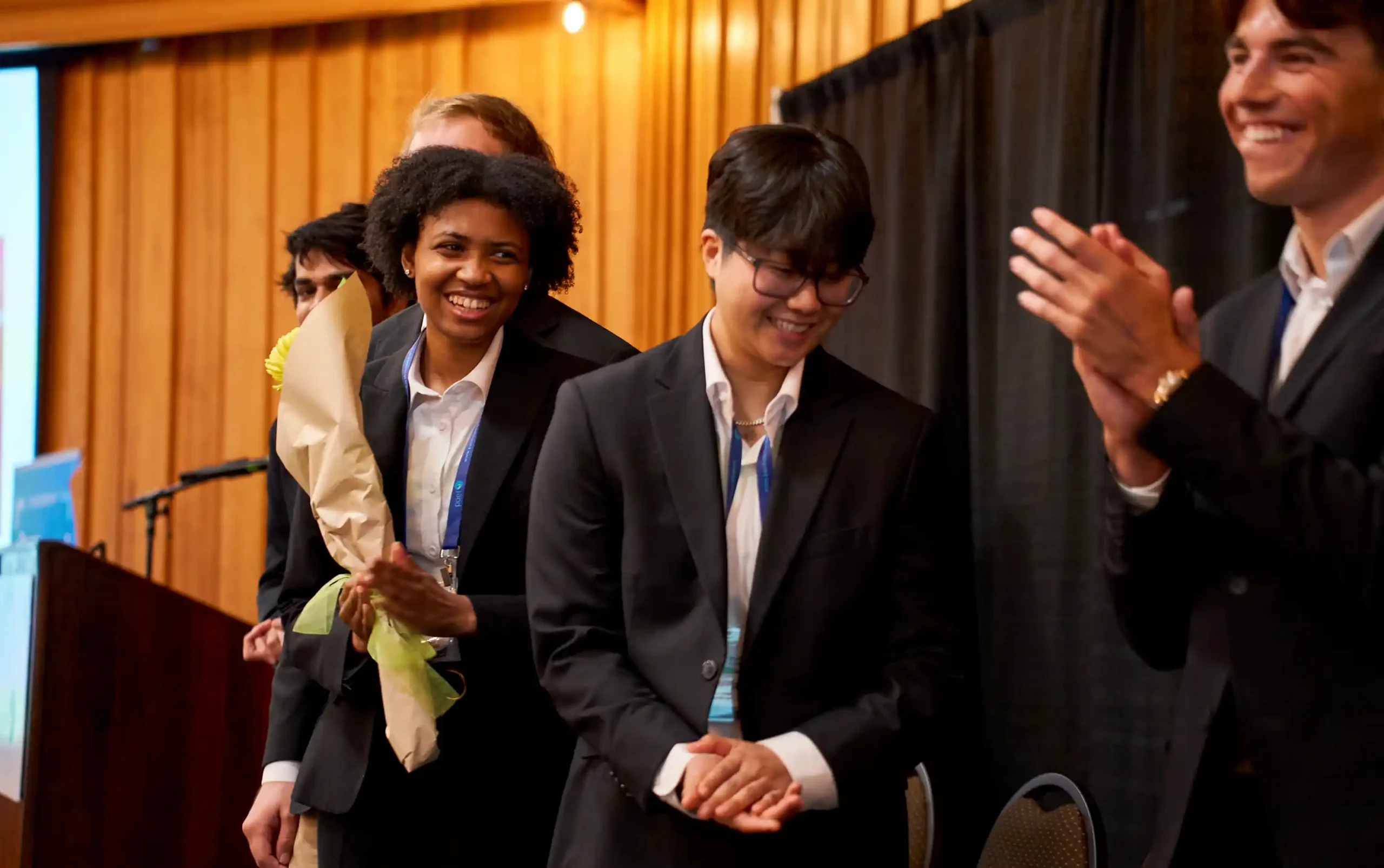
The energy transition is also drawing a new generation of engineers. At the Hydropower Collegiate Competition in Green Bay, California Polytechnic State University took home the Grand Prize. At the Marine Energy Collegiate Competition in Portland, University of Southern California claimed top honors. The Department of Energy's programs backing these competitions saw a record 45 teams qualify for next year's showdowns.
Across the Atlantic, the European Commission released its Electrification Action Plan, betting that direct electrification— EVs, heat pumps, industrial motors—will cut energy demand, lower prices, and reduce fossil dependence. The plan embraces Vehicle-to-Grid technology, recognizing that millions of EVs could function as a distributed battery network, storing solar and wind power when it's abundant and feeding it back when it's calm.
That logic is spreading. In Australia, traditional automakers are retreating—Fiat withdrew, Peugeot dealers are handing in franchises—but Chinese EV maker BYD is filling the gap. Rising fuel prices, partly driven by the Iran-US conflict, are pushing Australian drivers toward electric alternatives. A country blessed with world-class solar potential and cursed with oil scarcity is waking up to the obvious.
Even aviation, one of the hardest sectors to decarbonize, is getting fresh scrutiny. Researchers at the National Laboratory of the Rockies released a NASA-funded report evaluating five alternative jet fuels: sustainable aviation fuel, liquid hydrogen, LNG, liquefied ethane, and something called Jet X. The goal isn't to find a single silver bullet but to diversify a supply chain vulnerable to oil price shocks.
What connects all these threads? A shared recognition that energy independence, economic competitiveness, and climate stability all point toward the same destination. Governments set targets; courts clear obstacles; companies sign deals; students design turbines; and consumers, even in unlikely places, start voting with their wallets.
The world is building something enormous. And unlike previous energy transitions—which took decades to unfold—this one seems to feed on itself. Every megawatt installed makes the next megawatt cheaper. Every policy win makes the next negotiation easier. Every student who wins a collegiate competition today becomes the engineer who designs the grid of tomorrow.
The old energy system isn't dead yet. But the new one has stopped asking permission to exist.
Sign in to join the conversation.
Comments (0)
No comments yet. Be the first to share your thoughts.