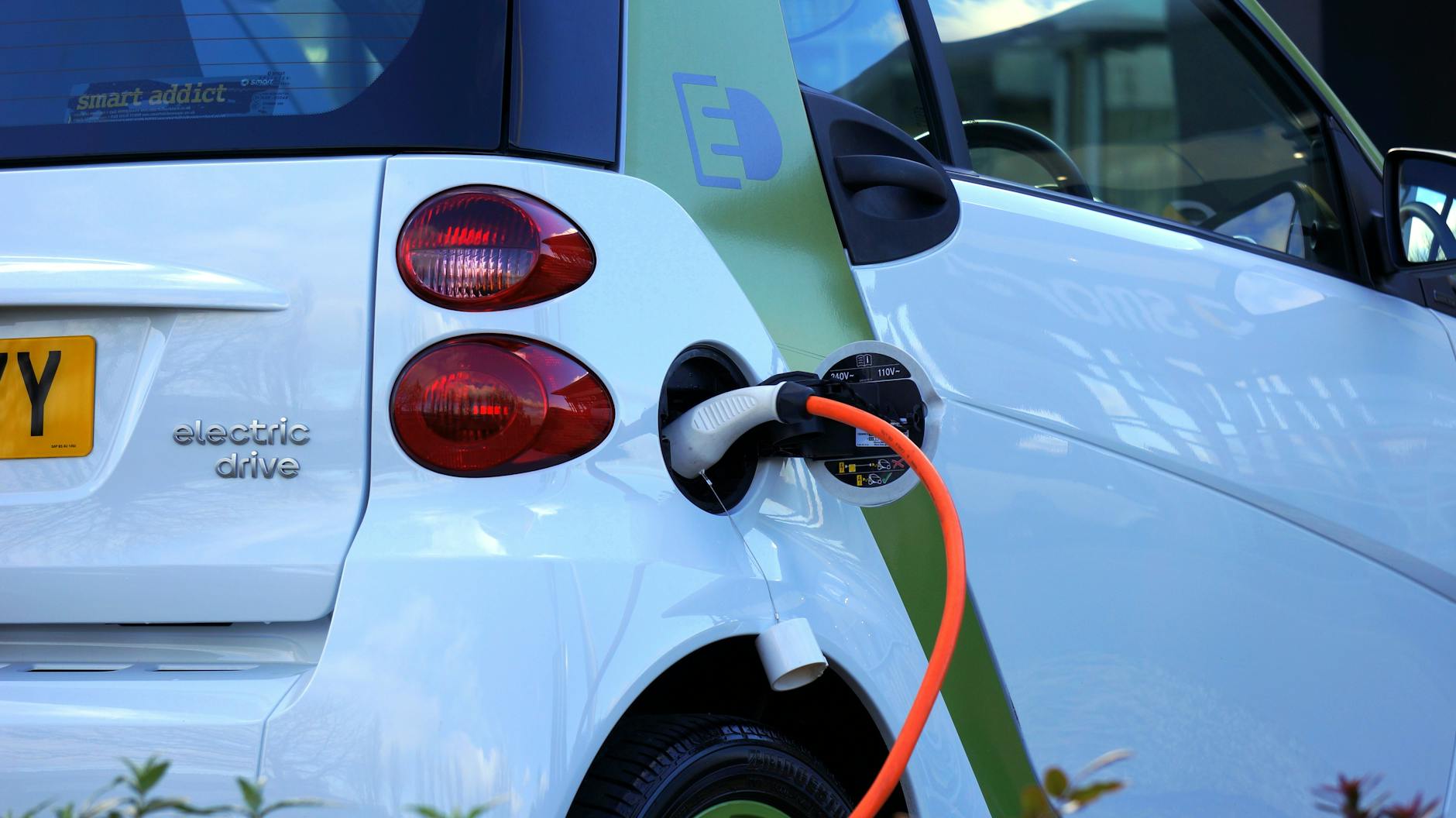
Spotted at a Gas Station in Batangas
A VinFast MPV 7 electric 7-seater sitting quietly in a small dealership tucked inside a gasoline station in Sto. Tomas, Batangas — it sounds like a contradiction. An electric vehicle, delivered to a fuel retailer, in the Philippine provinces. But as CleanTechnica reports, that unlikely scene turned out to be an early whisper of a full-scale national rollout now sweeping the Philippines.
That image — the new energy order quietly arriving inside the old one — turns out to be a pretty good metaphor for where the world stands in 2026.
Buses, Scooters, and the Scaling of Everything
Across the Pacific in San Francisco, the Presidio — 1,500 acres of open space and history near the Golden Gate — has quietly crossed a milestone: electric buses now make up more than half of the national park site's entire bus fleet. A national park. Running majority-electric transit. It's not a pilot program anymore; it's operational infrastructure.
Brazil is making the same move, only louder. As CleanTechnica reports, zero-emission buses in Brazil were once a curiosity for market analysts. Now, as of early 2026, the national fleet has expanded into what the outlet calls "a phase of genuine industrial scaling." The era of counting individual electric buses on one hand is over.
Zoom out further and the two-wheeled picture is just as striking. Strip China out of the global electric scooter market — the dominant force that distorts every headline number — and what remains, according to CleanTechnica's analysis of recent industry data, is a rich patchwork of regional markets accelerating at their own pace, shaped by policy, cost pressures, and urban density. Southeast Asia, South Asia, and parts of Latin America are all moving. Not uniformly. Not perfectly. But moving.
Europe Races to Build Its Own Supply Chain
Meanwhile, Europe is grappling with a different problem: how to make sure the clean energy boom benefits European workers and factories, not just European consumers.
The EU's proposed Industrial Accelerator Act (IAA) is designed to do exactly that — boosting made-in-EU electric vehicles and batteries to build economic resilience and advance climate goals simultaneously. Transport & Environment (T&E) supports the policy direction but argues, as CleanTechnica notes, that significant loopholes must still be closed to effectively scale a European battery value chain. The stakes are jobs, security, and sovereignty over the technologies the continent will depend on for decades.
Getting this right matters far beyond Europe's borders. A credible European manufacturing base for clean energy technology raises the floor for global standards.
The Grid's Next Headache
Not all of the clean energy story is smooth sailing. One of the most quietly urgent challenges is happening in data centers.
AI infrastructure is expanding at a pace that is straining the electrical grid in new ways — and the strain isn't just about how much power AI consumes, but how it consumes it. As Dr. Thomas Nann, CEO and Co-Founder of Allegro, writes for CleanTechnica, the biggest constraint facing AI data center expansion is not generation. It is storage. And lithium-ion batteries, for all their dominance in EVs and consumer electronics, are not fit for purpose at the scale and duty cycle that AI facilities demand.
The implication is clear: the clean energy transition needs new chemistry, not just more of the same.
Smarter Skies
Aviation offers a parallel lesson in thinking beyond the obvious solution.
The industry's decarbonization conversation is dominated by sustainable aviation fuels, hydrogen, and synthetic fuels — all of which are slow, expensive, and infrastructure-heavy, as CleanTechnica notes. But there's a faster, cheaper lever hiding in plain sight: better flight planning.
Optimizing flight paths can reduce both fuel burn and the formation of contrails — the high-altitude ice clouds that, surprisingly, may contribute more to aviation's climate impact than its CO₂ emissions alone. No new fuel required. No new aircraft. Just smarter routing.
It's a reminder that sometimes the most powerful climate interventions aren't the most dramatic ones.
When Farmers Become a "Threat"
And then there's the political weather.
In Washington, the Trump Administration has reportedly framed farmers who lease their land for wind turbines as a national security concern — apparently a threat serious enough to warrant emergency attention from a country that manages aircraft carriers, nuclear submarines, and hypersonic missiles, as CleanTechnica pointedly observes.
The absurdity of that framing is its own kind of signal. When obstruction has to reach for arguments this thin, it suggests the thing being obstructed is harder and harder to stop.
The Shape of What's Coming
None of these stories is the whole picture. A VinFast in Batangas, electric buses at the Presidio, Brazil's scaling fleets, European industrial policy, AI battery chemistry, smarter flight paths, and embattled wind farmers don't add up to a clean, finished transition.
But together, they describe something real: a world in which clean energy is no longer waiting in the wings. It is arriving in national parks and provincial gas stations, in legislative chambers and airport control rooms, in forms expected and otherwise. The shift is uneven, contested, and sometimes frustratingly slow. It is also, unmistakably, underway.
Sign in to join the conversation.
Comments (0)
No comments yet. Be the first to share your thoughts.